
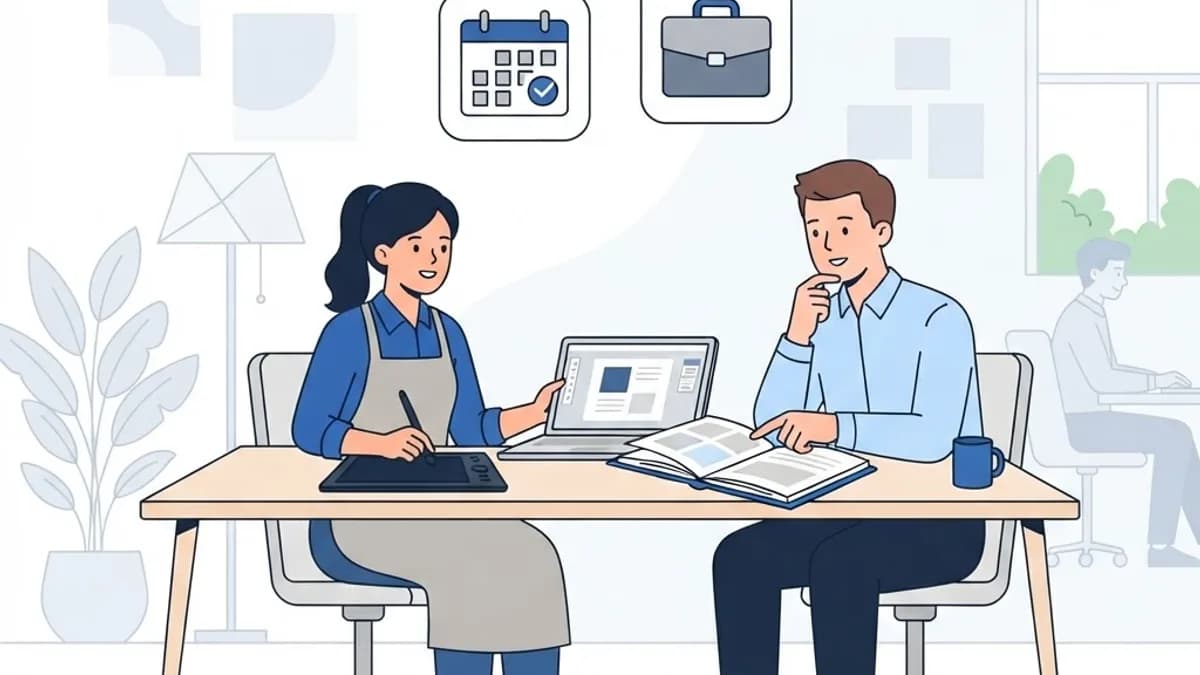
Cedar Rapids is a quietly strong market for early-career designers. Insurance and manufacturing headquarters, a growing nonprofit sector, agencies serving the Corridor, and Iowa City fifteen minutes down the road all create demand for junior design help. If you are hunting Cedar Rapids graphic design internships for summer 2026, that mix works in your favour.
Smaller markets have a real advantage: fewer applicants per opening, and interns who touch actual client work instead of watching from a corner.
This guide covers where these internships hide, what the timeline looks like, how to build a portfolio that beats stronger-credentialed applicants, and what the work genuinely involves once you start.
What Is a Graphic Design Internship?
A graphic design internship is a temporary, structured role — usually eight to twelve weeks over summer — where a student or recent graduate produces real design work under supervision.
Unlike coursework, the constraints are commercial. You work inside brand guidelines, hit deadlines, take feedback from non-designers, and prepare files for production. The value is not the portfolio piece alone but learning how design actually gets approved and shipped.
Typical assignments include social graphics, email headers, event collateral, presentation templates, packaging revisions, simple web layouts, and asset resizing for campaigns.
Who Should Apply?
Cedar Rapids employers tend to be practical about backgrounds. Strong candidates usually include:
- Design and art students at Iowa colleges, including Kirkwood, Coe, Mount Mercy, and the University of Iowa.
- Recent graduates wanting production experience before a first full-time role.
- Marketing or communications students with real software skills and a visual portfolio.
- Career changers from adjacent fields such as photography, print production, or illustration.
- Self-taught designers whose portfolio quality can outweigh a missing degree.
Key Things Employers Look For
A Focused, Honest Portfolio
Six to eight strong pieces beat twenty mediocre ones. Show your process briefly — problem, options, final choice — because reviewers want to see thinking, not just polished screens.
Understanding of Branding, Not Just Aesthetics
Interns who grasp why a brand system exists need far less supervision. Reading up on the primary goal of branding in graphic design will help you answer the interview question almost every hiring manager asks about consistency.
Production and Software Fluency
Expect to demonstrate Illustrator, Photoshop, InDesign, and increasingly Figma. Knowing export settings, colour modes, and file organisation matters more than knowing obscure filters.
Resilience With Feedback
Client revisions can be blunt and non-visual. Employers watch how you handle a rejected concept. If you are still deciding whether this career fits you, this candid discussion of whether graphic design is hard sets realistic expectations.
How to Find and Land a Summer 2026 Internship
Timing matters more than most students realise. Follow this sequence:
- Start in autumn 2025. Larger Cedar Rapids employers post summer roles between October and February.
- Build your portfolio site first, before applying, with a clean layout and downloadable PDF version.
- List target employers — local agencies, corporate marketing departments, hospitals, nonprofits, print shops, and university communications offices.
- Use campus career services, which often hold unadvertised local relationships.
- Apply directly by email to small studios that never post listings, attaching three relevant samples.
- Tailor each application, naming the organisation and referencing something specific about their work.
- Prepare for a portfolio review where you talk through two projects in detail.
- Follow up once after a week, politely, then keep applying rather than waiting.
Benefits of a Local Internship
A Cedar Rapids internship offers advantages a competitive coastal placement often cannot.
- Real responsibility early, since small teams cannot afford observers.
- Direct mentorship from senior designers you sit beside daily.
- Lower living costs, making a modest stipend actually workable.
- Portfolio pieces that shipped to real audiences, which interviewers value highly.
- Local network effects — the Corridor design community is small and refers constantly.
Potential Challenges
Go in with clear eyes about the trade-offs:
- Fewer formal programmes than in large metros, so you must pitch yourself proactively.
- Unpaid or low-paid offers still appear; weigh them carefully against paid alternatives.
- Production-heavy tasks like resizing and retouching may dominate the first weeks.
- Limited creative freedom inside established brand guidelines.
Best Practices and Tips
Small habits separate interns who get return offers from those who do not:
- Keep a weekly log of what you produced; it becomes your resume bullet points and portfolio notes.
- Ask for the brief in writing before starting any task to avoid mid-project surprises.
- Volunteer for one stretch project, such as a template system, that outlasts your internship.
- Request written permission before publishing client work in your portfolio.
Real-World Example
Picture a Kirkwood student applying in November for a summer role. Her portfolio held mostly class projects with invented brands, which every applicant has. Instead of applying more, she spent three weeks redesigning a real local nonprofit's event materials as a self-directed case study — poster, social set, and donation card — and documented the reasoning.
She emailed that case study to five Cedar Rapids studios and two corporate marketing teams. Two replied within a week, largely because the work addressed a local organisation they recognised.
She spent the summer producing campaign assets and a presentation template used company-wide, and left with three shipped projects plus a reference. The differentiator was initiative and local relevance, not credentials.
Why Internships Matter for Design Careers
Design hiring is portfolio-driven, and portfolios built solely from coursework look similar. Internship work shows you can operate inside constraints — brand rules, deadlines, stakeholder feedback, production specs — which is what employers are actually buying.
It also clarifies direction. Ten weeks in a marketing department will quickly tell you whether you prefer brand systems, digital product work, packaging, or motion, saving years of drift after graduation.
Frequently Asked Questions
When should I apply for summer 2026 internships?
Begin in October 2025 for corporate programmes and continue through February 2026. Small studios often hire later, sometimes as late as April, so keep applying past the main season.
Are Cedar Rapids design internships paid?
Corporate and agency roles are usually paid hourly, while some nonprofits offer stipends or academic credit instead. Always confirm compensation and expected hours in writing before accepting.
Do I need a design degree to get an internship?
Not always. Many employers prioritise portfolio quality and software fluency, though degree programmes make it easier to access campus recruiting and academic credit arrangements.
What should my portfolio include?
Six to eight projects showing range: one identity or branding piece, one print layout, one digital or social set, and one self-directed case study with visible process. Quality beats quantity every time.
Conclusion
Cedar Rapids graphic design internships for summer 2026 are winnable if you start early, target local employers directly, and lead with a portfolio that shows thinking rather than decoration. The market's smaller scale means genuine responsibility and real mentorship.
Build one self-directed local case study this month and send it out before the winter application rush. If you are still weighing the career itself, this honest look at how hard graphic design really is is worth reading first.
Enjoyed this article? Share it with others!