
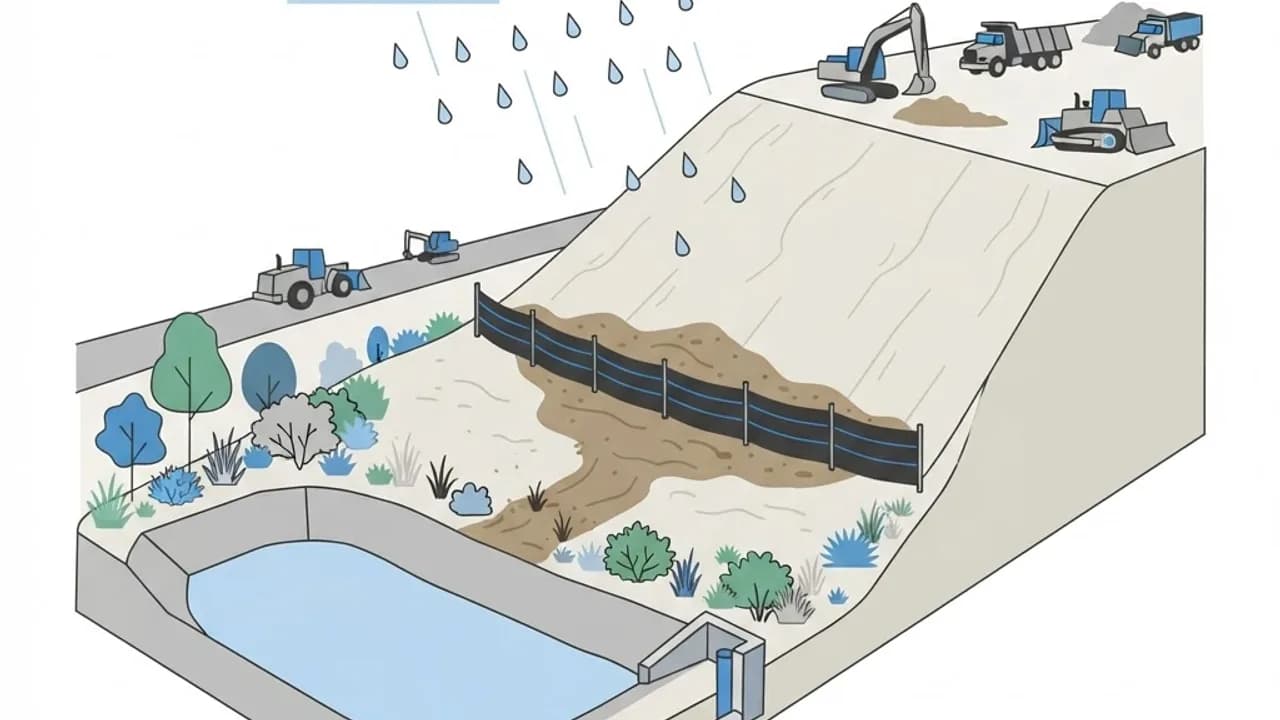
Learning how to prevent soil erosion on a construction site protects your schedule, your budget and the waterway downstream. Bare, disturbed ground can lose soil at many times the rate of vegetated land, and that soil ends up in drains, streams and neighbouring properties.
Erosion control is one of the few site disciplines where a few hundred dollars of materials prevents tens of thousands in fines and rework.
Below is a practical framework: reduce disturbance, slow the water, capture what escapes, and stabilise ground as fast as you expose it.
What Is Soil Erosion on a Construction Site?
Soil erosion is the detachment and transport of soil particles by water, wind or gravity. On construction sites, clearing vegetation and stripping topsoil removes the natural protection that held soil in place, leaving it vulnerable to the first heavy rain.
Erosion is the loss of soil; sedimentation is where that soil lands. Effective programmes treat the two together, because capturing sediment is only a backstop for erosion you failed to prevent.
The most effective erosion control is minimising the area and duration of exposed soil — every other measure is secondary to that principle.
Who Needs Erosion Control Measures?
Almost any project that disturbs ground carries an erosion control obligation.
- Contractors on any site with cleared or graded ground
- Developers of subdivisions and multi-lot residential projects
- Road, pipeline and infrastructure crews working in long corridors
- Builders on sloped sites or land adjacent to watercourses
- Landscapers and civil crews handling bulk earthworks
Key Erosion Control Measures
Perimeter Sediment Barriers
Silt fences, fibre rolls and compost socks installed along the downslope perimeter slow sheet flow and trap sediment. They must be trenched in properly, staked securely and repaired after every storm to function at all.
Ground Cover and Stabilisation
Hydroseeding, mulch, straw blankets, erosion control matting and gravel cover shield exposed soil from raindrop impact. Temporary seeding on areas that will sit idle for weeks is one of the cheapest wins available.
Drainage and Flow Control
Diversion berms, swales, check dams and slope drains route clean upslope water around disturbed areas and slow concentrated flows before they cut channels. Controlling water velocity is the core engineering task.
Sediment Traps and Basins
Where runoff must be collected, sediment traps and basins hold water long enough for particles to settle before controlled discharge. Inlet protection on storm drains provides the final line of defence.
How to Build an Erosion Control Plan: Step by Step
Sequence matters enormously here — controls installed after clearing are already too late.
- Map site topography, slopes, soil type and existing drainage paths.
- Phase the earthworks so only the area actively being worked is exposed.
- Preserve existing vegetation and mature trees wherever the design allows.
- Install perimeter silt fences and a stabilised construction entrance first.
- Divert clean upslope runoff around the disturbed area with berms or swales.
- Protect all storm drain inlets before earthmoving begins.
- Cover or seed stockpiles and ring them with sediment barriers.
- Stabilise finished slopes immediately with matting, mulch or seeding.
- Inspect all controls weekly and after every significant rainfall event.
- Remove accumulated sediment before it reduces control capacity.
Benefits of Effective Erosion Control
Erosion control quietly improves nearly every project metric.
- Compliance with stormwater permits and avoidance of penalties
- Less lost fill and fewer expensive soil imports
- Workable, trafficable ground after rain instead of days of mud
- Protected foundations, since erosion undermines footings and trenches
- Fewer neighbour and downstream complaints that stall progress
Potential Challenges
Erosion control fails in a handful of familiar ways.
- Storms exceeding the design capacity of installed measures
- Steep or long slopes where flow velocity builds rapidly
- Controls damaged by plant traffic and never reinstated
- Long delays between grading and permanent stabilisation
Best Practices and Tips
These points cover most real-world failures.
- Trench silt fence into the ground — fabric laid on the surface simply lets water underneath.
- Stabilise within days of reaching final grade, not at project end.
- Keep spare fabric, stakes and matting on site for immediate storm repairs.
- Sweep tracked soil from public roads daily; it is both a hazard and a citation risk.
Real-World Example
A hillside subdivision cleared eleven acres at once to speed up grading. The first heavy storm sent sediment through the silt fence into a creek, triggering a stop-work notice and a mandatory remediation plan.
The rebuilt approach cleared land in three staged sections, hydroseeded each finished slope within a week, and added check dams in the main drainage line. Sediment discharge effectively ceased, and the developer documented the turnaround in a case study promoted through managed social media campaigns that helped restore community confidence.
Why Erosion Prevention Matters
Eroded construction soil is a leading contributor to sediment pollution in urban waterways. It smothers aquatic habitat, clogs drainage infrastructure and costs municipalities real money to remove.
On site, erosion undermines what you have already built. Contractors who demonstrate control of it earn smoother approvals, and many now showcase that record on sites built with professional WordPress development supported by clear technical content writing.
Frequently Asked Questions
What is the cheapest way to prevent soil erosion on a construction site?
Limiting the area of exposed soil and preserving existing vegetation cost almost nothing and deliver the biggest reduction. Mulch and temporary seeding are the next most cost-effective measures.
How long can bare soil be left exposed?
Many permits require stabilisation within seven to fourteen days of the last disturbance, and sooner on steep slopes or before forecast rain. Check your local conditions, since thresholds vary.
Does a silt fence stop erosion?
No. A silt fence captures sediment that has already eroded, acting as a backstop. Preventing detachment through ground cover, phased clearing and flow control is what actually stops erosion.
How often should erosion controls be inspected?
Weekly as a minimum, plus immediately after any rainfall event large enough to produce runoff. Log each inspection with photographs so maintenance is provable.
Conclusion
Preventing soil erosion on a construction site means exposing less ground, slowing the water, covering soil quickly and maintaining every control after rain. None of it is technically difficult, but all of it depends on sequence and follow-through.
Build erosion control into your programme rather than bolting it on, and if you want to turn strong environmental performance into visible credibility, consider informative infographic design to explain your methods to clients and communities.
Enjoyed this article? Share it with others!