
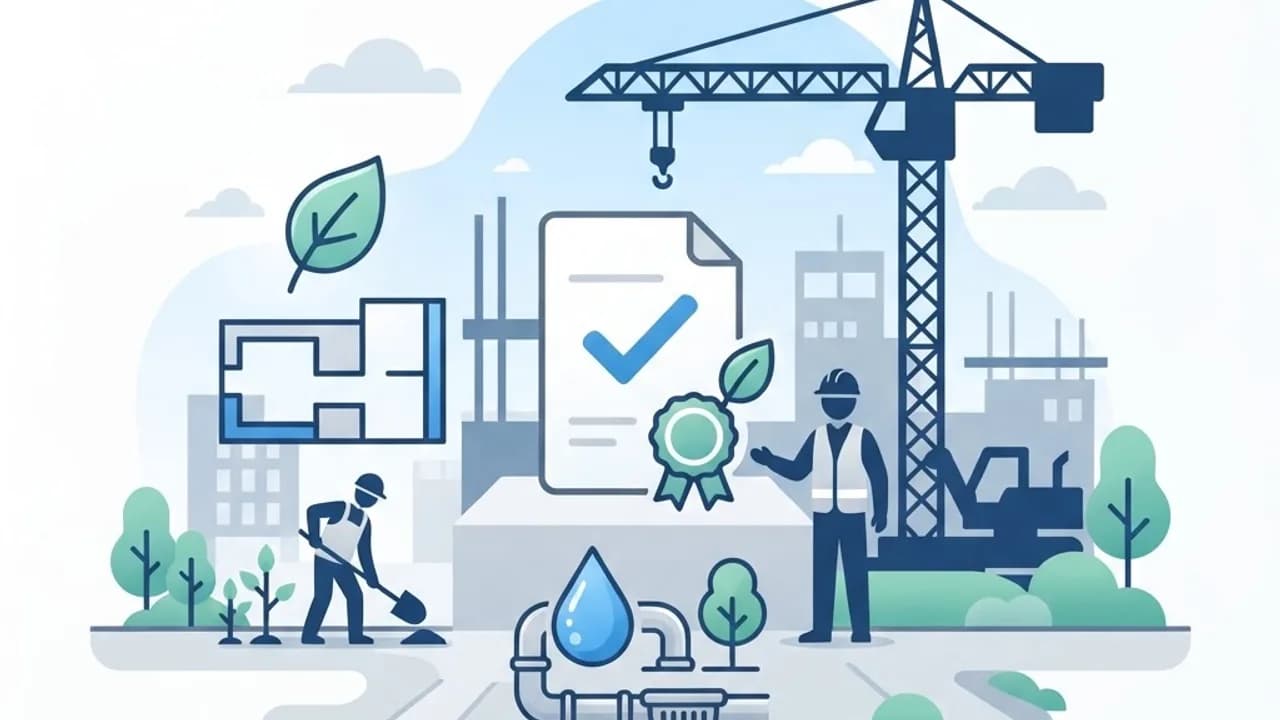
Environmental compliance on a construction site is no longer a box-ticking exercise. Stormwater discharges, dust, noise, waste streams and protected habitats are actively monitored, and penalties arrive quickly when controls fail.
The good news is that compliance is largely procedural. Sites that get it right are not spending more money — they are spending it earlier, on planning and controls rather than fines and remediation.
This guide sets out how to build an environmental compliance system that survives an unannounced inspection and a heavy rainfall event on the same week.
What Is Environmental Compliance in Construction?
Environmental compliance means operating a site in line with all applicable environmental laws, permits and conditions. That includes sediment and erosion control, stormwater management, air quality and dust suppression, noise and vibration limits, waste classification and disposal, and protection of water bodies, trees and wildlife.
Compliance is proven by records, not intentions. Inspection logs, monitoring data, waste dockets and training registers are the evidence that controls existed and worked.
Most environmental breaches are documentation and maintenance failures — the silt fence existed but was never repaired, or the monitoring log was never filled in.
Who Is Responsible for Environmental Compliance?
Responsibility is shared and often joint, which is why written allocation matters.
- Principal contractors holding the site environmental permits
- Developers and clients, who frequently retain legal liability
- Environmental managers and appointed compliance officers
- Subcontractors handling concrete, fuel, chemicals or demolition waste
- Site supervisors performing daily and post-rainfall inspections
Key Features of a Compliant Site
A Written Environmental Management Plan
The plan identifies environmental risks, assigns controls, sets monitoring frequencies and names responsible people. It should be site-specific and reference the actual permits and conditions that apply.
Erosion and Sediment Controls in Place Early
Silt fences, sediment basins, stabilised construction entrances, inlet protection and covered stockpiles must be installed before ground disturbance, not after the first complaint about muddy runoff.
Dust, Noise and Emissions Management
Water carts, wheel washes, sheeted loads, screening and restricted working hours keep dust and noise inside permitted limits. Equipment maintenance and idle-reduction policies handle emissions.
Waste Segregation and Chain-of-Custody Records
Separate skips for concrete, timber, metal and general waste raise recycling rates and cut disposal cost. Keep every transfer docket — unlicensed disposal is one of the most heavily penalised breaches.
How to Achieve Environmental Compliance: Step by Step
Follow this order so controls are ready before the activities that need them begin.
- Identify every applicable regulation, permit and consent condition for the site.
- Prepare a site-specific environmental management plan with named responsibilities.
- Obtain stormwater, dewatering, tree removal and waste permits before mobilising.
- Install erosion, sediment and perimeter controls prior to any ground disturbance.
- Set up bunded fuel and chemical storage with spill kits and trained responders.
- Establish separated waste streams and a licensed contractor for each one.
- Train all workers and subcontractors on the plan and induct new arrivals.
- Inspect controls weekly and after every significant rainfall, logging findings.
- Monitor dust, noise and water quality where conditions require it.
- Audit records monthly and close out corrective actions with evidence.
Benefits of Strong Environmental Performance
Compliance protects far more than the environment.
- Avoided fines, stop-work notices and remediation orders
- Better relationships with neighbours, councils and regulators
- Lower disposal costs through higher recycling and reuse rates
- Eligibility for green certification and public-sector tenders
- Reduced project delay risk from complaints and investigations
Potential Challenges
Even committed sites hit friction, usually in these areas.
- Overlapping local, regional and national rules with different thresholds
- Extreme weather overwhelming controls designed for average conditions
- Subcontractors who did not read the environmental plan
- Record-keeping gaps that make good practice impossible to prove
Best Practices and Tips
Small habits deliver most of the compliance outcome.
- Photograph controls at installation and after each inspection, with timestamps.
- Stabilise disturbed ground quickly rather than leaving bare soil exposed.
- Put environmental duties into subcontract agreements with clear consequences.
- Run a short pre-rain checklist so the site is secured before weather arrives.
Real-World Example
A road-widening contractor faced repeated sediment complaints after storms. Rather than adding more silt fence, the team moved to digital inspections: a tablet form with mandatory photos, GPS tagging and automatic corrective-action reminders, triggered whenever forecast rainfall exceeded a threshold.
Complaints stopped within two months because failures were caught before the rain, not after. The inspection tool itself was built as a lightweight internal system using MERN stack development, and the data now feeds the company's quarterly compliance reporting.
Why Environmental Compliance Matters
Sediment in a waterway or uncontrolled dust in a residential street creates harm that outlives the project. Regulators respond with penalties, and communities respond with objections to your next application.
There is also a growing commercial dimension. Clients now request environmental performance data at tender stage, and contractors who can present it clearly — often through dashboards built with robust back-end web development and hosted on scalable cloud solutions — hold a real advantage.
Frequently Asked Questions
What permits does a construction site usually need for environmental compliance?
Common requirements include a stormwater or erosion and sediment control permit, dewatering or discharge consent, waste transfer documentation, and specific approvals for tree removal, protected species or work near watercourses.
How often should environmental controls be inspected?
Weekly inspections are a common baseline, with additional inspections before and after significant rainfall. Many permits specify exact frequencies and rainfall triggers, so check your conditions.
What is the most common environmental violation on construction sites?
Uncontrolled sediment-laden stormwater runoff is the most frequently cited breach, usually caused by controls that were installed but not maintained. Improper waste disposal and dust complaints follow closely.
Does environmental compliance increase project cost?
Planned compliance adds a modest, predictable cost. Unplanned non-compliance costs far more once fines, remediation, delay and reputational damage are counted, and it often affects future approvals.
Conclusion
Environmental compliance on a construction site comes down to knowing your conditions, installing controls before disturbance, maintaining them relentlessly and documenting everything. That combination satisfies regulators and protects the site at the same time.
Build the system before you break ground, and if reporting is your weak point, look at AI-assisted data and reporting solutions to turn inspection records into insight rather than paperwork.
Enjoyed this article? Share it with others!