
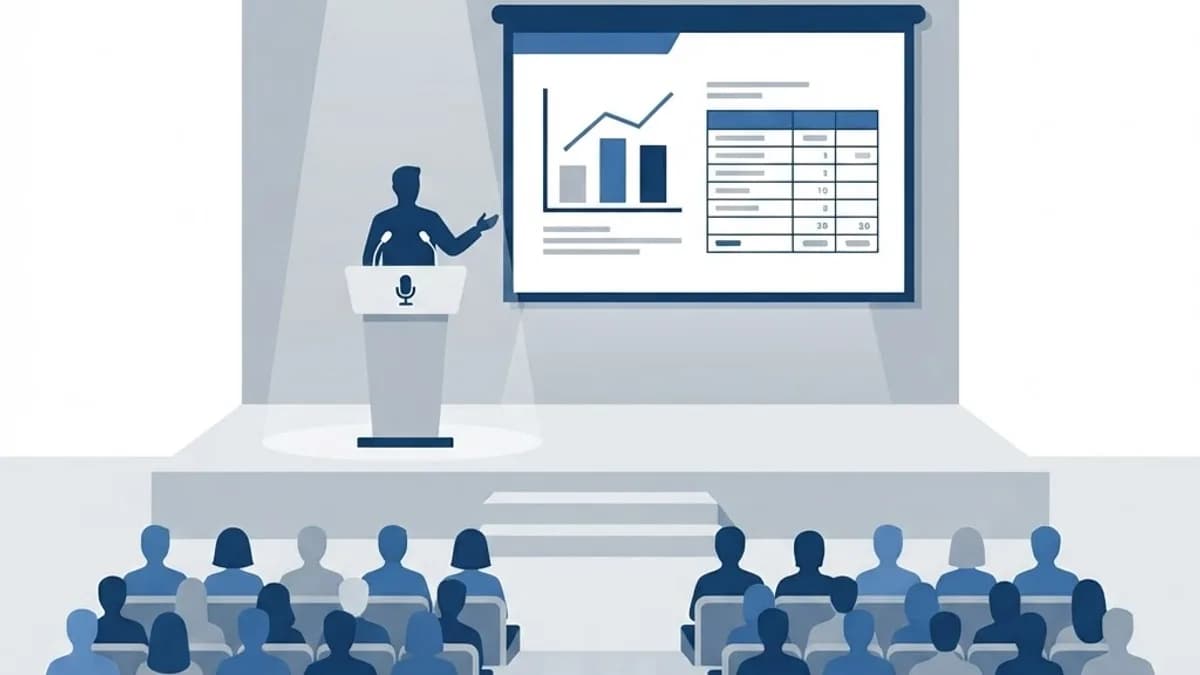
Every profession gets its moment of collective reckoning with new technology, and for accountants it is happening in conference halls. An AI in accounting summit is where practitioners, software vendors, regulators and academics work out what automation actually means for audit, tax and advisory work.
These events have changed character quickly. Two years ago the agenda was mostly speculation and vendor demos. Now the sessions are about implementation reality: governance frameworks, audit evidence standards, staff training, pricing model changes and what happens to the traditional pyramid staffing model.
This guide explains what these summits cover, who benefits most, how to prepare so the trip pays for itself, and how to convert what you hear into actual changes in your practice.
What Is an AI in Accounting Summit?
An AI in accounting summit is a focused professional conference examining how artificial intelligence affects accounting, audit, tax and finance functions. Formats range from single-day regional events run by professional bodies to multi-day international conferences with parallel tracks and exhibition floors.
Typical agendas mix keynote framing, practitioner case studies, hands-on tool workshops, regulatory and ethics panels, and vendor showcases. The most useful sessions are almost always the case studies where a firm explains what went wrong before it went right.
The real value, though, is rarely on the stage. Most attendees report the highest return comes from candid conversations with peers facing identical implementation problems, which is why the corridor and dinner conversations matter as much as the programme.
Who Attends?
The audience is broader than practice accountants alone, which is part of the appeal.
- Practice partners and managers deciding technology strategy and investment
- Audit leads working out evidence standards for AI-assisted testing
- Tax specialists evaluating document automation and research tools
- CFOs and financial controllers modernising internal finance functions
- Accounting software vendors, educators and regulators shaping the standards
Key Themes You Will Encounter
Audit Automation and Evidence Standards
The central technical debate is what constitutes sufficient appropriate audit evidence when a model performs the testing. Sessions cover full-population testing instead of sampling, anomaly detection in journal entries, and the documentation needed to demonstrate professional scepticism when an algorithm produced the risk assessment.
Tax and Document Automation
Practical tracks demonstrate extraction of data from receipts, invoices and statements, plus AI-assisted tax research. Expect frank discussion of accuracy limits, confidence thresholds and where human review remains mandatory rather than optional.
Advisory Services and Business Model Change
If compliance work compresses, where does revenue come from? This is the commercially urgent theme: repositioning toward advisory, moving from hourly billing to value pricing, and rethinking a staffing pyramid built on junior hours that automation now performs.
Ethics, Governance and Regulation
Panels cover professional independence, client confidentiality when data enters third-party AI tools, bias in credit and risk models, and the governance documentation regulators increasingly expect. This track produces the most immediately actionable takeaways for firm policy.
How to Get the Most From Attending
Conferences reward preparation. Arriving without specific questions guarantees a pleasant but forgettable few days.
- Define three concrete problems you want solved before booking, written down.
- Choose sessions matched to those problems rather than the most exciting titles.
- Research speakers in advance and identify five people worth meeting.
- Send a team of two or three so you can cover parallel tracks and compare notes.
- Prepare hard vendor questions: accuracy figures, data residency, training-use terms, real implementation timelines.
- Capture one actionable item per session in a shared document, not passive notes.
- Schedule a debrief within a week of returning while momentum survives.
- Commit to one pilot within 30 days, with a named owner and a success metric.
Benefits of Attending
The strongest returns come from avoided mistakes rather than new ideas.
- Honest peer accounts of what failed, saving you the same expensive lesson
- Direct vendor comparison in one place, with technical staff available to interrogate
- Early visibility of regulatory and standards direction affecting your obligations
- CPD or CPE hours toward professional requirements
- A peer network you can call when an implementation stalls months later
Potential Challenges
These events are not uniformly valuable, and it pays to go in clear-eyed.
- Heavy vendor influence on some agendas, producing sales pitches dressed as sessions
- Hype cycles that overstate readiness and understate implementation effort
- Real cost in fees, travel and chargeable hours lost
- Insight decay — most attendees implement nothing without a structured follow-up plan
Best Practices and Tips
A few disciplines separate a productive summit from an expensive week away.
- Favour practitioner case studies over vendor keynotes when tracks conflict
- Always ask presenters what did not work and what it cost to fix
- Write your firm's AI use policy while the governance session is still fresh
- Follow up on every worthwhile connection within a week, and refresh your firm's website presentation if you plan to market new advisory capability
Real-World Example
A three-partner practice sent two managers to a regional AI in accounting summit with a specific brief: find a way to cut bookkeeping data-entry time and understand the confidentiality rules for client data in AI tools.
They skipped the headline keynotes entirely, attended four workshops and two ethics panels, and spoke to six vendors with a prepared question list. They returned with a shortlist of two extraction tools, a draft data-handling policy adapted from a panel discussion, and a peer contact who had already run the same implementation.
Within a quarter they had piloted one tool on 300 documents, written a firm-wide AI policy, and started marketing an advisory package supported by refreshed professional content writing. The conference paid for itself because they went with a brief rather than curiosity.
Why It Matters
Accounting is a standards-driven profession, and standards evolve through professional consensus. Summits are where that consensus forms — on audit evidence, on documentation, on what constitutes reasonable care when a model is involved.
Firms that participate help shape those norms and adopt early with confidence. Firms that stay away learn the rules later, from clients or regulators, which is a considerably more expensive classroom.
Frequently Asked Questions
Who should attend an AI in accounting summit?
Decision-makers and practitioners who will actually implement change: partners setting strategy, audit and tax leads, and finance controllers. Sending someone without authority to act rarely produces results.
Do these summits count for CPD or CPE?
Most events organised or accredited by professional bodies do. Confirm before booking and keep session attendance records for your development log.
Are they worth it for small practices?
Often yes, particularly regional or virtual editions with lower cost. Small firms gain most from the peer conversations, since they lack the internal research capacity larger firms have.
What is the biggest mistake attendees make?
Returning inspired and doing nothing. Without a named owner, a specific pilot and a 30-day deadline, conference insight evaporates within a fortnight of getting back to billable work.
Conclusion
An AI in accounting summit is worth attending when you treat it as a working trip with defined objectives rather than a broad education. Go with three problems, target the practitioner sessions, interrogate vendors properly and commit to one pilot on return.
If your firm needs help building or marketing new AI-supported service lines, explore our AI consulting and development services.
Enjoyed this article? Share it with others!