
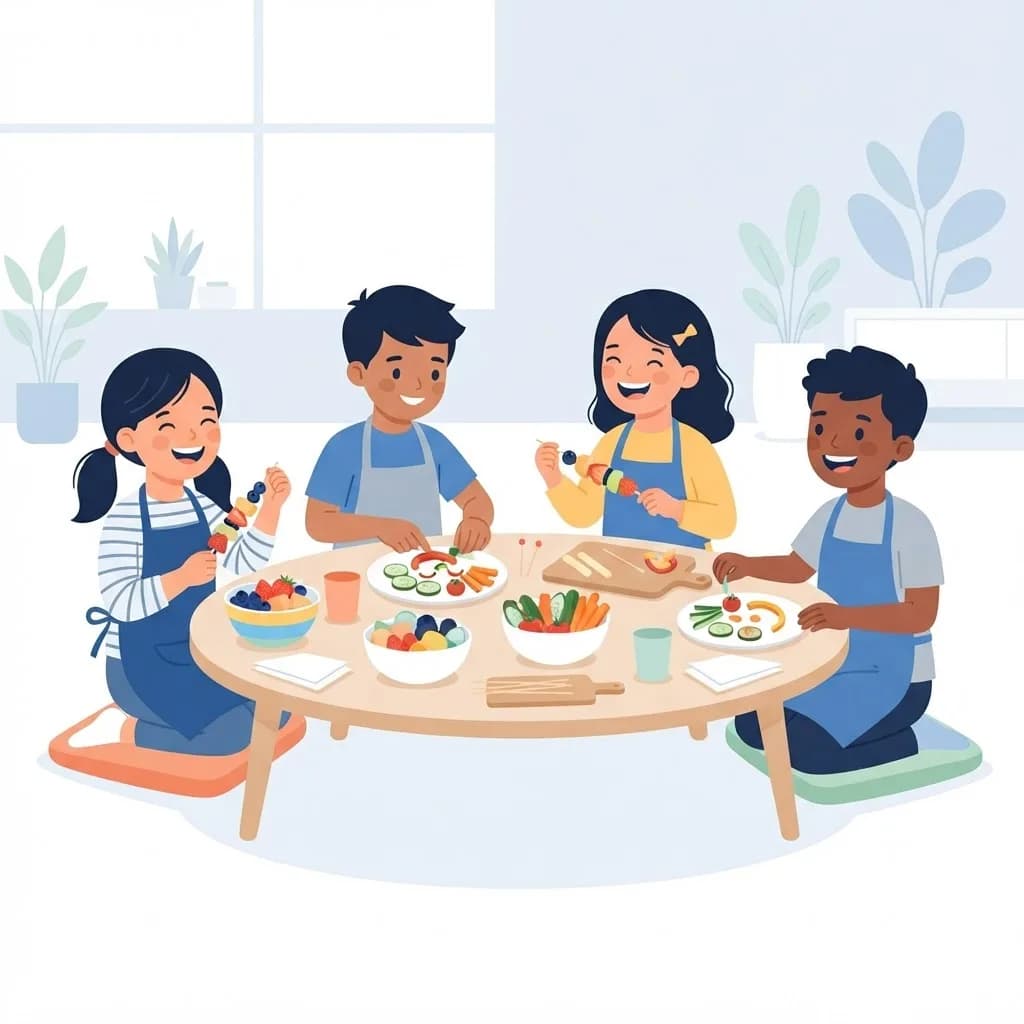
Getting a three-year-old excited about broccoli is not a persuasion problem — it is a play problem. The most effective healthy food activities for preschoolers work because they let children touch, build, and create with food instead of being told to eat it.
Preschoolers are natural scientists. They want to squish, sort, smell, and stack. When healthy food becomes the material for that exploration, resistance drops on its own.
Below are practical, tested activity ideas you can run at home or in a classroom, plus the setup steps and safety notes that keep them smooth.
What Are Healthy Food Activities for Preschoolers?
Healthy food activities for preschoolers are short, playful tasks built around nutritious ingredients — assembling, sorting, decorating, tasting, growing, or comparing food using their own hands.
They differ from ordinary snack time in one important way: the food is the activity, not just the reward at the end. A fruit skewer a child threaded herself carries emotional ownership that a pre-cut bowl never will.
The underlying principle is simple. Familiarity, not persuasion, is what turns a rejected food into an accepted one, and playful handling creates familiarity faster than anything else.
Who Uses These Activities?
These ideas travel well across settings and adult roles.
- Parents managing selective or anxious eaters at home
- Preschool teachers and daycare staff planning weekly themes
- Feeding therapists and occupational therapists building sensory tolerance
- Community centers, libraries, and summer programs running family workshops
- Pediatric nutrition educators delivering group sessions
Key Features of Great Food Activities
Building and Creating
Children love construction. Fruit kebabs, veggie faces on hummus, banana sushi rolls, and cucumber boats all give a preschooler a build task with an edible result.
Sensory Exploration
Blind smell jars, texture guessing bags, and crunch-loudness contests engage senses other than taste. This matters enormously for children who find new foods overwhelming in the mouth.
Growing and Sourcing
Sprouting beans in a jar, regrowing green onions in water, or planting herbs on a windowsill connects food to living things. Programs that document this journey visually often use short clips produced with professional video production support to share progress with families.
Sorting, Counting, and Charting
Rainbow sorting trays, taste-test voting charts, and counting seeds turn nutrition into early math. The learning is real, and the food exposure comes free with it.
How to Get Started
A repeatable setup keeps these activities from becoming a production.
- Confirm allergies and dietary needs for every participating child.
- Pick one simple activity and one target food for the session.
- Pre-wash and pre-cut anything that requires a sharp knife.
- Set out child-safe tools: nylon crinkle cutters, spreaders, tongs, silicone cups.
- Wash hands together and cover the work surface for easy cleanup.
- Demonstrate once, then step back and let children work at their own pace.
- Narrate with sensory words instead of praise about eating.
- Offer tasting as a free choice and let refusals pass without comment.
Benefits of Healthy Food Activities
These sessions do far more than fill a snack slot.
- Reduce picky eating through repeated, low-stakes exposure
- Develop pincer grip, bilateral coordination, and tool control
- Build sensory tolerance for unfamiliar textures and smells
- Encourage autonomy and pride in self-made food
- Create positive food memories that shape teenage and adult choices
Potential Challenges
Know the friction points before you begin.
- Choking risks from whole grapes, raw carrot coins, nuts, and popcorn
- Cross-contamination and hygiene issues when many small hands share bowls
- Short attention spans — activities running past ten minutes lose the room
- Waste and cost when children handle more food than they consume
Best Practices and Tips
These small rules protect both safety and enthusiasm.
- Cut grapes and cherry tomatoes lengthwise, and grate or steam hard vegetables
- Give each child their own small portion tray to limit shared handling
- Keep sessions to five or ten minutes and end while interest is still high
- Repeat the same activity with the same food multiple times before switching
- Share photos and recipes with families — centers that post these regularly through managed social media channels see much stronger parent follow-through at home
Real-World Example
A parent whose four-year-old refuses all vegetables starts a Saturday "garden plate" routine. Each week the child gets a plate, a small spoon of hummus, and three vegetable pieces to build a face — cucumber eyes, a pepper smile, a shredded carrot hairstyle.
For the first three weeks the child builds the face, laughs, and eats only the hummus. In week four he eats one cucumber eye. By week eight cucumber and pepper are both routine snacks. Nothing changed except repetition, play, and the complete absence of pressure to eat.
Why It Matters
Food preferences established in the preschool years are remarkably persistent. Children who never build comfort with vegetables early tend to carry that gap into adolescence, when habits harden and adult influence shrinks.
Healthy food activities for preschoolers offer a low-cost, low-conflict way to close that gap. They replace the dinner-table standoff with something children actively look forward to — which is exactly why they keep working when rules and rewards fail.
Frequently Asked Questions
What are the safest healthy food activities for young preschoolers?
Spreading, sorting, washing, and threading soft foods are safest. Avoid whole round foods, nuts, and anything requiring sharp knives or heat with children under five.
My child plays with the food but never eats it. Is that a failure?
Not at all. Touching, smelling, and handling are genuine progress steps. Most children need eight to fifteen neutral exposures before they willingly taste a new food.
How long should a food activity last?
Five to ten minutes is ideal for this age group. Ending before attention fades keeps the association with the food positive.
Do these activities help children with sensory sensitivities?
Yes, they are a core strategy in feeding therapy. Start with looking and touching through a tool or napkin, then progress gradually toward direct contact and tasting.
Conclusion
The best healthy food activities for preschoolers are short, hands-on, safe, and endlessly repeatable. Let children build, sort, grow, and explore — and let tasting arrive on its own schedule.
If you run a program and want a clean online home for your activity library and parent resources, our Next.js web development services can help you build something fast and easy to update.
Enjoyed this article? Share it with others!