
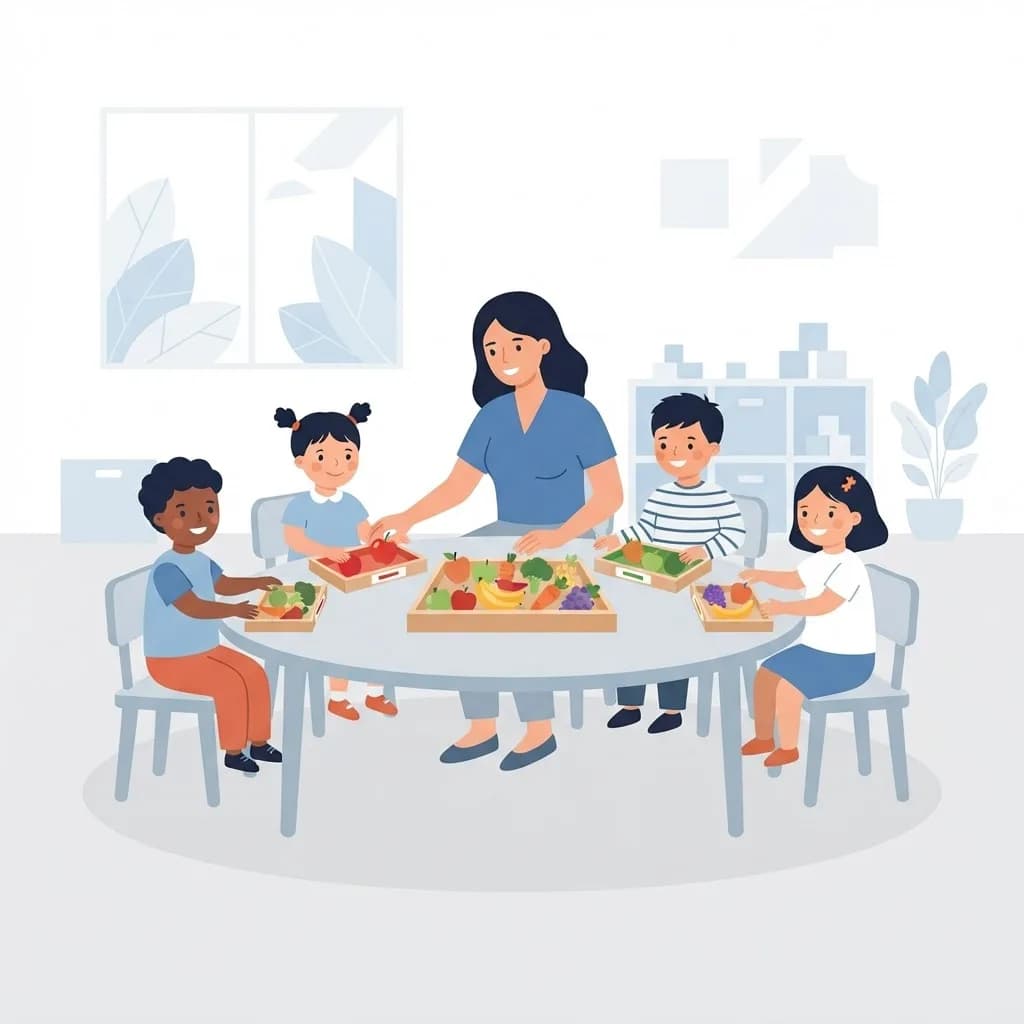
Ask any early childhood teacher what shapes a child's relationship with food, and they will point to routine, repetition, and play. Well-designed healthy eating activities for preschool classrooms do all three at once — they turn nutrition from a lecture into an experience.
Children between three and five are in the middle of a critical window. Taste preferences, willingness to try new foods, and basic ideas about what a meal looks like are all forming right now.
This guide covers activities that actually work in real classrooms: low prep, high engagement, allergy-aware, and tied to skills preschoolers are already developing.
What Are Healthy Eating Activities for Preschool?
Healthy eating activities for preschool are structured, play-based experiences that help young children explore, prepare, and talk about nutritious food. They are not diet lessons and they never label foods as good or bad.
The goal is exposure and confidence. Research on food neophobia consistently shows that repeated, pressure-free contact with a new food — touching it, smelling it, helping wash it — makes tasting far more likely later.
The best activities work on two levels at once: they teach nutrition concepts while building fine motor skills, vocabulary, counting, and sensory tolerance. That dual purpose is what makes them easy to justify inside a packed curriculum.
Who Uses These Activities?
Nutrition play belongs anywhere young children eat and learn together.
- Preschool and pre-K teachers building weekly theme units
- Childcare centers and family daycare providers managing group meals
- Head Start and community nutrition programs with wellness requirements
- Parents and caregivers looking for structured at-home learning
- Pediatric dietitians and occupational therapists supporting picky eaters
Key Features of Effective Preschool Nutrition Activities
Hands-On and Sensory-Led
Preschoolers learn through their hands and mouths. Washing lettuce, shelling peas, tearing herbs, or rolling dough gives them ownership of the food before it ever reaches a plate.
Visual and Color-Based
Young children sort by color long before they understand nutrients. Rainbow charts, color-of-the-week tables, and produce sorting bins make variety visible. Classrooms that print their own colorful learning posters often lean on simple graphic design support to keep materials consistent and readable.
Story and Character Driven
A carrot with a name is far more interesting than a carrot on a tray. Picture books, puppets, and simple narratives give children a reason to care about the food in front of them.
Zero Pressure to Eat
Effective activities separate exploring from eating. A child who licks a strawberry and puts it down has still succeeded. Forcing bites reliably backfires and increases resistance.
How to Get Started
You do not need a kitchen or a big budget. Start small and repeat often.
- Check allergy, dietary, and religious restrictions for every child before planning.
- Pick one target food or color for the week to keep the message simple.
- Choose a no-cook activity first — sorting, washing, or a taste-test chart.
- Set up handwashing, gloves, and clean surfaces as part of the routine, not an afterthought.
- Introduce the food through a story or song before touching it.
- Let children handle and describe the food using senses: bumpy, cold, sweet, crunchy.
- Offer an optional taste and record reactions on a class chart with stickers.
- Repeat the same food two or three more times across the month.
Benefits of Healthy Eating Activities in Preschool
The payoff shows up in behavior at snack time and in skills across the curriculum.
- Greater willingness to try unfamiliar fruits and vegetables over time
- Stronger fine motor control from peeling, tearing, spreading, and tonging
- Expanded descriptive vocabulary and early math through counting and sorting
- Better mealtime independence and self-serving confidence
- Positive food attitudes that carry into elementary school and beyond
Potential Challenges
Anticipating friction points keeps activities from stalling.
- Allergies and cultural food restrictions require careful substitutions and parent communication
- Fresh produce costs and prep time strain tight program budgets
- Mess and cleanup can discourage staff without a clear routine
- Mixed developmental levels mean one activity rarely fits every child in the group
Best Practices and Tips
Small adjustments make a large difference in participation.
- Model eating the food yourself — adult enthusiasm is contagious and free
- Use real produce rather than plastic replicas whenever possible
- Keep groups to four or five children per adult for food handling activities
- Send a short recap home so families can repeat the exposure, which is easier when centers share updates through a simple parent email newsletter system
- Rotate through the same core foods repeatedly instead of chasing novelty
Real-World Example
A pre-K classroom runs a four-week "Color Kitchen" unit. Week one is red: children sort red apples, tomatoes, and peppers into bins, then help wash and tear lettuce for a class salad while the teacher reads a short story about a farmer's market.
No child is asked to eat anything. A chart on the wall lets each student place a sticker on a smiley, neutral, or frowning face after an optional taste. By week four, seven children who refused raw tomato in week one voluntarily tried it — simply because it kept reappearing in a friendly, low-pressure context.
Why It Matters
Early childhood is when eating patterns are cheapest to shape and most durable. Children who learn to see vegetables as normal, familiar, and fun in preschool carry a measurable advantage into later childhood, when peer pressure and marketing take over.
Healthy eating activities for preschool also reach families indirectly. When a four-year-old comes home talking about the crunchy purple cabbage she washed herself, that conversation changes what appears on the grocery list.
Frequently Asked Questions
What is the easiest healthy eating activity for preschoolers?
A color sorting table with real produce. It needs no cooking, takes minutes to set up, and builds both nutrition awareness and early math skills at the same time.
Should children be required to taste the food?
No. Tasting should always be optional. Repeated exposure without pressure produces better long-term acceptance than any requirement or reward system.
How do I handle food allergies during these activities?
Collect written allergy information first, avoid the top allergens in group handling activities, provide equivalent substitutions, and keep separate prep surfaces and utensils.
How often should we do nutrition activities?
Short activities two or three times a week beat one long monthly event. Consistency and repetition drive acceptance far more than novelty does.
Conclusion
The most effective healthy eating activities for preschool are simple, sensory, repeated, and free of pressure. Give children real food to touch, a story to connect it to, and permission to say no — then offer it again next week.
If your center wants a polished way to share activity plans and family resources online, take a look at our WordPress development services for education programs.
Enjoyed this article? Share it with others!