
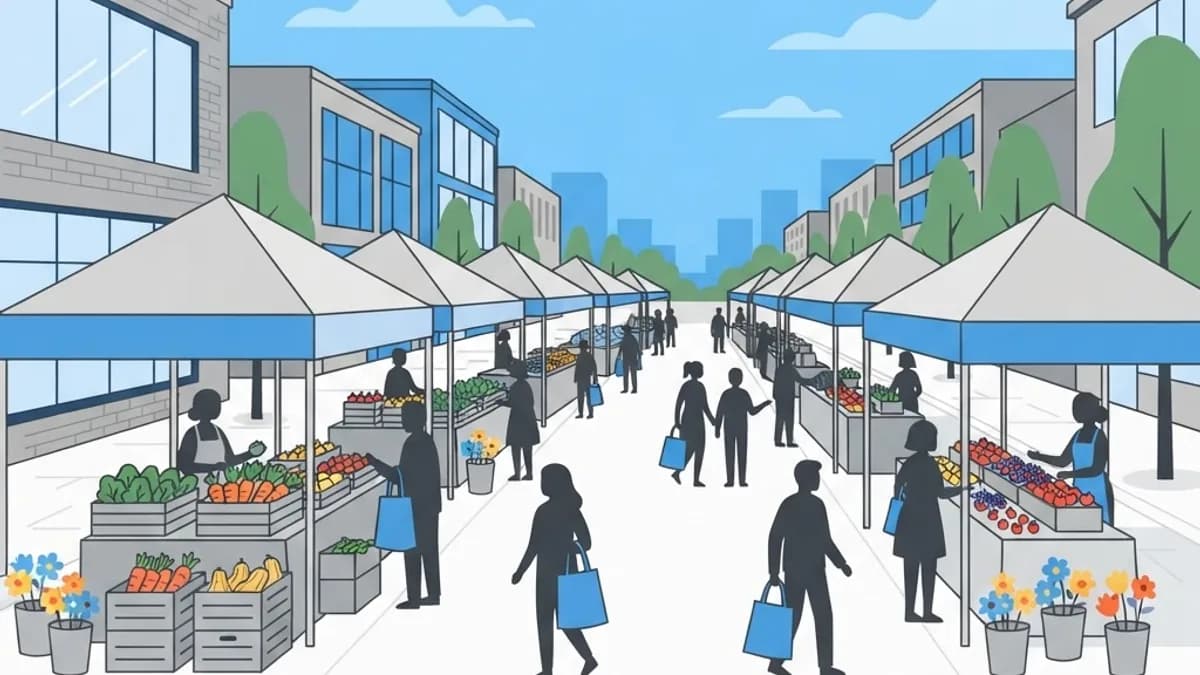
The Pleasanton Farmers Market is one of the most reliable weekend rituals in the Tri-Valley. Every week, a stretch of downtown Pleasanton fills with canopy tents, crates of Central Valley stone fruit, flower buckets, and neighbors who genuinely stop to talk to each other.
It is a market with a real sense of place. You are shopping a few dozen steps from independent bookstores, coffee shops, and restaurants on Main Street, which makes a produce run feel like an outing rather than an errand.
This guide covers what you will find, when to arrive, how to shop efficiently, and why small local markets like this one matter more than their size suggests.
What Is the Pleasanton Farmers Market?
The Pleasanton Farmers Market is a certified farmers market held weekly in downtown Pleasanton, California. Certified status means the growers selling produce have been verified by the county agricultural commissioner as actually farming what they sell.
That certification is the key distinction between a real farmers market and a general craft fair. It is why the peaches taste like peaches and why you can ask the person behind the table exactly which orchard the fruit came from.
The market operates year-round with a rotating seasonal inventory, so a January visit looks completely different from a July one. Citrus, greens, and root vegetables dominate winter, while summer brings stone fruit, tomatoes, corn, and berries.
Who Shops at the Pleasanton Farmers Market?
The crowd reflects the Tri-Valley itself: a mix of longtime residents and newer families who moved out from the Bay for space.
- Families making a Saturday morning routine of produce shopping and pastries
- Home cooks planning menus around whatever is actually at peak season
- Local chefs and caterers sourcing small quantities of specialty items
- Fitness and health-focused shoppers prioritizing fresh, minimally processed food
- Visitors from nearby Livermore, Dublin, and San Ramon combining the market with downtown dining
Key Features of the Market
Certified California Produce
The heart of the market is fruit and vegetables harvested days rather than weeks earlier. Central Valley and coastal growers bring stone fruit, heirloom tomatoes, avocados, citrus, leafy greens, and specialty items you rarely see in supermarkets, like Blenheim apricots or Concord grapes with a two-week window.
Artisan Food Vendors
Beyond produce you will find fresh bread, olive oil, raw honey, tamales, hummus, pasta, cheese, kettle corn, and cut flowers. Many are family operations selling at three or four markets a week, which means the person handing you the loaf usually baked it.
Prepared Food and Coffee
Several stalls sell breakfast and coffee, which is why the market functions as much as a social space as a shopping trip. Grabbing a pastry and walking the aisles slowly is the intended experience.
Downtown Walkability
The market's downtown location means you can park once and combine it with Main Street shops, brunch, or the library. That integration with existing businesses is a major reason the market has stayed healthy while others have faded.
How to Shop the Market Effectively
A little strategy gets you better produce at better prices.
- Check the current day and hours online before you go, as schedules shift with daylight and season.
- Bring your own sturdy bags plus a cooler bag if you plan to buy cheese, eggs, or meat.
- Carry small bills. Most vendors take cards or mobile payment now, but cash speeds up transactions and helps vendors avoid fees.
- Walk the entire market once before buying anything, comparing quality and price across stalls.
- Ask what is at peak this week and build your meals around that answer rather than a fixed shopping list.
- Arrive early for the best selection of popular items, or in the last thirty minutes for end-of-day deals on what remains.
Benefits of Shopping at a Farmers Market
The advantages go well beyond flavor, though flavor alone would justify the trip.
- Produce picked at ripeness rather than for shipping durability, which means better taste and nutrition
- Money circulating locally instead of flowing to distant corporate supply chains
- Direct access to growing information — how it was grown, what was sprayed, when it was picked
- Seasonal eating that naturally varies your diet across the year
- Dramatically less packaging waste than supermarket equivalents
Potential Challenges
Farmers markets are not universally better on every dimension, and it is worth being honest about that.
- Higher prices on some staples compared with warehouse or discount grocers
- Limited hours that force your shopping into one narrow weekly window
- Incomplete inventory, so you will still need a grocery trip for pantry and household goods
- Weather dependence, since a rainy morning thins both vendors and selection
Best Practices and Local Tips
Regulars do a few things differently from first-timers.
- Build relationships with two or three favorite vendors — they will save you the best items and tell you what is coming next week
- Buy in volume during peak season and freeze or preserve, especially with summer stone fruit and tomatoes
- Ask about seconds or cosmetically imperfect produce, which is often deeply discounted and perfect for cooking
- Follow individual vendors on social media, since many post what they are bringing the night before
Real-World Example
A Pleasanton family of four shifted most of their produce spending to the market and changed how they cooked. Instead of writing a menu on Thursday and shopping to match, they arrive Saturday, see what looks best, and plan four dinners around it on the drive home.
The result was less food waste, because they cooked what they bought at peak, and more variety, because the market forced them out of the same six vegetables. They also discovered that one grower's tomatoes were worth planning an entire August around.
On the vendor side, one of the market's bread bakers built a subscription pre-order system so customers reserve loaves midweek and simply collect them Saturday. That single change nearly eliminated unsold inventory and smoothed out her cash flow, and it was made possible by a simple custom web application handling orders and pickup slots.
Why It Matters
Small regional markets like the Pleasanton Farmers Market are how independent growers survive in a food system dominated by consolidated distribution. Selling direct means a farmer keeps the full retail margin instead of a fraction of it.
For the community, the market is also genuine public space — one of the few places where neighbors encounter each other without a transaction being the whole point. Vendors who want to extend that relationship beyond market hours increasingly rely on a proper online presence, which starts with straightforward website design for small food businesses.
Frequently Asked Questions
What day is the Pleasanton Farmers Market held?
The main downtown Pleasanton market runs on a set weekend morning, typically Saturday, with hours that shift slightly between summer and winter. Confirm the current schedule on the market's official page before heading out, since seasonal changes are common.
Does the Pleasanton Farmers Market accept EBT or CalFresh?
Many certified California farmers markets participate in CalFresh and offer market match programs that stretch benefit dollars on fresh produce. Look for the market information booth on arrival to ask about current programs and token exchange.
Is the market open in winter?
Yes, the market operates year-round, though the vendor count and product mix shrink in the coldest months. Winter is excellent for citrus, brassicas, root vegetables, and hearty greens.
Are dogs allowed at the farmers market?
Rules vary and California food safety regulations restrict animals in some certified produce areas. Check the market's posted policy before bringing a pet, and if allowed, keep them leashed and away from open food displays.
Conclusion
The Pleasanton Farmers Market rewards shoppers who slow down, ask questions, and let the season decide the menu. Walk the whole market first, talk to the growers, and buy what is genuinely at peak.
If you sell at local markets and want customers ordering from you all week rather than only on Saturday morning, look into ecommerce solutions built for small food producers and turn your market stand into a year-round business.
Enjoyed this article? Share it with others!