
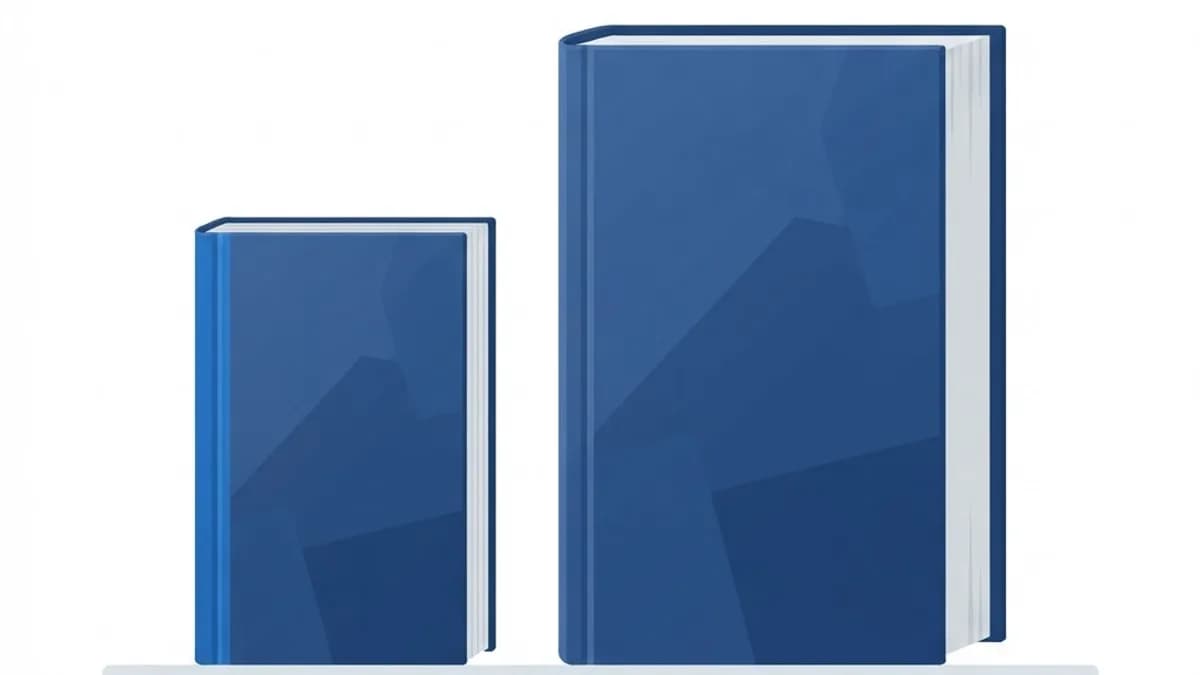
If you have ever ordered a book online and received something noticeably smaller than expected, you have already run into the mass market paperback vs paperback question. Both are softcover books, both are cheaper than hardcovers, and yet they are built for very different readers and very different retail shelves.
The confusion is understandable. Publishers rarely explain the distinction on product pages, and marketplace listings often lump every softcover into one bucket. The result is mismatched expectations, avoidable returns, and shoppers who cannot tell why one edition costs $8.99 and a nearly identical one costs $18.00.
This guide breaks down the real differences in size, paper stock, binding, pricing, and longevity, so you can pick the right format whether you are buying one novel or sourcing hundreds of copies for a shop.
What Is a Mass Market Paperback?
A mass market paperback is the compact, pocket-sized softcover traditionally sold in supermarkets, airports, drugstores, and spinner racks. It usually measures about 4.25 x 6.87 inches, uses thin newsprint-style paper, and is glued with a simple perfect binding.
The whole format exists for one reason: volume at a low price. Mass market paperbacks are printed cheaply and in huge runs so they can be distributed almost anywhere and sold impulsively. Historically, unsold copies were not even returned to the publisher; only the stripped cover was returned as proof of destruction.
The standard paperback, often called a trade paperback, is the larger softcover you see in bookstores. It typically runs 5.5 x 8.5 inches or 6 x 9 inches, uses heavier cream or white paper, and carries a more designed cover with better ink coverage.
Who Needs to Know the Difference?
Format choice affects more people than casual readers. Anyone who buys, sells, ships, or lists books benefits from knowing which edition is in their hands.
- Frequent commuters and travelers who want a book that fits a jacket pocket or small bag.
- Collectors and long-term readers who care about spine durability and paper that will not yellow within a few years.
- Independent bookshops and online resellers pricing inventory and writing accurate listings.
- Self-publishing authors choosing a print format and retail price point.
- Schools, libraries, and book clubs buying multiple copies on a fixed budget.
Key Features Compared
Physical Size and Feel
Mass market editions are small and thick, with tight inner margins that can make the gutter text hard to read. Trade paperbacks are wider and taller, with generous margins, larger type, and a page layout that is simply easier on the eyes during long reading sessions.
Paper and Print Quality
Mass market books use lightweight, high-acid paper that browns quickly and tears if handled roughly. Trade paperbacks use thicker, often acid-free stock with crisper typography. If you plan to annotate margins or keep the book for a decade, the heavier paper matters.
Price and Availability
Mass market titles are the budget option, frequently priced 40 to 60 percent below the trade edition. However, they are mostly limited to genre fiction such as thrillers, romance, mystery, and science fiction. Literary fiction, memoir, and nonfiction usually skip the mass market stage entirely.
Release Timing
Publishers stagger formats. Hardcover comes first, then trade paperback, then mass market months later, if at all. Waiting for the mass market release saves money but can mean a year-long delay on a popular title.
How to Choose the Right Format
Rather than guessing from a thumbnail, work through a short checklist before you buy.
- Check the listed dimensions in the product details, not the cover image.
- Look at the page count relative to thickness. A 400-page book under one inch thick is almost always mass market.
- Decide how long you want the book to last. Reference and reread material justifies the trade edition.
- Compare the per-copy price against shipping. For bulk orders, mass market weight savings are significant.
- Confirm the ISBN. Each format has its own ISBN, which is the most reliable identifier.
Benefits of Understanding Book Formats
Knowing the difference is not trivia. It changes what you spend and what you receive.
- Fewer returns and disappointed customers caused by unclear listings.
- Better budgeting when buying series or classroom sets.
- Smarter pricing decisions for resellers and independent publishers.
- More accurate product pages, which is a genuine trust signal for any online shop. Clean product presentation is exactly what strong ecommerce solutions are built to support.
- Longer-lasting personal libraries because you match format to intended use.
Potential Challenges
Even with clear definitions, the market introduces friction.
- Marketplace listings often mislabel formats or reuse a single cover photo across editions.
- "Premium mass market" is a hybrid size that sits between the two standards and confuses buyers further.
- Many titles never receive a mass market edition, removing the cheaper option entirely.
- Used mass market copies degrade fast, so condition grades vary wildly between sellers.
Best Practices and Tips
A few habits eliminate most format mistakes.
- Always cross-check the ISBN before adding a book to your cart or your inventory system.
- If you sell books, photograph a ruler or a common object beside the spine to show real scale.
- Store mass market paperbacks upright and out of direct sunlight to slow yellowing.
- For a bookshop building an online catalog, structured product data and clear filters do more for conversions than extra photos. A well-planned website design makes those filters obvious instead of hidden.
Real-World Example
Consider a small used bookstore that lists 2,000 titles online. Initially the shop tagged everything as "paperback." Roughly one in twelve orders came back, almost always because a customer expected the larger trade size and received a pocket edition.
After splitting the catalog into distinct mass market and trade categories, adding measured dimensions to every listing, and grouping editions by ISBN, returns dropped sharply and average review scores climbed. Nothing about the inventory changed. Only the clarity of the information did, which is often how the best conversion improvements work.
Why It Matters
Format is a purchase decision disguised as a detail. The mass market paperback vs paperback choice determines cost, readability, shelf life, and shipping weight all at once. For a reader, that is comfort. For a seller, it is margin and reputation.
As print continues to coexist with digital, the physical editions people choose deliberately tend to be the ones they keep. Understanding what you are buying keeps that choice intentional rather than accidental.
Frequently Asked Questions
Is a mass market paperback lower quality than a regular paperback?
In materials, yes. The paper is thinner, the binding is simpler, and the pages yellow faster. The text itself is identical, so the story is unchanged; only the physical object differs.
Which format is better for reading on a commute?
Mass market wins on portability. It fits in a coat pocket, weighs less, and costs little enough that damage in a backpack is not a concern.
Why are some books never released as mass market paperbacks?
Mass market printing only makes sense at very high volumes in genres with broad impulse appeal. Niche nonfiction, literary titles, and illustrated books rarely justify that print run.
How can I tell which format a listing is selling?
Check the dimensions and the ISBN in the product details. Each edition carries a unique ISBN, making it the most dependable way to confirm the format.
Conclusion
The difference between a mass market paperback and a standard paperback comes down to size, paper quality, price, and how long you expect the book to survive. Choose mass market for cheap portability, and trade paperback for comfort and durability.
If you sell books online and want listings that set accurate expectations and convert better, explore how a clearer catalog and stronger storefront can help with front-end web development.
Enjoyed this article? Share it with others!