
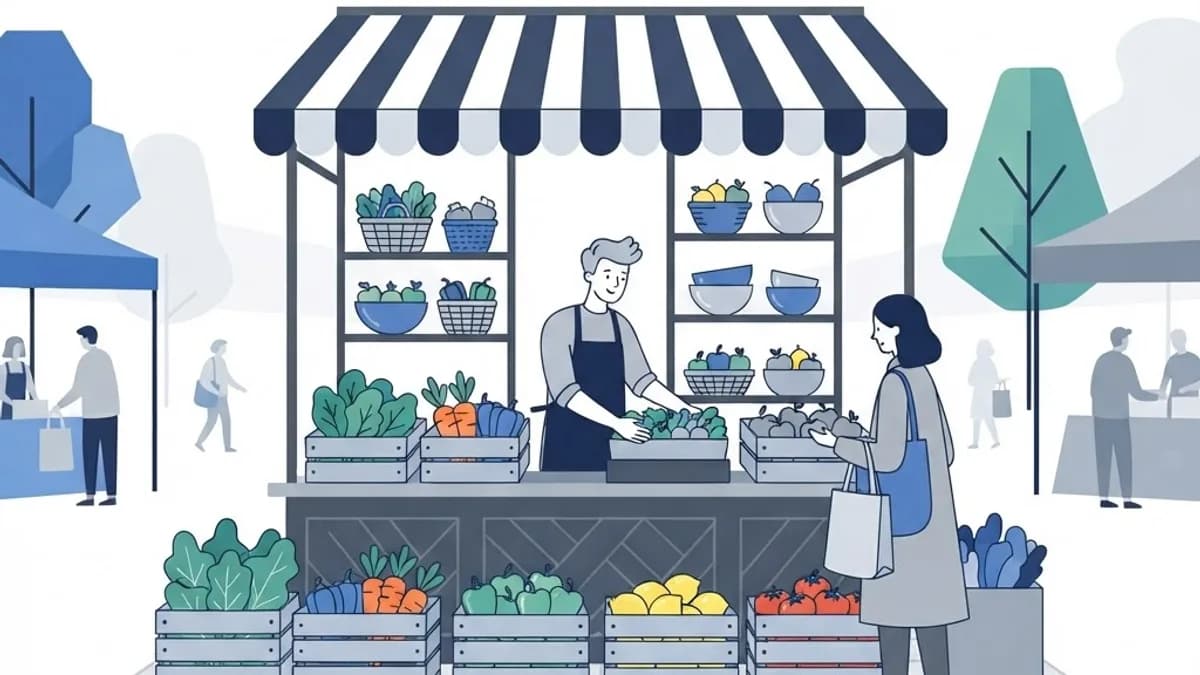
The Nampa Farmers Market is one of those community fixtures that does far more than sell vegetables. It functions as a small business incubator, a weekly social hub, and a direct link between Treasure Valley growers and the people eating their food.
For shoppers, it is a chance to buy produce harvested days rather than weeks earlier. For vendors, it is a low-barrier way to test products, meet customers face to face, and build a brand without renting retail space.
This guide walks through what to expect as a visitor, how the seasons shape what you will find, and what vendors can do to turn market-day traffic into a real, year-round business.
What Is the Nampa Farmers Market?
The Nampa Farmers Market is a seasonal, producer-focused market in Nampa, Idaho, where local farms, bakers, ranchers, and makers sell directly to the public during the growing season, typically spring through fall.
Unlike a general craft fair, producer-focused markets emphasize items grown, raised, or made by the seller. That direct-from-the-producer model is what makes the freshness and price advantages real, because there is no distributor markup between field and table.
Markets like this also tend to include prepared food, live music, and family activities, which turns a shopping errand into a weekend outing and keeps foot traffic strong through the season.
Who Should Visit or Sell Here?
The market serves several distinct groups, each with different reasons to show up.
- Home cooks looking for peak-season Idaho produce and better flavor.
- Small farms and market gardeners selling direct for higher margin than wholesale.
- Bakers and food artisans testing recipes and price points with immediate feedback.
- Local restaurants and cafes sourcing small volumes of specialty items.
- Families wanting a low-cost weekend activity with food and music.
What to Expect at the Market
Seasonal Produce Rotation
Early season brings greens, radishes, asparagus, and rhubarb. Midsummer shifts to berries, sweet corn, stone fruit, tomatoes, and peppers. Fall delivers squash, apples, onions, and root vegetables. Shopping the rotation rather than a fixed list produces the best results.
Ranch Meats, Eggs, and Dairy
Many Idaho markets include pasture-raised eggs, beef, pork, and sometimes local cheese. These vendors often sell out early, so arriving in the first hour matters if protein is on your list.
Baked Goods and Prepared Food
Bread, pastries, tamales, coffee, and other ready-to-eat items anchor the social side of the market and often generate the highest per-customer spend of any category.
Craft and Handmade Goods
Soap makers, woodworkers, jewelers, and other artisans round out the vendor mix. For many, market day is the primary sales channel until an online presence takes over.
How to Get the Most From Market Day
A short plan makes a noticeable difference for both shoppers and sellers.
- Arrive within the first hour for the widest selection, especially eggs, berries, and meat.
- Bring cash in small bills as backup, even though most vendors now accept cards.
- Walk the full market once before buying to compare quality and pricing.
- Bring a cooler bag if you plan to buy meat, dairy, or greens on a hot Idaho morning.
- Talk to growers about what is peaking that week; they will tell you honestly.
- Ask vendors where else you can buy from them, since many ship or offer CSA boxes.
Benefits of Shopping Local Markets
The advantages go well beyond flavor, though flavor alone is a strong argument.
- Produce harvested within a day or two, meaning better taste and longer fridge life.
- Money stays in the local economy rather than a national supply chain.
- Access to varieties grocery stores never carry because they ship poorly.
- Direct relationships with the people growing your food, which is real transparency.
- Discovery of small brands before they scale up. Many later grow through social media management and online ordering.
Potential Challenges
Markets have genuine limitations worth planning around.
- Limited hours, usually a single morning per week during the season.
- Weather dependence, with attendance and vendor turnout dropping in heat or rain.
- Popular items sell out early, so late arrivals get slim selection.
- Prices on some items exceed supermarket equivalents, particularly meat and eggs.
Best Practices and Tips
These habits help shoppers and give vendors a real edge.
- Shoppers should build flexible meal plans after the market, not before.
- Vendors should collect emails at the booth. It is the cheapest retention channel available, and consistent email marketing keeps customers buying in the off-season.
- Use clear, legible signage with prices. Confused customers walk past rather than ask.
- Vendors selling shelf-stable goods should set up a simple online store so market interest converts after the event.
Real-World Example
Imagine a small Nampa-area vendor selling jams and pickled vegetables. Market Saturdays produced steady sales, but revenue vanished between November and April, making the business impossible to sustain full time.
The owner started collecting emails at the booth with a simple clipboard and a small discount incentive, then launched a basic online shop with flat-rate regional shipping. Within two seasons, off-market sales covered winter expenses entirely. The market did not stop being important; it became the top of a funnel instead of the whole business.
Why It Matters
The Nampa Farmers Market matters because it keeps small-scale agriculture economically viable in a region where farmland faces constant development pressure. Direct sales let a grower earn retail rather than wholesale prices, which can be the difference between profit and quitting.
For the community, it preserves access to genuinely fresh food and creates the kind of weekly gathering place that is hard to replace once it is gone. Supporting it is a practical act, not just a sentimental one.
Frequently Asked Questions
When is the Nampa Farmers Market open?
Markets in this region typically run weekly during the growing season, generally spring through fall, on a weekend morning. Always check the market's current schedule before heading out, since dates and hours shift by year.
Do vendors accept credit cards?
Most do now, using mobile card readers. Bringing some cash is still wise for smaller vendors and for faster transactions during busy periods.
Is farmers market produce more expensive than the grocery store?
It varies by item. Peak-season vegetables are often competitive or cheaper, while eggs, meat, and artisan goods usually cost more because production scale is smaller.
How do I become a vendor at a local farmers market?
Apply through the market organizers, provide required licensing or cottage food documentation, and pay a stall fee. Producer-focused markets generally require that you grow or make what you sell.
Conclusion
Whether you are shopping for the week or launching a food business, the Nampa Farmers Market rewards showing up early, staying flexible, and talking to the people behind the tables. Fresh food and real relationships are the point.
If you are a market vendor ready to sell beyond Saturday mornings, look into ecommerce solutions.
Enjoyed this article? Share it with others!