Plastic surgery marketing is unlike almost any other kind of advertising. You are not selling a product someone can return. You are asking a person to trust a surgeon with their face, their body, and a significant amount of money, often for a decision they have thought about for years.
That reality changes everything about how a practice should market itself. Aggressive discount tactics that work for retail actively damage credibility in aesthetics, while patient education and genuine transparency convert remarkably well.
This guide covers what modern plastic surgery marketing looks like: the channels that produce qualified consultations, the compliance boundaries you cannot cross, and the practical steps to build a system rather than a scattering of ads.
What Is Plastic Surgery Marketing?
Plastic surgery marketing is the coordinated set of activities a practice uses to attract, educate, and convert prospective patients while remaining compliant with medical advertising regulations and patient privacy law.
It spans a wide surface: search visibility, a conversion-focused website, before-and-after galleries, reputation management, paid advertising, social content, email nurture, and the consultation experience itself.
The core objective is not volume of leads but quality of consultations — a practice that books ten well-informed, financially prepared patients will outperform one that books eighty tire-kickers, because surgeon time is the scarcest resource in the business.
Who Needs Plastic Surgery Marketing?
Marketing needs vary dramatically by practice stage and specialty mix. These are the groups that benefit most.
- New solo practices building a patient base from zero without an established referral network
- Established surgeons whose word-of-mouth pipeline has plateaued or aged
- Multi-provider groups that need to fill calendars for several injectors and surgeons
- Med spas and aesthetic clinics competing on a crowded local map
- Practices shifting specialty focus, such as moving from general work toward a signature procedure
Key Components of an Effective Strategy
A Conversion-Focused Website
Your website is the single highest-leverage asset in aesthetic marketing. Prospective patients research extensively before they ever call, and they judge surgical skill partly by digital polish. Fast load times, mobile-first layout, clear procedure pages, honest pricing ranges, and frictionless consultation booking matter more than visual flourish. Practices that invest in professional website design consistently see higher consultation conversion from the same traffic.
Local SEO and Google Business Profile
The majority of aesthetic searches carry local intent. Ranking in the map pack for procedure-plus-city queries often drives more booked consultations than any paid channel. This requires a complete Google Business Profile, consistent citations, procedure-specific location pages, and a steady flow of recent reviews.
Before-and-After Galleries and Visual Proof
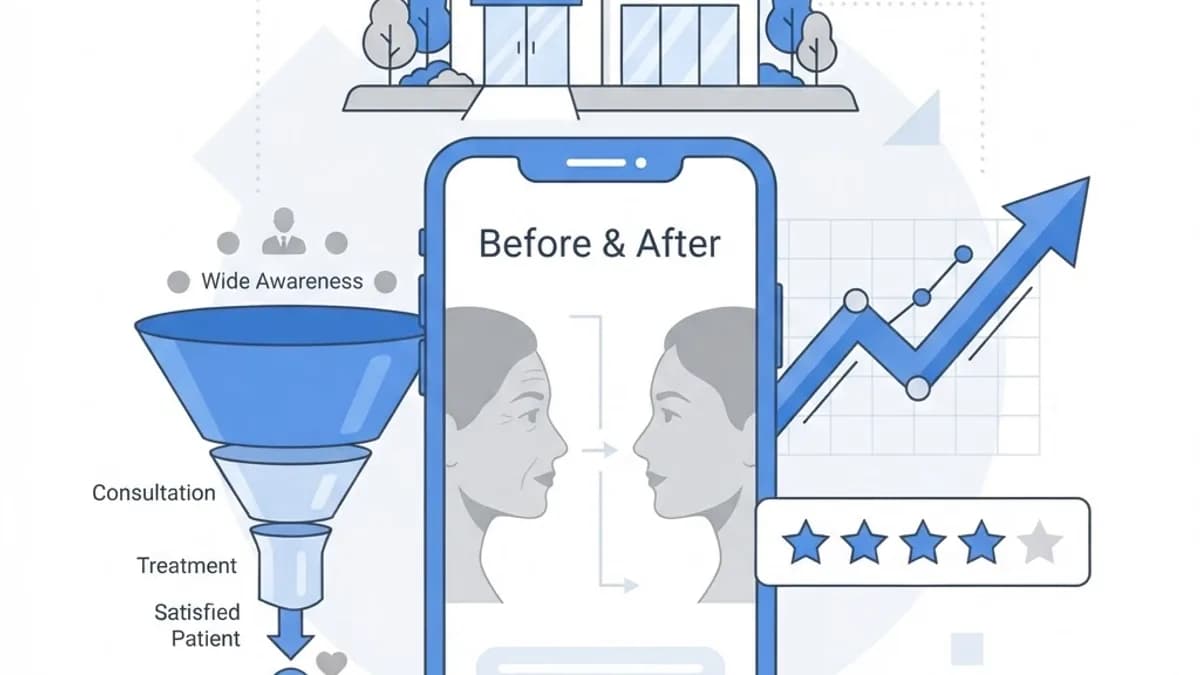
Nothing converts an aesthetic patient like credible photographic results. Galleries must use consistent lighting, angles, and timeframes, and every image requires documented patient consent. Standardized, well-organized visual assets, supported by strong infographic and visual design work for procedure explanations, make complex surgery understandable at a glance.
Reputation and Review Management
Review volume, recency, and response quality directly influence both rankings and trust. A practice with two hundred reviews averaging 4.8 stars will beat a practice with twelve reviews at a perfect 5.0. Build a systematic post-operative review request into your patient workflow rather than asking sporadically.
How to Get Started
Build in this order. Skipping foundational steps to jump straight to ads is the most common and most expensive mistake in this industry.
- Define your ideal patient and signature procedures rather than marketing everything equally.
- Audit your website for speed, mobile usability, procedure page depth, and booking friction.
- Fix tracking first — install proper call tracking, form attribution, and conversion events so you can measure anything.
- Claim and fully optimize your Google Business Profile with photos, services, and Q&A.
- Build out depth on your three to five highest-value procedure pages before creating new ones.
- Launch a systematic review generation process tied to post-op follow-up.
- Only then add paid search and paid social, starting with high-intent branded and procedure terms.
- Layer in email nurture for consultations that did not convert immediately, since aesthetic decisions often take months.
Benefits of a Structured Marketing System
Moving from ad-hoc promotion to a real system produces compounding returns.
- Higher-quality consultations, which means less unpaid surgeon time spent on unqualified prospects
- Lower cost per acquired patient as organic visibility reduces paid dependency
- Predictable pipeline that lets you staff and schedule with confidence
- Stronger positioning for your highest-margin signature procedures
- A durable brand asset that keeps producing after you pause spending
Potential Challenges
Aesthetic marketing carries real risks that generic advice tends to ignore.
- Regulatory and advertising restrictions from medical boards, the FTC, and platform policies on health and body-image content
- Patient privacy obligations that govern how you collect, store, and display any patient information or imagery
- Rising ad costs in competitive metro markets where cost per click can exceed thirty dollars
- Platform ad rejections for before-and-after imagery, which many social networks restrict outright
Best Practices and Compliance Tips
These practices protect the practice while improving results.
- Never guarantee outcomes or use language implying a specific result is assured
- Obtain and archive explicit written photo consent for every image, specifying exactly where it may appear
- Lead with education over discounts — procedure explainers, recovery timelines, and candidacy criteria attract serious patients
- Keep clinical claims reviewable and cite credentials, board certification, and case volume accurately
- Protect patient data with proper security practices, since aesthetic inquiries are sensitive by nature and warrant genuine cybersecurity protection
Real-World Example
A two-surgeon practice in a competitive Sun Belt metro was spending heavily on broad paid search and getting volume without revenue. Consultations were plentiful but the conversion rate to surgery sat near eight percent.
They paused most paid spend and rebuilt fundamentals. Each of their four core procedures got a genuinely deep page covering candidacy, technique, recovery week by week, realistic cost ranges, and thirty consented result photos. They added a pre-consultation questionnaire that qualified budget and timeline, and they started requesting reviews at the six-week post-op visit.
Within nine months organic traffic tripled, and because the questionnaire filtered casual inquiries, consultation-to-surgery conversion rose past twenty-five percent. Total consultations dropped, revenue rose substantially, and the surgeons got hours back each week.
Why It Matters
Plastic surgery marketing done well is genuinely good for patients. Detailed procedure education, honest recovery expectations, and transparent pricing help people make informed decisions and reduce regret. Done poorly, it pressures vulnerable people toward procedures with unrealistic expectations.
The practices that win long term are the ones whose marketing looks like the practice itself: careful, credentialed, honest, and focused on outcomes rather than volume.
Frequently Asked Questions
How much should a plastic surgery practice spend on marketing?
Established practices commonly invest between five and ten percent of revenue, while new practices building from zero often spend more in the first two years. Judge the number by cost per acquired surgical patient rather than by percentage alone.
Which channel produces the best return for aesthetic practices?
Local organic search and Google Business Profile visibility typically deliver the strongest long-term return because they capture patients already searching with intent. Paid search works well for immediate volume, and social content is best for building familiarity and trust over time.
Can I run before-and-after photos in paid social ads?
Most major platforms restrict or reject before-and-after imagery in health and beauty advertising. Use educational content, surgeon introductions, and procedure explainers in ads, and reserve full galleries for your own website where you control the presentation.
How long before plastic surgery marketing shows results?
Paid channels can generate consultations within days. Organic search and reputation building typically take four to eight months to produce meaningful momentum, then continue compounding. Plan for both timelines simultaneously.
Conclusion
Successful plastic surgery marketing is a trust-building system, not a lead-generation gimmick. Get the website, tracking, local search, visual proof, and review engine right, then scale with paid channels once the foundation converts.
If you are ready to build that foundation properly, start with a digital marketing strategy designed for medical and aesthetic practices and measure everything against booked surgeries, not clicks.
Enjoyed this article? Share it with others!