
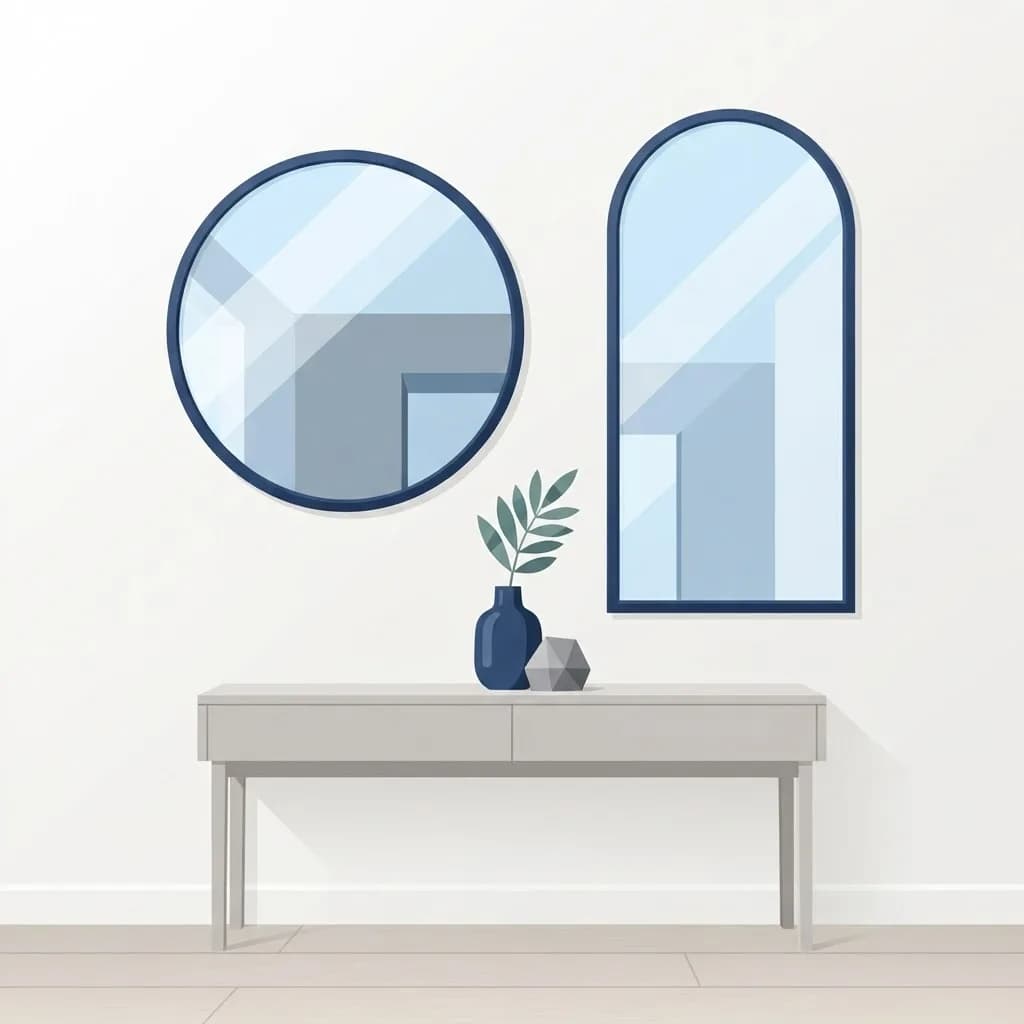
HomeSense mirrors have a cult following for one simple reason: they deliver designer looks at off-price value. A large arched mirror that would cost several hundred pounds or dollars at a boutique often turns up for a fraction of that — but only if you know how to shop the format.
Mirrors are the highest-leverage décor item in any room. They add perceived square footage, bounce daylight into dark corners, and finish a wall the way art rarely can on its own. Getting the size and placement right matters more than the price you paid.
This guide covers what makes HomeSense mirrors different, how to choose shape and scale, where to hang them, how to install them safely, and the timing tricks regular shoppers use.
What Are HomeSense Mirrors?
HomeSense is an off-price home furnishings retailer, sister brand to TJ Maxx and TK Maxx. Its mirror assortment is not a fixed catalogue — it is an ever-changing mix of overstock, end-of-line, and opportunistic buys from suppliers who also sell to full-price retailers.
That means inventory is genuinely one-off and location-specific. The gold arched mirror in one store may never appear in another. There is no reorder, no restock, and no guarantee.
The range typically spans full-length leaners, round and arched wall mirrors, ornate baroque frames, slim industrial metal designs, sunburst pieces, and small vanity mirrors — usually priced well below comparable specialist retailers.
Who Buys Mirrors Like These?
Off-price mirrors suit anyone who wants impact without a designer budget, and they reward flexible shoppers over rigid ones.
- Renters who want a big visual change without altering walls permanently.
- Budget-conscious decorators chasing a high-end look at accessible prices.
- Small-space dwellers using reflection to make studios and hallways feel larger.
- Home stagers and short-let hosts who need photogenic pieces quickly and cheaply.
- Small salons, boutiques, and studios fitting out customer-facing space affordably.
Key Features to Evaluate
Shape and Silhouette
Round and arched mirrors soften rooms full of straight lines and work beautifully above consoles and sideboards. Rectangular leaners suit bedrooms and dressing areas. Ornate and sunburst frames act as sculpture and demand a quiet wall around them.
Frame Material and Real Weight
Frames range from solid metal and timber to resin and MDF with a metallic finish. Lift the mirror before buying: weight determines the fixings you need and whether the piece feels substantial or hollow. Resin frames chip at corners, so inspect edges carefully.
Glass Quality and Bevelling
Check the reflection from an angle for waviness or a green cast, both signs of thinner glass. Bevelled edges add a noticeably more expensive look. Antiqued or smoked glass is decorative rather than functional — lovely on a feature wall, frustrating for applying makeup.
Hanging Hardware Included
Off-price stock sometimes arrives with minimal fittings. Look for D-rings, a French cleat, or a solid wire, and assume you will supply your own wall anchors. For anything over about ten kilograms, a cleat fixed into studs is the only sensible approach.
How to Shop for HomeSense Mirrors Successfully
Because stock is unpredictable, process beats browsing. These steps consistently produce better outcomes.
- Measure your wall first. Note width, height, and the width of any furniture the mirror will sit above.
- Set a target size range. A mirror over a console should be roughly two-thirds to three-quarters of the furniture's width.
- Decide your finish family. Warm brass, matte black, natural wood, or antique silver — pick one to match existing metals in the room.
- Visit mid-week and check the back wall. New freight is typically worked early in the week and clearance sits at the rear.
- Inspect thoroughly in store. Corners, glass edges, backing board, and hanging points.
- Buy immediately if it fits. There is no restock. Hesitation is how people lose the piece.
- Transport upright. Never lay a mirror flat in a car boot; padded and vertical is the rule.
Benefits of Decorating With Mirrors
Few purchases change a room this much for this little money.
- Instant perceived space. A well-placed mirror can make a narrow hallway feel twice as wide.
- Better natural light. Positioned opposite a window, it redistributes daylight deep into the room.
- Strong focal point. One large mirror finishes a wall faster and cheaper than a gallery arrangement.
- Highly photogenic. Valuable for hosts, stagers, and anyone marketing a space visually.
- Style-flexible. Mirrors move house and adapt to new schemes far more easily than patterned furniture.
Potential Challenges
The off-price model creates specific frustrations you should expect.
- No reordering. If you want a matching pair, you must find both on the same visit.
- Variable quality control. Some pieces have minor finish flaws; always inspect rather than assume.
- Heavy and fragile transport. Large mirrors need a suitable vehicle and two people.
- Installation risk. A poorly anchored heavy mirror is a genuine safety hazard, especially around children.
Best Practices and Placement Tips
These rules come straight from interior practice and prevent the most common mistakes.
- Centre at eye level. Aim for the mirror's midpoint around 145 to 155 cm from the floor in living areas.
- Leave breathing room. Around 15 to 20 cm between the top of a console and the bottom of the mirror.
- Reflect something worth seeing. A window, greenery, or open space — never a cluttered corner or a bathroom door.
- Anchor leaners properly. Strap tall floor mirrors to the wall; they tip more easily than people expect.
Real-World Example
A homeowner with a dim north-facing dining room wanted more light without building work. Rather than buying the first mirror she liked, she measured the sideboard at 120 cm, set a target mirror width of 80 to 90 cm, and chose warm brass to match her existing pendant light.
Two visits later she found an 85 cm arched brass mirror in a clearance aisle for well under a third of a specialist retailer's price. Hung opposite the window on a French cleat screwed into studs, it visibly brightened the room and became the piece guests comment on. The win came from having a specification before shopping, not from luck.
Why Mirror Selection Matters
Mirrors are one of the few décor items that change how a room functions rather than just how it looks. Scale errors are also the most visible mistake in home styling — an undersized mirror on a large wall reads as unfinished no matter how attractive the frame.
This is equally true commercially. Retailers and interior brands live or die on how well products are presented, which is why strong photography, clear dimensions, and clear visual sizing guides and infographics reduce returns and build buyer confidence dramatically.
Frequently Asked Questions
Are HomeSense mirrors good quality?
Quality varies because stock is sourced opportunistically rather than made to a single standard. Many pieces are genuinely well made, so inspect the frame corners, glass clarity, and backing before buying and judge each mirror individually.
Can I order HomeSense mirrors online?
Availability is heavily store-based and inventory differs between locations, so the reliable approach is visiting in person. Check the retailer's current online offering, but do not expect a specific in-store piece to be listed.
What size mirror should I hang above a console table?
Choose a mirror roughly two-thirds to three-quarters of the table's width, and leave 15 to 20 cm of wall between the tabletop and the frame. This proportion looks balanced in almost every room.
How do I hang a heavy mirror safely?
Weigh it, locate the studs, and use a French cleat or heavy-duty anchors rated well above the actual weight. For anything above roughly fifteen kilograms, fixing into structural studs rather than plasterboard alone is essential.
Conclusion
HomeSense mirrors reward prepared shoppers. Measure your wall, decide on shape and finish before you go, inspect carefully, and buy on the spot when you find the right piece — because it will not be there next week.
Selling home décor yourself? Presentation determines conversion far more than price. A specialist team can create product visuals and design assets that sell and make every piece look worth its price.
Enjoyed this article? Share it with others!