
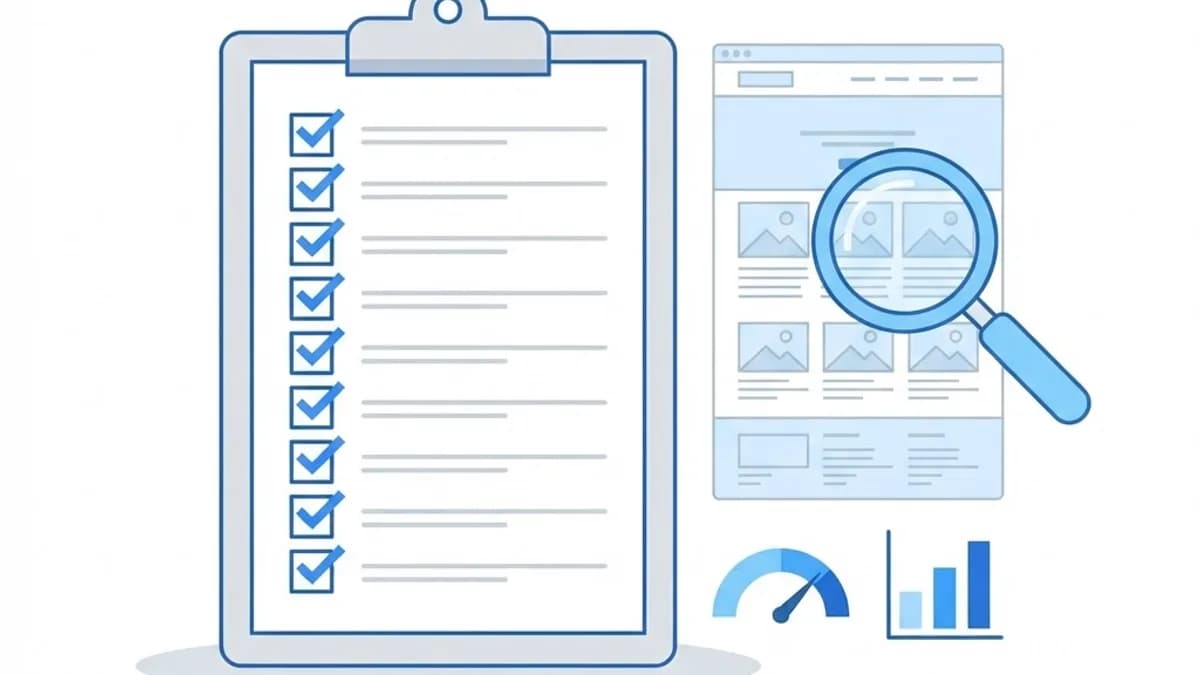
Most marketing problems are diagnosed too late. Budget gets spent, dashboards look busy, and revenue stubbornly refuses to move. That is precisely the gap digital marketing audit services exist to close — a structured review that identifies what is broken, what is wasteful and what is working better than anyone realised.
An audit is not a sales document dressed up as analysis. Done properly it is a diagnostic exercise producing a prioritised list of actions with expected impact, effort and owner.
This guide covers what a genuine audit examines, who needs one, what deliverables to expect, realistic pricing, and how to make sure the findings get implemented rather than filed.
What Are Digital Marketing Audit Services?
A digital marketing audit is a systematic assessment of every channel, asset and measurement system involved in acquiring and retaining customers online. It typically covers your website, search visibility, paid media accounts, content, email, social presence, analytics setup and competitive position.
The output should be more than observations. A strong audit delivers a ranked action plan connecting each finding to a business consequence and an estimated size of opportunity. "Your page speed is poor" is a note; "your mobile product pages load in 6.2 seconds and mobile conversion is 58 percent below desktop, representing roughly $18,000 in monthly lost revenue" is a finding.
Audits vary in scope. A focused audit might examine only paid search efficiency, while a full-funnel audit reviews everything from first impression to repeat purchase.
Who Needs a Marketing Audit?
Audits are most valuable at inflection points, when assumptions have quietly gone stale.
- Businesses with flat or declining results despite steady or increasing spend.
- Companies changing agencies, who need an independent baseline before handover.
- New marketing leaders inheriting accounts and needing an honest picture fast.
- Organisations planning to scale spend, where existing leaks would simply be amplified.
- Investors and acquirers conducting due diligence on a company's customer acquisition engine.
- Businesses after a website migration, where traffic loss is common and often fixable.
What a Thorough Audit Examines
Technical and Website Health
Crawlability, indexation, site speed, Core Web Vitals, mobile usability, broken links, redirect chains and structured data. Technical debt here quietly caps the performance of every other channel, and remediation often requires proper engineering support such as ongoing maintenance and technical support.
Search Visibility and Content
Keyword coverage against commercial intent, page-to-keyword mapping, cannibalisation, content quality and depth, internal linking, and backlink profile health. Auditors also assess whether content demonstrates genuine experience or reads as generic filler that recent search updates penalise.
Paid Media Efficiency
Account structure, wasted spend on irrelevant queries, negative keyword coverage, bid strategy fit, landing page alignment and true cost per acquisition against margin. This section frequently finds the fastest savings in the entire audit.
Measurement and Data Integrity
Analytics configuration, conversion tracking accuracy, duplicate or missing events, consent handling and CRM integration. If measurement is wrong, every decision downstream is guesswork — and this is the single most common serious problem auditors uncover.
How the Audit Process Works
A professional audit follows a repeatable sequence, usually over two to four weeks.
- Scoping and objectives. Agreeing which channels are in scope and which business metric matters most.
- Access and data collection. Read-only access to analytics, ad accounts, search console, CMS and CRM.
- Baseline documentation. Recording current traffic, conversion rates, cost per acquisition and revenue.
- Channel-by-channel analysis against defined checklists and benchmarks.
- Competitive comparison to establish whether performance is genuinely weak or category-normal.
- Prioritisation. Ranking findings by expected impact versus effort required.
- Presentation and roadmap. A working session covering findings, quick wins and a 90-day plan.
Benefits of Commissioning an Audit
The return usually comes from stopping waste rather than discovering something new.
- Immediate cost savings from eliminating unprofitable spend and duplicated tooling.
- Reliable measurement, so future decisions rest on accurate data.
- Clear priorities instead of a scattered list of competing marketing opinions.
- Independent perspective free from the incentive to defend past decisions.
- Internal alignment, since a documented plan resolves arguments faster than debate.
Potential Challenges
Audits fail for organisational reasons far more often than analytical ones.
- Findings without implementation — the most common and most expensive failure.
- Conflicts of interest when the auditor is also pitching to fix everything they find.
- Access delays that stall the process for weeks.
- Overwhelming scope, where a 90-page report buries the five things that matter.
Best Practices and Tips
How you commission the audit largely determines whether it produces value.
- Ask for a prioritised summary of no more than ten actions alongside the detailed report.
- Require estimated impact and effort for each recommendation, not just a description.
- Arrange all account access before the engagement starts to avoid dead time.
- Assign an internal owner and a 90-day implementation window before the report arrives.
Real-World Example
A B2B software company was spending around $40,000 monthly on paid search with reported cost per lead that leadership considered acceptable. Growth had nevertheless stalled for three quarters.
The audit found three compounding issues. Conversion tracking counted newsletter signups and demo requests identically, inflating apparent performance. Roughly 22 percent of spend went to broad-match queries with no commercial intent. And the primary landing page took over five seconds to load on mobile, where nearly half of clicks arrived. Fixing tracking made results look temporarily worse, which is normal, but it revealed which campaigns produced actual pipeline. Cutting wasted queries and rebuilding the landing page on a modern stack reduced cost per qualified demo by nearly 40 percent within two months, with support from a specialist digital marketing team handling implementation.
Why It Matters
Marketing budgets are scrutinised harder than ever, and the ability to show where money goes and what it returns is now a basic expectation. An audit converts vague confidence into evidence.
It also protects you from scaling problems. Doubling spend on a funnel with broken tracking and a slow checkout does not double revenue; it doubles the cost of an existing flaw. Diagnosing first is simply cheaper.
Frequently Asked Questions
How much do digital marketing audit services cost?
Focused single-channel audits often range from $1,000 to $3,000. Comprehensive full-funnel audits for mid-sized businesses typically fall between $5,000 and $15,000, depending on account complexity and channel count.
How long does an audit take?
Most take two to four weeks from access being granted to the findings presentation. Rushed one-week audits usually rely on automated tool output rather than genuine analysis.
How often should we audit our marketing?
A full audit every 12 to 18 months works for most organisations, with lighter quarterly reviews of measurement accuracy and paid media efficiency in between.
Should the agency that runs my campaigns do the audit?
An independent auditor gives a more candid assessment, because they have no past decisions to defend. Your existing agency can then implement the recommendations.
Conclusion
Good digital marketing audit services do three things: verify that your measurement is trustworthy, identify where money is leaking, and rank what to fix first. Everything else in the report is supporting detail.
If you suspect your site or tracking is the underlying constraint, start there rather than with campaigns — and if the technical fixes look substantial, professional back-end development support will get the recommendations shipped instead of shelved.
Enjoyed this article? Share it with others!