
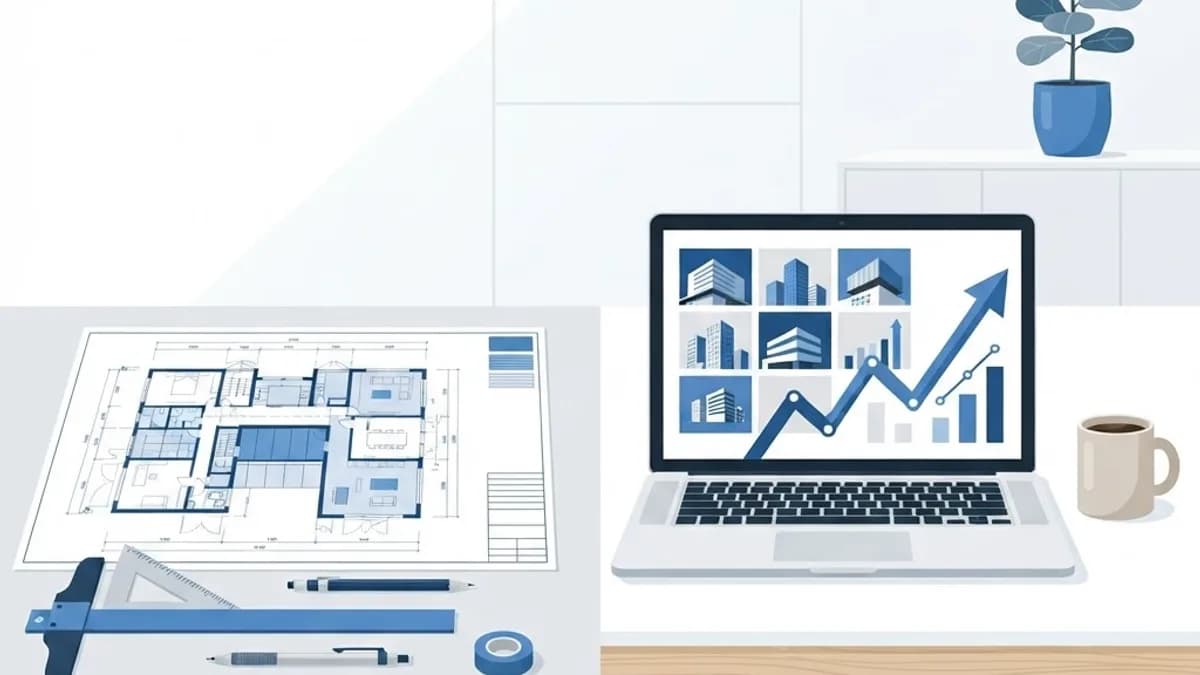
Most architecture practices grow through referrals and reputation. That works beautifully until the pipeline thins, a key client moves on, or you want to break into a new sector. At that point architecture digital marketing stops being optional and becomes the difference between choosing your projects and accepting whatever arrives.
The good news is that architects start with an unfair advantage: extraordinary visual material and genuine expertise. The bad news is that most practice websites bury both behind slow galleries, vague service descriptions and no clear next step.
This guide covers how design firms attract the right clients online, which channels actually produce commissions, and how to market a considered, high-value service without sounding like a sales pitch.
What Is Architecture Digital Marketing?
Architecture digital marketing is the coordinated use of your website, search visibility, content and social presence to attract clients who need design services and can afford them. It is not advertising in the volume sense. It is positioning and proof, delivered where prospective clients research.
The buying journey for architectural services is long and considered. A homeowner planning an extension or a developer selecting a practice for a mixed-use scheme will spend weeks comparing portfolios, reading about process and assessing whether a firm has handled similar constraints. Marketing's job is to make that evaluation easy and to make your relevant experience unmistakable.
That is why case studies, planning-process explainers and clear sector specialisation outperform generic brand messaging in this field.
Who Needs It?
Any practice that wants control over the type and quality of work it takes on benefits from a deliberate digital presence.
- Residential architects competing for extensions, renovations and new-build homes, where homeowners search extensively before enquiring.
- Commercial and mixed-use practices pursuing developer and institutional clients who research shortlists online.
- Specialist firms in conservation, sustainability or passive house design, where niche expertise is a strong search advantage.
- New and growing studios without decades of referral networks to lean on.
- Interior architects and design-build firms whose work is highly visual and shares well socially.
Key Features of an Effective Programme
A Portfolio Site That Loads Fast
Architecture sites are image-heavy by nature, and that is where most fail. Uncompressed hero images and heavy sliders create load times that lose visitors before the first render. Modern formats, lazy loading and a properly built front end solve it — which is why practices often invest in expert front-end web development rather than another off-the-shelf theme.
Project Case Studies, Not Just Galleries
Beautiful photography shows what you made. A case study shows how you think. Include the brief, the site constraints, the planning challenges, the design response and the outcome. Clients hire for judgement, and case studies are how you demonstrate it.
Search Visibility for Service and Sector Terms
Terms like "conservation architect" plus a location, or "passive house architect", carry high intent and moderate competition. Dedicated pages for each service and sector, supported by relevant content, capture searches that generic homepage copy never will.
Visual Social Presence
Instagram, Pinterest and LinkedIn all work for architecture, though for different audiences. Process shots, sketches and site progress build engagement far better than finished-render-only feeds. Consistent posting is the hard part, which is where structured social media management keeps momentum without consuming design time.
How to Get Started
You do not need a full rebrand to make progress. Work in the order that produces enquiries soonest.
- Define your ideal commission. Sector, budget range, geography and project type. Marketing without this becomes noise.
- Audit your current website. Check load speed, mobile experience, whether services are clearly listed and whether contact is obvious.
- Rebuild three flagship case studies with full narrative, drawings, photography and results.
- Create dedicated service and sector pages optimised for the terms your ideal clients actually search.
- Set up local search essentials including a complete Google Business Profile with project photography.
- Publish helpful guidance monthly — planning permission, budgeting, timelines, material choices.
- Track enquiries by source so you know which pages and channels produce real commissions.
Benefits for a Design Practice
Done properly, digital marketing changes the character of your pipeline, not just its size.
- Better-qualified enquiries because your positioning filters out mismatched budgets and project types.
- Less referral dependence, which reduces risk when a key relationship ends.
- Stronger negotiating position when clients arrive already convinced by your work.
- Talent attraction — good architects research practices online before applying.
- Compounding visibility as case studies and guides accumulate search authority.
Potential Challenges
Architecture marketing has specific friction that generic advice ignores.
- Photography cost and timing — projects finish years after design, and unphotographed work cannot sell.
- Client confidentiality restricting what you can publish, particularly on commercial schemes.
- Long sales cycles that make attribution difficult and patience essential.
- Internal time pressure, since the people best placed to write content are the ones billing hours.
Best Practices and Tips
Small, consistent choices matter more than a single dramatic relaunch.
- Budget professional photography into every project from the outset, and negotiate publication rights early.
- Write plainly. Clients rarely share the architectural vocabulary you use internally.
- Show process work — sketches, models, iterations. It differentiates far more than another polished render.
- Make enquiry easy: a short form, a phone number and a clear statement of what happens next.
Real-World Example
A six-person practice specialising in period property extensions relied entirely on word of mouth. Its website had a single gallery page, no service descriptions and a nine-second load time on mobile.
The changes were focused rather than sweeping. The team built three detailed case studies covering listed-building consent, published four practical guides on planning and budgeting for period renovations, created two service pages targeting conservation and extension searches, and rebuilt the site with compressed responsive imagery. Load time dropped below two seconds. Within seven months, organic enquiries went from roughly one a month to eight or nine, and crucially the average project budget rose because the content attracted clients who already understood the value of specialist consent experience.
Why It Matters
Clients no longer wait for a recommendation before forming a shortlist. They search, they compare, and they judge a practice's competence partly by how it presents itself online. A slow, vague website suggests a slow, vague process, however unfair that inference may be.
Architecture digital marketing simply lets your actual expertise reach the people looking for it. In a profession where reputation is everything, being discoverable is now part of reputation.
Frequently Asked Questions
How much should an architecture practice spend on marketing?
Many small and mid-sized practices allocate between two and five percent of revenue, weighted toward website quality, photography and content in the first year rather than ongoing ad spend.
Does paid advertising work for architects?
It can for residential work with clear local intent, such as extensions or loft conversions. For commercial and institutional commissions, content, search visibility and relationships almost always outperform paid clicks.
How many case studies do I need?
Three genuinely detailed case studies beat twenty thin ones. Aim for coverage of each sector you want to win work in, then add depth over time.
Should I hire an agency or handle it internally?
A hybrid model usually works best: keep design narrative and project selection in-house, and outsource website build, SEO and consistent publishing to specialists.
Conclusion
Effective architecture digital marketing is mostly about removing friction. Make the site fast, make the expertise legible, explain the process honestly, and publish the guidance your clients are already searching for.
If your current portfolio site is holding the practice back, the fastest improvement is usually technical — consider a portfolio-focused website design rebuild that does justice to the work you are already producing.
Enjoyed this article? Share it with others!