Most agencies give audits away and wonder why prospects do not value them. A better model exists, and it starts earlier in the funnel. This case study examines how a digital marketing agency webinar to sell audit engagements turned a free-consultation habit into a paid, high-conversion front-end offer.
The premise is simple. A webinar demonstrates expertise to many prospects at once, and a paid audit converts that demonstrated expertise into a small commitment that qualifies buyers far better than a free call ever could.
What follows is the structure that worked, the numbers behind it, the mistakes made along the way, and how to adapt the approach to your own agency without copying it blindly.
What Is a Webinar-to-Audit Funnel?
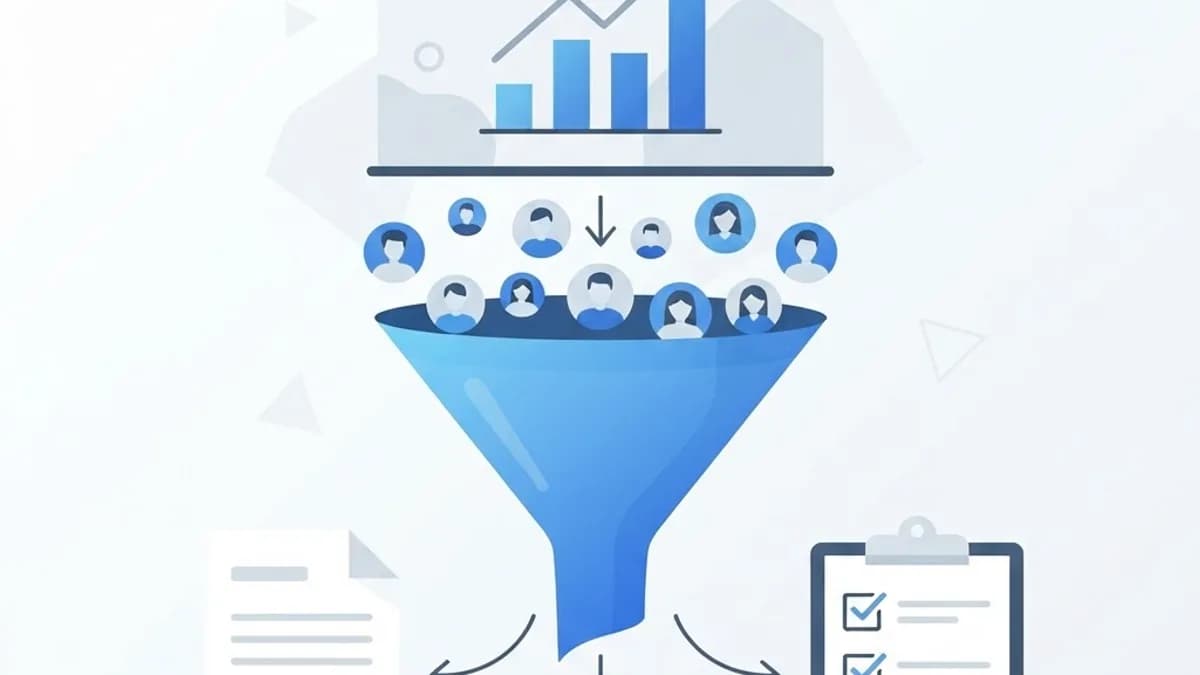
A webinar-to-audit funnel is a sales system where an agency runs an educational online session for a defined audience, then offers a paid diagnostic audit as the immediate next step. Instead of pitching a retainer to a cold prospect, the agency sells a small, concrete deliverable.
The mechanism works because it reverses the usual dynamic. Rather than the agency proving its worth in a free call while the prospect stays passive, the webinar establishes credibility first and the paid audit filters for prospects with genuine budget and intent.
The audit itself then becomes the sales conversation. By the time findings are presented, the agency has already worked inside the prospect's accounts, understands their problems in detail, and can scope a retainer with evidence rather than assumptions.
Who Should Use This Model?
The funnel suits service businesses selling considered, expertise-led work, but it is not universal.
- Digital marketing and SEO agencies whose diagnostic work naturally reveals scope for ongoing engagement.
- Web development studios selling performance or accessibility reviews before larger builds.
- Consultancies in finance, operations or HR where an assessment precedes implementation.
- Specialist agencies with a defined niche, since webinars convert best with narrow, well-matched audiences.
- Agencies with existing email lists or communities, which dramatically reduces acquisition cost.
Key Components of the Funnel
A Narrow, Specific Webinar Topic
The winning session in this case study was not "Digital Marketing in 2026". It was a focused teardown of why ecommerce brands lose revenue at checkout, aimed squarely at store owners doing between one and ten million in annual sales. Specificity drove both registration rate and audit conversion.
Live Teardowns Instead of Slides
Rather than theory, the presenter analysed three real (anonymised) stores live, showing exactly how issues were found. This built credibility no testimonial could match and made the paid audit an obvious continuation rather than a pitch.
A Priced, Scoped Audit Offer
The audit was fixed-price, clearly scoped, delivered within ten business days, and included a presentation call. Ambiguity kills conversion, so the deliverables were listed explicitly on a dedicated landing page built with fast React-based development to keep load times low for paid traffic.
Structured Follow-Up
Only a portion of attendees bought on the day. A five-email sequence over ten days, plus a replay for no-shows, roughly doubled total conversions. Automated, well-written follow-up did more heavy lifting than the live pitch itself.
How the Funnel Was Built
The agency ran the whole system in seven stages, and the order mattered.
- Chose one audience segment — mid-market ecommerce — and refused to broaden it.
- Interviewed eight past clients to identify the problem they would have paid to solve sooner.
- Built the webinar around that problem, with 40 minutes of teaching and 15 minutes of Q&A.
- Created a registration page and audit landing page, both mobile-first and fast.
- Drove registrations through their own email list, LinkedIn, partner newsletters and modest paid social spend.
- Ran the session live monthly, refining based on which questions repeated.
- Measured and iterated on registration rate, attendance rate, audit conversion and audit-to-retainer rate.
Results and Benefits
Across six monthly sessions the pattern stabilised, and the benefits went beyond immediate revenue.
- Roughly 38 percent attendance from registrations, well above the agency's previous webinar performance.
- Around 11 percent of attendees purchased the paid audit within the follow-up window.
- Over half of audit clients converted to a retainer, compared with under a fifth from free consultations.
- Sales cycle shortened noticeably, because the audit replaced weeks of proposal back-and-forth.
- Front-end profitability — audit revenue covered acquisition costs, making the funnel self-funding.
Potential Challenges
The model is effective but demanding, and the first two attempts underperformed badly.
- Presentation skill dependency — a weak presenter destroys conversion regardless of funnel quality.
- Delivery capacity, since paid audits must be genuinely thorough or reputation suffers.
- Registration cost if you lack an existing list and must buy every attendee.
- Topic drift — broadening the subject to increase registrations reliably reduced audit sales.
Best Practices and Tips
These adjustments produced the largest gains between the first and sixth session.
- Narrow the audience until it feels uncomfortably specific, then narrow once more.
- Teach genuinely useful material; withholding the good parts visibly reduces trust and sales.
- Make the audit offer once, clearly, in the final ten minutes rather than repeatedly throughout.
- Send the replay within two hours and keep the follow-up sequence running for at least ten days.
Real-World Example in Detail
Session four illustrates the model at its best. The agency drove 412 registrations through partner newsletters and a small paid social budget. Around 160 people attended live, and 18 purchased the audit at $1,450 within the following ten days.
That produced just over $26,000 in front-end revenue against roughly $3,800 in promotion and production costs. More importantly, ten of those 18 audit clients signed retainers averaging $6,500 monthly. The webinar was not the profit centre; it was the qualification mechanism. Sustaining that output required consistent promotional assets, which the team supported with regular email marketing campaigns and repurposed clips distributed across social channels.
Why It Matters
Agencies competing on free consultations are competing on availability, and that attracts price shoppers. Charging for diagnostic work changes who shows up. Prospects who pay for an audit have budget, authority and a real problem.
The webinar makes that possible at scale. It replaces one-to-one persuasion with one-to-many demonstration, and it lets you filter hundreds of prospects with a single hour of delivery time.
Frequently Asked Questions
How much should I charge for an audit?
Enough to signal seriousness and cover real delivery time — commonly between $750 and $3,000 depending on scope and client size. Pricing too low undermines the qualifying effect entirely.
How many registrations do I need for this to work?
With roughly 35 percent attendance and 10 percent audit conversion, about 300 registrations yields a handful of audit sales. Smaller lists still work if the audience match is exceptionally tight.
Should the webinar be live or automated?
Run it live for at least four or five cycles to learn what resonates. Once conversion is stable, an evergreen automated version can supplement live sessions.
What if attendees expect the audit to be free?
Frame it explicitly during the session: the webinar is the free education, the audit is the paid diagnostic work. Clear framing prevents the expectation from forming.
Conclusion
A digital marketing agency webinar to sell audit engagements works because it sequences trust correctly: teach first, charge for diagnosis, then scope the retainer from evidence. Narrow the audience, deliver real value live, and follow up relentlessly.
If you are building this funnel, the landing pages and registration flow deserve as much attention as the presentation — consider conversion-focused front-end development so your paid traffic is not lost to a slow page.
Enjoyed this article? Share it with others!