
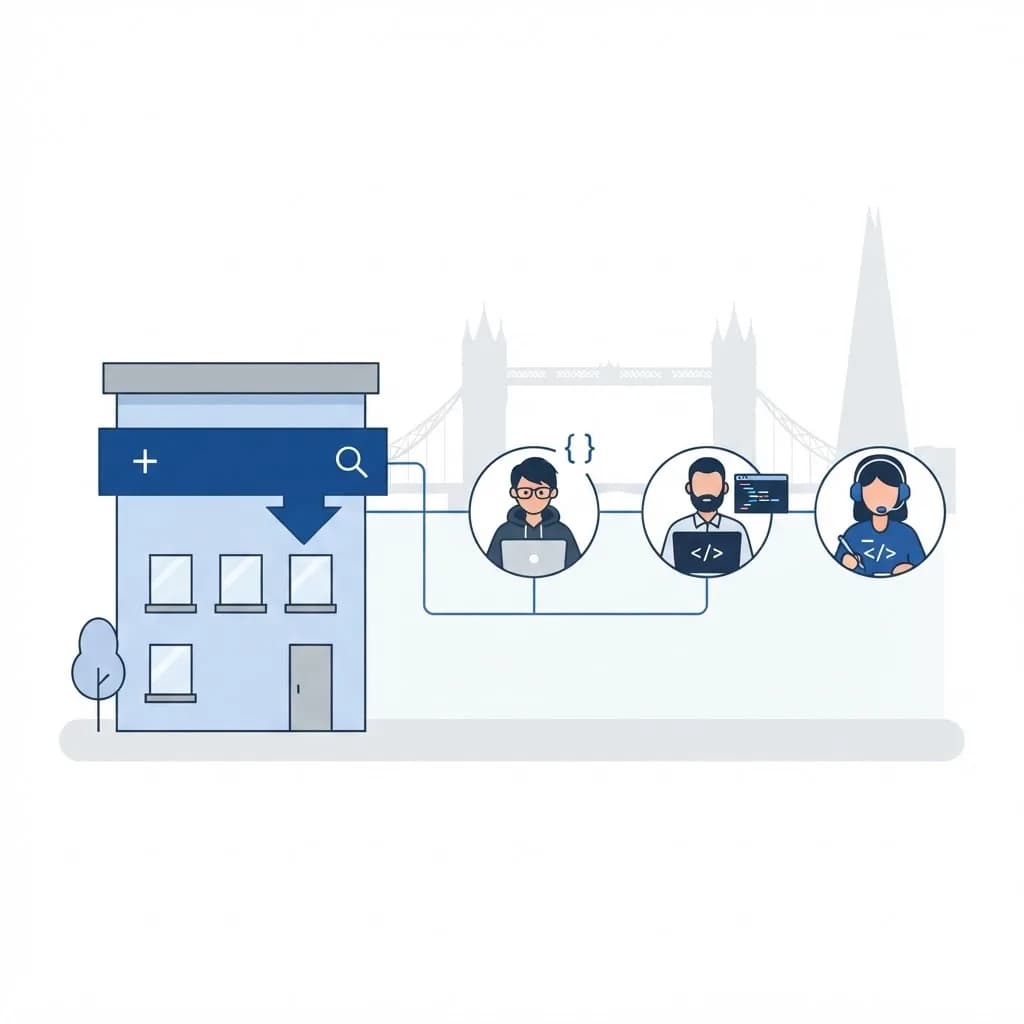
There is a hidden job market in the capital. Small London companies recruiting software engineers rarely run large advertising campaigns, so their openings circulate through founder networks, niche boards, and direct outreach instead.
For engineers, this is good news. Fewer applicants see the role, decisions happen quickly, and the person reading your application is often the person you would work with directly.
This guide explains how these companies hire, what they value, how to reach them before the role is filled, and how to judge whether an early-stage offer is actually worth taking.
What Counts as a Small London Company?
Generally, any London-based business with fewer than around fifty staff and a single engineering function. That includes pre-seed startups, seed-stage products, small agencies, and profitable independent software businesses that never raised capital.
The key characteristic is that hiring is a founder-level decision rather than a process owned by a recruitment department. There is no applicant tracking bureaucracy between you and the decision-maker.
These businesses span every sector, from proptech in Canary Wharf to sustainability reporting in Bermondsey. Many run lean product teams supported externally for design or specialist work.
Who Thrives in These Companies?
Small-company engineering suits particular temperaments. Being clear about this before applying prevents a mismatched hire on both sides.
- Self-directed engineers comfortable working without detailed specifications.
- Full-stack developers who enjoy variety over deep specialisation.
- Bootcamp graduates with strong portfolios seeking a first real production role.
- Contractors testing whether a permanent early-stage role suits them.
- Engineers motivated by product outcomes rather than internal promotion ladders.
Key Features of Their Recruitment Process
Direct Founder Involvement
Your first conversation is often with a technical co-founder. They are assessing whether you can operate independently and whether they would enjoy working beside you for two years.
Work Samples Over Whiteboards
Small firms prefer to see you build. Paid trial tasks, short take-home exercises, and pairing on their actual repository are standard because they predict performance better than puzzles.
Multi-Disciplinary Expectations
You may be asked about deployment, basic UI polish, and even how a landing page converts. Teams that lean on partners for professional website design still expect engineers to have taste and judgment about the interface.
Fast, Informal Decisions
A well-run small company can move from first contact to signed offer in under two weeks. The trade-off is less structure around levelling and compensation bands.
How to Get Started
Finding these roles requires an active approach rather than waiting for listings to appear in your feed.
- Build a target list of thirty London companies in sectors you find interesting.
- Check each careers page directly; many roles never leave the company website.
- Monitor niche boards and startup-focused platforms with company size filters.
- Follow London angel investors and accelerators who announce portfolio hiring.
- Send a concise, specific email to the technical founder referencing their product.
- Attach or link one relevant piece of work rather than describing your skills abstractly.
- Follow up once, politely, after a week, then move on.
Benefits of Working at a Small London Firm
The advantages are concentrated in autonomy, learning speed, and proximity to real business outcomes.
- Ownership of entire features and services from day one.
- Rapid exposure to product strategy and customer conversations.
- Freedom to choose tools and shape engineering practice.
- Equity participation with genuine upside if the company succeeds.
- Flexible working arrangements negotiated case by case.
Potential Challenges
Early-stage employment carries real risk that deserves honest assessment before you sign.
- Funding uncertainty and the possibility of sudden restructuring.
- Little formal onboarding, training budget, or career framework.
- Broad workload that can spill into support and operations tasks.
- Fewer senior engineers to learn from directly.
Best Practices and Tips
These steps consistently improve outcomes when applying to lean teams.
- Show product thinking in your application, not just technical competence.
- Ask about revenue, runway, and customer numbers during interviews.
- Get compensation, equity terms, and vesting details in writing before accepting.
- Confirm who you report to and how technical decisions get made.
Real-World Example
A fifteen-person marketplace company in Bethnal Green needs a second backend engineer. They never post the role publicly. The technical co-founder mentions it at a meetup and two candidates hear about it.
One sends a CV. The other spends an evening reading the company's public API documentation, notices an inconsistency in pagination behaviour, and mentions it in a short email alongside a link to a similar API she built. She receives a reply the same evening and starts a paid trial the following week.
Why It Matters
London hosts thousands of small technology employers, and collectively they hire far more engineers than the handful of household names. Ignoring them means ignoring most of the market.
These roles also accelerate careers. Two years of end-to-end ownership at a small company often produces broader capability than four years of narrow work at a large one.
Frequently Asked Questions
How do I find small London companies that are hiring?
Combine startup job boards with direct careers-page checks, investor portfolio pages, and in-person meetups. Direct outreach to founders is unusually effective at this size.
Do small companies expect full-stack skills?
Frequently yes. Even backend-focused roles benefit from comfort with the frontend, deployment, and basic infrastructure.
Is equity at a small company worth anything?
Sometimes substantially, often nothing. Treat it as upside rather than salary, and understand the strike price, vesting schedule, and dilution risk.
Should I take a lower salary for a startup role?
Only if the learning, ownership, or equity genuinely compensates. Never accept a discount purely for the promise of future opportunity.
Conclusion
Small London companies recruiting software engineers offer speed, autonomy, and unusual access to decision-makers, provided you find them and approach them well. Build a target list, research deeply, and reach out directly with proof of work.
Founders building a lean team can move faster with external support such as digital marketing services handling growth while engineers focus on the product.
Enjoyed this article? Share it with others!