
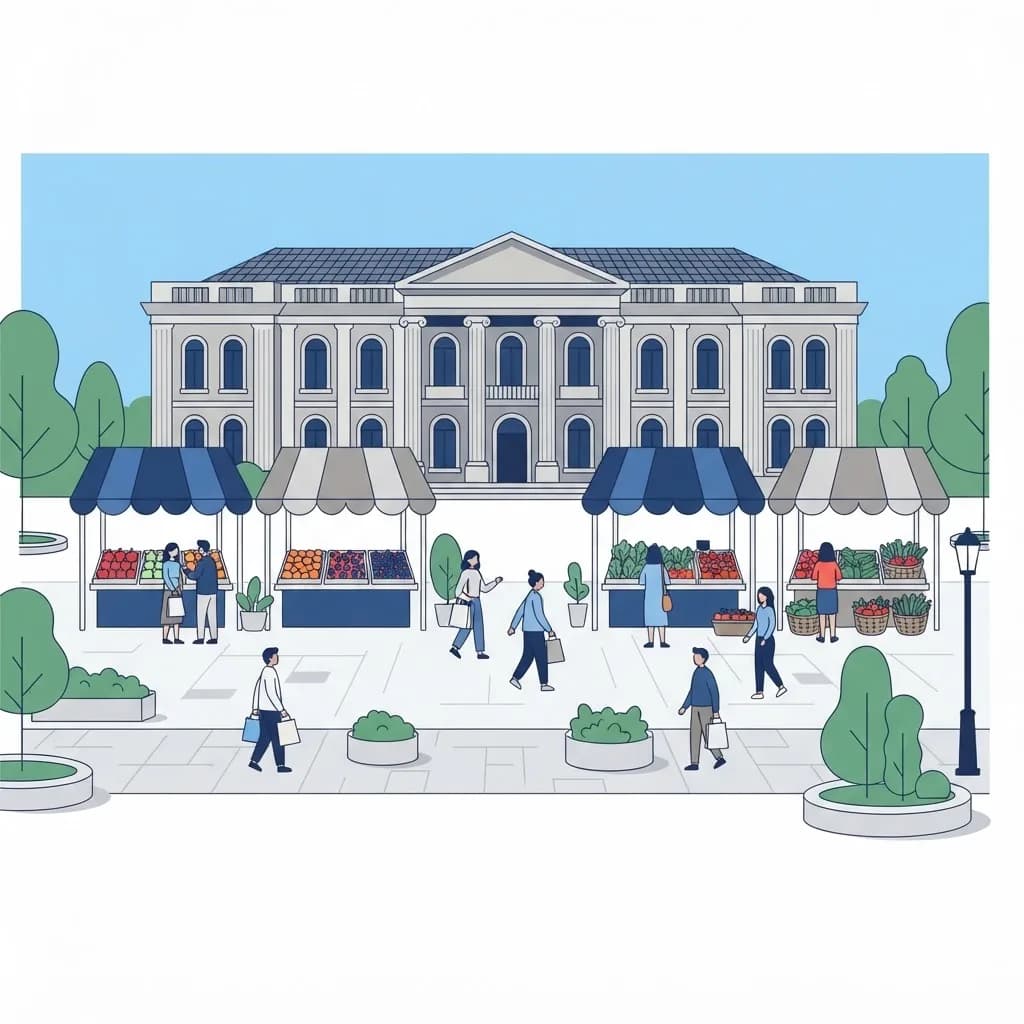
A Federal Plaza city market is one of those urban traditions that makes a downtown feel alive. Rows of canopy tents fill a civic square, vendors sell produce and prepared food, and office workers, families, and tourists mix in the same few hundred square feet.
Plaza markets exist in cities across the country, usually operating on set weekdays during warmer months. They occupy public space that is otherwise a pass-through, converting it into a genuine gathering place.
This guide covers what to expect at a plaza market, who benefits from it, how to shop it well, and why these markets matter far beyond the groceries people carry home.
What Is a Federal Plaza City Market?
A plaza city market is an open-air, temporary market held in a public square, typically adjacent to government buildings or civic centers. Vendors set up mobile stalls for a few hours, then clear the space completely.
Unlike a permanent market hall, everything is portable. That flexibility keeps vendor costs low, which is why plaza markets often feature small farms, startup food businesses, and independent artisans rather than established retail chains.
The defining feature is direct producer-to-customer sales. When you buy tomatoes at a plaza market, you are usually speaking to the person who grew them, which means better information and a much shorter supply chain.
Who Uses a Plaza Market?
The customer mix at a downtown plaza market is unusually broad, which is part of its charm.
- Downtown office workers grabbing lunch and picking up produce before heading home.
- Nearby residents who prefer fresh local food over supermarket shopping.
- Small farmers and food producers seeking direct sales without wholesale margins.
- New food entrepreneurs testing recipes before opening a storefront.
- Visitors and tourists looking for an authentic local experience.
Key Features of Plaza Markets
Seasonal Produce From Local Growers
Selection follows the local growing calendar: greens and asparagus early, berries and stone fruit midseason, then squash, apples, and root vegetables in fall. Shopping this way naturally aligns your cooking with what actually tastes best.
Prepared Food and Lunch Vendors
Because plaza markets often run at midday, prepared food is a major draw. Tacos, sandwiches, noodle bowls, and pastries compete for the office lunch crowd, and many of these vendors later graduate to brick-and-mortar restaurants.
Artisan and Craft Stalls
Soap makers, potters, jewelers, and print artists round out the mix. These vendors give the market a distinct identity and make it a destination rather than just a grocery stop. Many rely on strong visual branding, which is where good logo design makes a small stall look established.
Community Programming
Live music, cooking demos, nutrition-assistance programs, and civic information booths frequently share the space. Markets that accept SNAP and offer matching dollars expand access meaningfully for lower-income shoppers.
How to Get the Most Out of Your Visit
A plaza market rewards a little planning, especially if you arrive during a busy lunch rush.
- Check the market's official schedule online, since plaza markets are seasonal and weather dependent.
- Arrive early for the best produce selection or late for possible end-of-day discounts.
- Bring reusable bags, small bills, and a card — vendor payment options vary.
- Do one full loop before buying to compare prices and quality across stalls.
- Ask growers what is at peak right now; their answer is usually the best value.
- Plan parking or transit ahead, as downtown plaza parking fills fast on market days.
Benefits of Plaza City Markets
The advantages extend to shoppers, vendors, and the city itself.
- Fresher food harvested days rather than weeks before sale.
- More money stays in the local economy compared with chain retail purchases.
- Low-barrier entry for entrepreneurs testing a product with real customers.
- Increased foot traffic that benefits surrounding downtown businesses.
- Stronger civic connection, as public space gets used the way it was intended.
Potential Challenges
Plaza markets face real operational constraints worth understanding.
- Weather can cancel a market day entirely, costing vendors their revenue.
- Limited hours make attendance difficult for people with rigid work schedules.
- Prices on some items run higher than discount supermarket equivalents.
- Downtown parking and loading logistics create friction for both vendors and shoppers.
Best Practices and Tips
Whether you shop or sell, a few habits improve the experience considerably.
- Shoppers: buy what looks best that day instead of rigidly following a list.
- Vendors: post clear, legible pricing — unclear signs cost sales constantly.
- Vendors: collect emails at the stall so you can announce attendance each week.
- Vendors: invest in clean stall visuals and consistent graphic design across signage and packaging.
Real-World Example
Picture a small bakery that started with one folding table at a plaza market, selling four kinds of scones. Foot traffic from nearby office buildings gave the owner roughly 300 customer interactions per market day — feedback that would have taken months to gather any other way.
Within two seasons the baker had identified two bestsellers, built an email list of regulars, and secured wholesale accounts with two downtown cafes. The market functioned as a low-cost incubator, providing revenue and research simultaneously.
Why It Matters
Plaza markets solve two urban problems at once. They give small producers affordable access to customers, and they give underused civic squares a genuine purpose on a recurring schedule.
Cities that support these markets consistently see measurable downtown activity gains on market days. That ripple effect — more people walking, more nearby shops visited — is why municipal governments keep funding them.
Frequently Asked Questions
When are plaza city markets usually open?
Most run on one or two fixed weekdays during the growing season, often from late morning through early afternoon to capture the lunch crowd. Always confirm current dates on the market's official page.
Do plaza markets accept SNAP or EBT?
Many do, and a growing number offer matching incentive programs that double benefit dollars for fresh produce. Look for the market information booth to process tokens or vouchers.
How do I become a vendor at a city plaza market?
Apply through the market operator, usually a city department or nonprofit. Expect to provide product details, required licenses or food-handling permits, insurance, and a stall fee for the season or per day.
Is a plaza market more expensive than a supermarket?
Some items cost more because of small-scale production, while in-season produce is often competitively priced or cheaper. The quality difference on fresh items typically justifies any premium.
Conclusion
A Federal Plaza city market delivers more than food. It gives small businesses a launchpad, gives shoppers real seasonal quality, and gives a downtown square a reason to feel busy.
If you sell at a market and want online ordering, a vendor schedule, or preorder pickup, look into modern ecommerce solutions to extend your stall beyond market hours.
Enjoyed this article? Share it with others!