
Keeping up with email marketing news has become part of the job rather than a nice-to-have. Inbox providers now change filtering rules mid-quarter, privacy laws expand yearly, and AI tools reshape production workflows faster than most teams can document them.
October is a critical month for email programs. Teams are finalizing holiday sequences, warming sending infrastructure, and cleaning lists before peak volume — all while ensuring compliance with the latest sender requirements.
This roundup covers the themes shaping email marketing heading into late 2026, what they mean practically, and how to adjust your program before the busiest season of the year.
What Is Driving Email Marketing News Right Now?
Three forces dominate current coverage: deliverability enforcement, artificial intelligence in campaign production, and privacy-driven measurement changes. Each one changes how marketers plan, not just how they execute.
Deliverability has become the loudest topic. Major mailbox providers now enforce authentication standards, complaint-rate thresholds, and one-click unsubscribe requirements for bulk senders. Programs that ignored these fundamentals saw inbox placement collapse.
Meanwhile, AI-assisted personalization moved from experiment to standard practice. The differentiator is no longer whether you use AI, but whether your data is clean enough for AI-generated segments and subject lines to be accurate and on-brand.
Who Needs to Follow These Updates?
Anyone responsible for revenue from owned channels should track email changes closely. The consequences of missing a policy shift are immediate and measurable.
- Ecommerce and retail marketers preparing high-volume seasonal sends.
- SaaS lifecycle and onboarding teams running automated sequences.
- Agencies managing sending reputation across multiple client domains.
- Nonprofits and publishers relying on newsletter engagement.
- Developers maintaining transactional email infrastructure and DNS records.
Key Developments to Know
Authentication Is Now Non-Negotiable
SPF, DKIM, and a published DMARC policy are baseline requirements, not advanced tactics. Senders without aligned authentication face throttling or outright rejection. Reviewing DNS records should be a scheduled quarterly task, and it often requires help from your back-end development team.
Engagement-Based Filtering Deepens
Providers increasingly weigh recipient behavior over content keywords. Consistent opens, replies, and folder moves matter more than avoiding spam trigger words. This rewards smaller, more engaged lists over large stale ones — a reversal of the old volume mindset.
AI Content With Human Oversight
Generative tools now draft subject lines, preview text, and body variations at scale. The teams winning pair automation with editorial review, because unedited AI copy tends toward generic phrasing that depresses click rates over time.
Privacy Changes Blur Open Rates
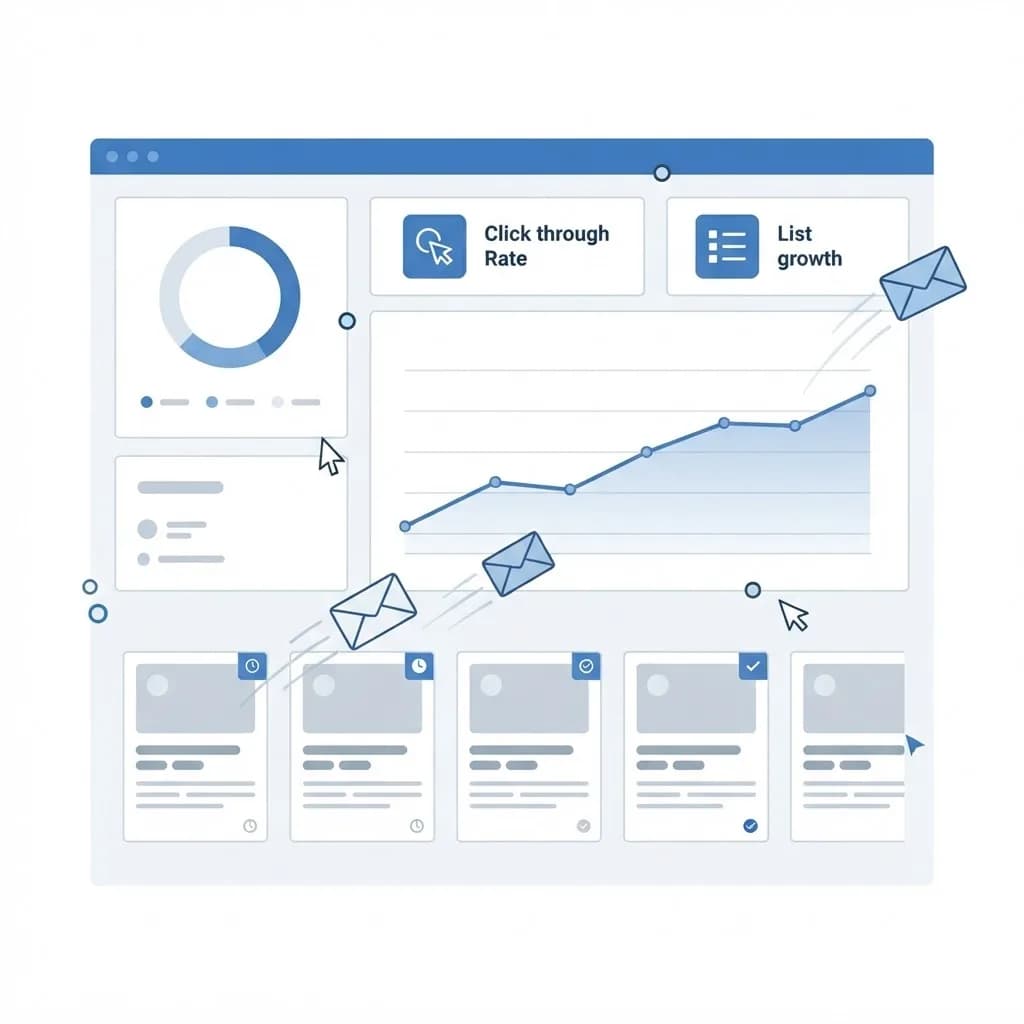
Mail privacy protection features inflate opens through prefetching, making open rate an unreliable primary KPI. Programs are shifting to click-to-conversion tracking, revenue per recipient, and list growth quality as core metrics.
How to Get Your Program Ready
Rather than reacting to every headline, run a structured audit. Most deliverability problems trace back to a handful of fixable issues.
- Verify SPF, DKIM, and DMARC alignment for every sending domain and subdomain.
- Suppress subscribers with no engagement in the last six to twelve months.
- Confirm one-click unsubscribe headers are present on all bulk campaigns.
- Warm any new IP or domain gradually over several weeks before peak season.
- Rebuild dashboards around clicks, conversions, and revenue instead of opens.
- Test rendering in dark mode and on mobile, where most opens now occur.
- Document a complaint-rate alert threshold and assign an owner to monitor it.
Benefits of Staying Current
Teams that track email news consistently avoid the expensive scramble that follows a sudden placement drop.
- Protected inbox placement during the highest-revenue weeks of the year.
- Lower risk of regulatory penalties under CAN-SPAM, GDPR, and state privacy laws.
- Better forecasting accuracy from metrics that are not distorted by prefetching.
- Faster adoption of tactics before they become saturated.
- Stronger subscriber trust, which compounds into long-term list value.
Potential Challenges
Acting on email news is harder than reading it, especially for lean teams.
- Technical changes require developer or IT access that marketers often lack.
- Pruning inactive subscribers shrinks list size, which can look bad to stakeholders.
- AI tools introduce brand-voice inconsistency without clear guidelines.
- Conflicting advice circulates quickly, and outdated tactics persist in blog posts.
Best Practices and Tips
A few habits keep email programs resilient regardless of what changes next.
- Send to people who want your email — permission quality solves most deliverability issues.
- Segment by behavior and recency rather than by broad demographics alone.
- Keep a single clear call to action per campaign and link it to a fast-loading page.
- Coordinate email with paid and organic channels through unified email marketing services for consistent messaging.
Real-World Example
A mid-sized apparel retailer entered last October with a 400,000-address list and declining revenue per send. An audit found DMARC set to none, no suppression policy, and roughly 40 percent of addresses inactive for over a year.
The team removed inactive subscribers, published a DMARC policy, and rebuilt reporting around click-to-purchase. List size dropped sharply, which initially alarmed leadership. Yet inbox placement recovered, click rates nearly doubled, and total holiday email revenue rose despite sending to fewer people.
Why It Matters
Email remains the highest-return owned channel for most businesses, precisely because you control the audience relationship. That control disappears the moment your messages stop reaching the inbox.
Following email marketing news is really about protecting an asset. Rented audiences on social platforms can vanish with an algorithm change, but a healthy, permission-based email list keeps producing revenue for years.
Frequently Asked Questions
Is open rate still useful in 2026?
It is useful for relative comparison within the same segment but unreliable as an absolute measure because privacy features prefetch images. Use clicks, conversions, and revenue per recipient as primary metrics.
How often should I clean my email list?
Review engagement quarterly and suppress subscribers inactive for six to twelve months, depending on your purchase cycle. Always clean before a major volume increase such as holiday campaigns.
Do I need DMARC if I only send small volumes?
Yes. Authentication protects your domain from spoofing regardless of volume, and providers increasingly evaluate it for all senders. Start with a monitoring policy, then tighten enforcement gradually.
Can AI write my entire email campaign?
AI can draft variations efficiently, but unreviewed output tends to be generic and occasionally inaccurate. The most effective workflow uses AI for volume and human editors for voice, accuracy, and offer clarity.
Conclusion
The email marketing news of late 2026 points in one direction: technical hygiene and genuine subscriber engagement now determine performance more than clever copy tricks. Fix authentication, prune ruthlessly, and measure what actually drives revenue.
If your campaigns deserve better landing experiences and smarter automation, explore AI-powered marketing solutions to scale personalization without sacrificing quality.
Enjoyed this article? Share it with others!