
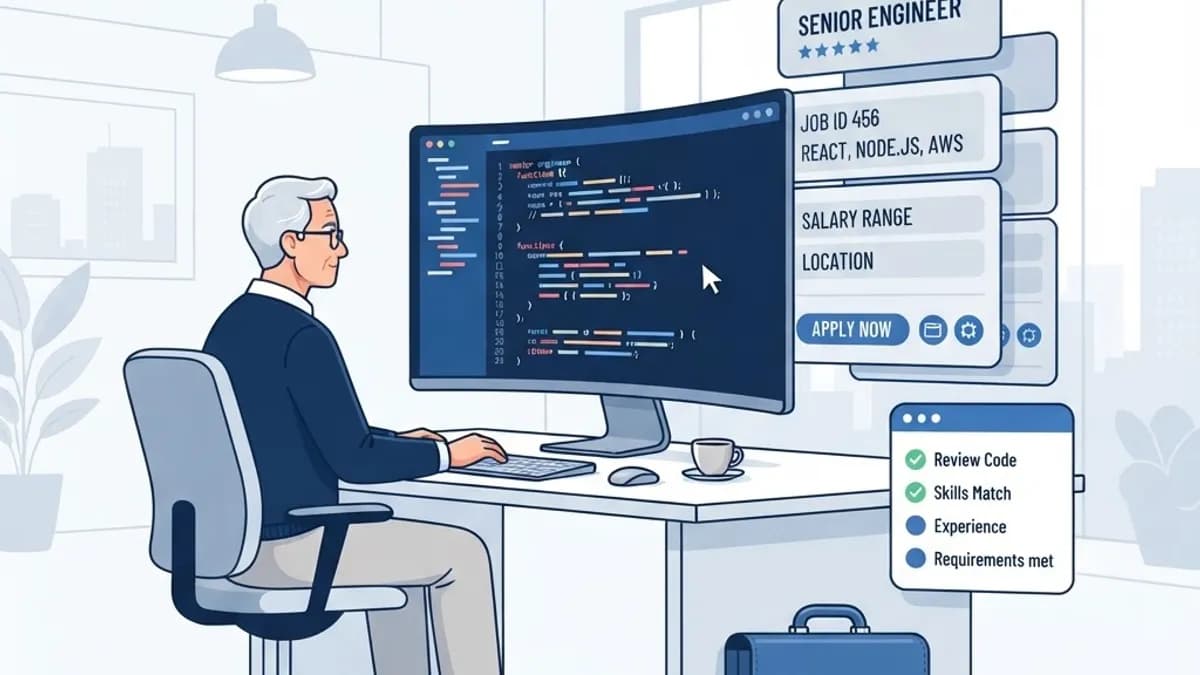
Senior software engineer vacancies look similar on the surface and behave very differently underneath. Two roles with identical titles can mean deep systems work at one company and team leadership at another. Reading the difference early saves months of wasted applications.
Demand for experienced engineers remains strong, but the bar has moved. Employers now expect design judgment, cross-team communication, and evidence that you improved something measurable, not just years on a CV.
This guide covers what senior roles actually require, how to evaluate a posting, what the process looks like, and how to negotiate once an offer arrives.
What Is a Senior Software Engineer Role?
A senior software engineer owns outcomes rather than tickets. You are trusted to take an ambiguous problem, choose an approach, weigh trade-offs, and deliver a working system that other people can maintain after you move on.
Most companies expect five to eight years of experience, though the real signal is scope. The defining marker of seniority is autonomous technical judgment under uncertainty, including knowing when not to build something.
Senior engineers also multiply the team. Code review, documentation, mentoring, and incident response are part of the job, not distractions from it.
Who Applies for Senior Vacancies?
The applicant pool is broader than most people assume, and several distinct groups compete for the same postings.
- Mid-level engineers ready for a title and scope increase.
- Existing seniors moving for compensation, domain change, or better technical culture.
- Former tech leads returning to hands-on individual contributor work.
- Consultants and contractors seeking a permanent role with equity.
- Specialists moving into product engineering from data, security, or infrastructure.
Key Features of Senior Job Descriptions
System Design Responsibility
Postings reference designing services, defining API contracts, and choosing storage models. You will be asked to justify decisions on consistency, caching, and failure handling, which is why solid back-end web development fundamentals dominate senior interviews.
Cross-Functional Collaboration
Expect language about partnering with product, design, and data teams. Seniors translate business goals into technical plans and push back with evidence when a deadline is unrealistic.
Reliability and Operational Ownership
Monitoring, alerting, on-call, and incident review appear in most listings. Companies increasingly pair this with security expectations, so familiarity with practical cybersecurity practices gives you a clear edge.
Mentorship Without Management
Senior roles usually carry no direct reports but real influence. You raise the standard of the codebase through reviews, pairing, and written design documents.
How to Get Started Applying
A focused search beats volume. Ten strong applications outperform eighty generic ones at this level.
- Write down your three strongest technical stories with concrete metrics before you apply anywhere.
- Rewrite your CV so each bullet names a problem, an action, and a measurable result.
- Shortlist twelve companies whose domain and stack genuinely interest you.
- Ask a former colleague for a referral into three of them.
- Prepare a system design narrative you can draw and explain in twenty minutes.
- Refresh core data structures lightly, then spend most study time on design and behavioural answers.
- Track every application and follow up once after seven working days.
Benefits of Moving Into a Senior Vacancy
The step up changes both compensation and the type of problem you get to work on daily.
- Significant pay increase, often twenty to forty percent over mid-level bands.
- Influence over architecture, tooling, and hiring standards.
- Access to higher-leverage projects with executive visibility.
- A credible platform for staff, principal, or engineering management tracks.
- More flexibility on location and working pattern.
Potential Challenges
Senior hiring is slower and more selective, and the failure modes are different from junior searches.
- Longer processes with four to six rounds and multiple stakeholders.
- Title inflation, where a senior label hides mid-level scope and pay.
- Expectation to deliver visible impact within the first ninety days.
- Interviewers probing communication and conflict handling as hard as code.
Best Practices and Tips
Small adjustments to how you present experience make a disproportionate difference at this level.
- Quantify everything: latency reduced, cost saved, incidents prevented, revenue enabled.
- Explain trade-offs out loud during design interviews rather than jumping to an answer.
- Prepare one story about a decision you got wrong and what you changed afterwards.
- Interview the company back on testing culture, on-call load, and technical debt.
Real-World Example
An engineer with six years of experience applies to a mid-sized logistics platform. Instead of listing frameworks, her CV opens with a line about cutting checkout API latency from 900ms to 180ms by restructuring queries and adding a read replica.
In the design round she is asked to model a shipment tracking service. She starts with access patterns and expected volumes, sketches the data model, then explains why she would delay introducing a message queue until traffic justifies it. That restraint, not the diagram, is what earns the offer.
Why It Matters
Senior software engineer vacancies are the pivot point of a technical career. The role you accept now shapes the problems you are qualified for in three years, along with your compensation trajectory.
Choosing carefully, rather than accepting the first offer, is one of the highest-return decisions available to an experienced engineer.
Frequently Asked Questions
How many years of experience do senior vacancies require?
Most listings state five or more years, but strong candidates with four years of high-ownership work are regularly hired. Demonstrated scope matters more than tenure.
Do I still face coding interviews as a senior?
Yes, though they are usually practical and closer to real work. Expect a coding round plus system design, behavioural, and sometimes a code review exercise.
Should I negotiate a senior offer?
Almost always. Ask about the band, then negotiate on base, equity, and sign-on together rather than one component in isolation.
Is a senior title transferable between companies?
Not reliably. Levels differ widely, so compare scope, salary band, and expectations rather than the label on the job advert.
Conclusion
Landing the right senior software engineer vacancy comes down to evidence of judgment, clear communication, and a targeted search. Prepare stories with numbers, evaluate offers on scope rather than title, and negotiate with information.
If your team is scaling and needs experienced delivery support alongside hiring, consider partnering for website maintenance and support so your senior engineers stay focused on high-value work.
Enjoyed this article? Share it with others!