
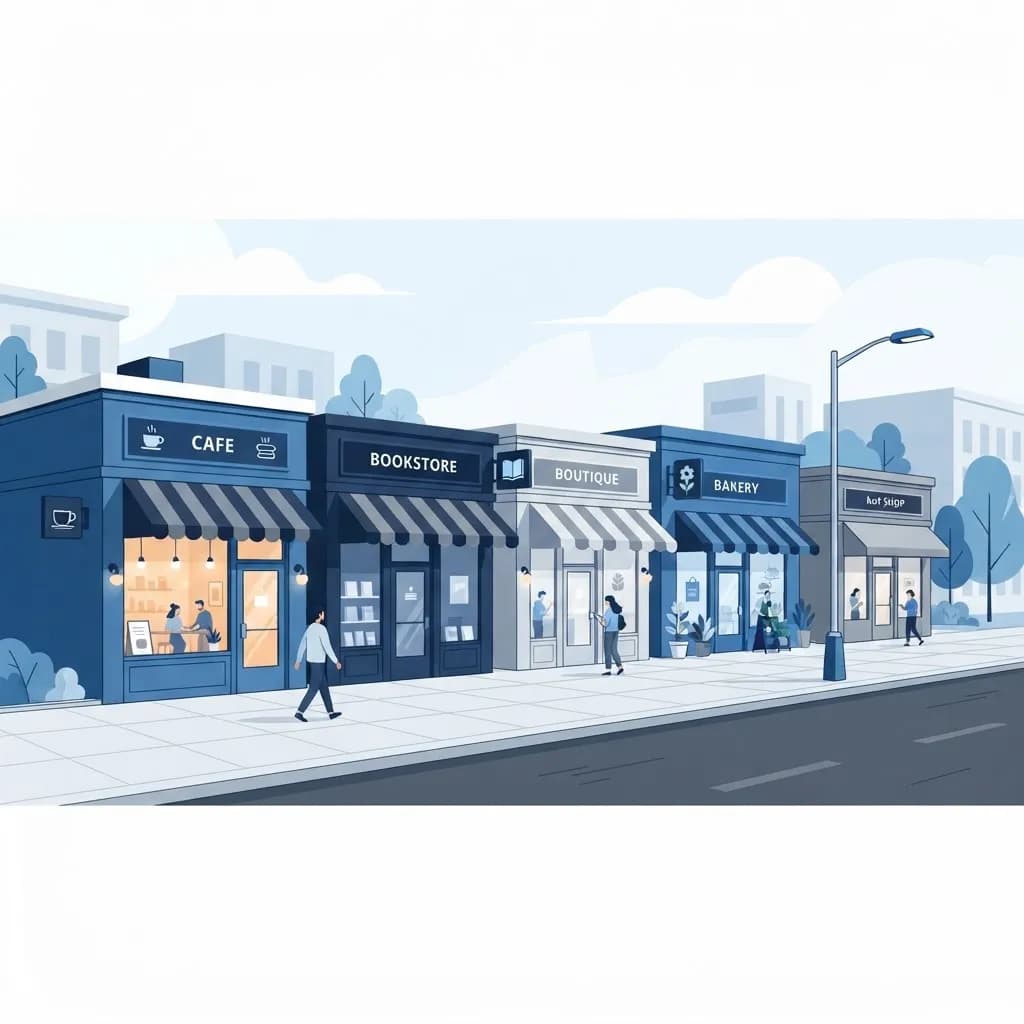
Almost every town has one: a Main Market Street lined with independent shops, a bakery, a hardware store, and at least one place everyone calls by the owner's first name. These streets are the backbone of local economies.
They are also under pressure. Ecommerce, big-box retail, rising rents, and thin staffing have made the traditional high street harder to run than at any point in living memory.
This guide looks at how Main Market Street businesses actually win today, blending old-fashioned service with the digital basics that decide whether a customer walks through your door or drives past.
What Is Main Market Street?
Main Market Street is the classic name for a town's central commercial corridor, where retail, food, and services cluster within walking distance. It exists in dozens of towns across the US, UK, and beyond.
Functionally, it is more than an address. It is a shared marketplace where each business benefits from the traffic the others attract, which is why street-level cooperation often outperforms individual advertising.
Modern high streets increasingly mix retail with services, experiences, and hospitality, because pure product retail is the easiest category for online sellers to undercut.
Who Depends on Main Market Street?
The stakeholders extend well beyond shop owners.
- Independent retailers, cafés, and salons paying street-level rent
- Professional services such as clinics, agents, and accountants
- Local employees who rely on walkable jobs
- Town councils and business improvement districts funding upkeep
- Residents who value services within walking distance
Key Success Factors for High Street Businesses
Visibility Online Before Offline
Most walk-ins now start as a phone search. If your hours, photos, and location are wrong on Google, you lose the customer before they ever see your window display.
A Reason to Visit in Person
Advice, fitting, repairs, tastings, and workshops cannot be shipped. Experience-led retail is the clearest defence against online price competition.
Consistent Local Branding
Signage, packaging, and social posts should look like they belong to the same business. A coherent identity starts with a proper logo design and carries through every touchpoint.
Repeat Purchase Systems
Loyalty cards, SMS lists, and email newsletters turn one-time visitors into regulars. Even a simple monthly email beats hoping people remember you.
How to Grow a Main Market Street Business
Improvement comes from a short list done consistently, not from a dozen half-finished ideas.
- Claim and fully complete your Google Business Profile with real photos.
- Build a simple, fast website showing hours, location, and core offerings.
- Collect customer emails or numbers at the counter with a clear reason to opt in.
- Post weekly on one social platform where your customers actually are.
- Partner with two neighbouring businesses on a joint promotion.
- Ask every happy customer for a review, politely and consistently.
- Track which promotions drove footfall and drop the ones that did not.
Benefits of a Strong High Street Presence
Physical presence still delivers advantages that pure online sellers cannot copy.
- Immediate trust from a visible, accountable location
- Same-day fulfilment without shipping costs
- Face-to-face service that resolves problems faster
- Community goodwill that drives word-of-mouth referrals
- Shared foot traffic from neighbouring businesses and events
Potential Challenges
The structural headwinds are real and worth planning around.
- Rent and utility costs rising faster than local spending power
- Parking limits and roadworks that suppress casual footfall
- Staffing shortages in retail and hospitality roles
- Online competitors with lower overheads and larger ad budgets
Best Practices and Tips
Focus your limited time on the actions that compound.
- Keep opening hours accurate everywhere; wrong hours destroy trust instantly
- Photograph your storefront and products properly, not with a rushed phone shot
- Run one memorable event per quarter rather than constant small discounts
- Sell a small curated range online rather than trying to list your whole shop
Real-World Example
A family-run kitchenware shop on a Main Market Street was losing sales to online retailers. Instead of discounting, the owners started free Saturday knife-sharpening and a monthly cooking demo, then promoted both locally.
Footfall rose on previously quiet mornings, and demo attendees bought accessories at full price. They later added a small online catalogue for their best sellers, supported by simple email marketing campaigns that reminded customers about upcoming sessions.
Why It Matters
Main Market Street businesses keep money circulating locally, employ neighbours, and give a town its character. When they close, the street rarely recovers quickly.
Supporting them is not nostalgia. Independent retail responds to local needs faster than national chains and adapts when it has the right tools.
Frequently Asked Questions
How can a Main Market Street shop compete with online retailers?
Compete on service, expertise, immediacy, and experience rather than price. Add a small, focused online presence for discovery instead of trying to match giant catalogues.
Does a small local shop really need a website?
Yes. Most customers check hours, location, and reviews online before visiting. A single well-built page often generates more visits than paid flyers.
What is the cheapest effective marketing for a local business?
A complete Google Business Profile plus consistent review collection. Both are free and directly influence whether nearby searchers choose you.
How do high street businesses build loyalty?
Remember customers, solve problems generously, and stay in contact through a simple email or SMS list with genuinely useful updates.
Conclusion
Main Market Street succeeds when independent operators combine real human service with basic digital visibility. Neither alone is enough in 2026.
If your shop is invisible online, fixing that is the highest-return project available. Start with a clean, fast site through front-end web development and build from there.
Enjoyed this article? Share it with others!