
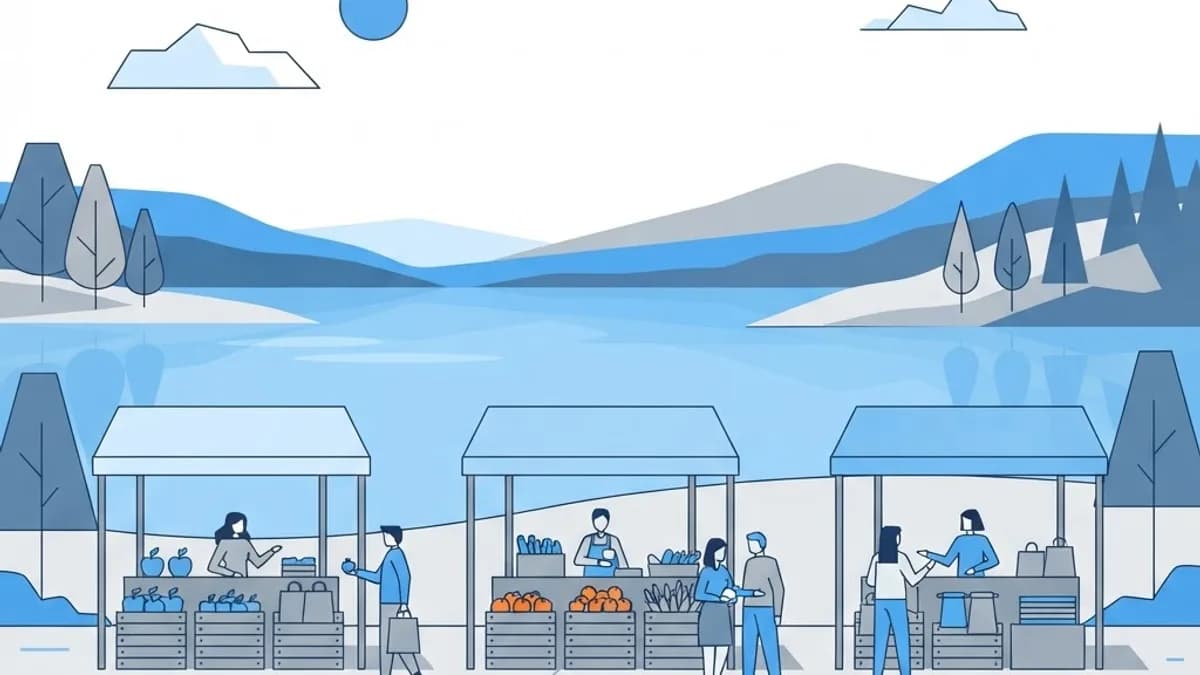
The Grand Lake Farmers Market is the kind of weekend ritual that defines a community. Rows of canopies, crates of just-picked produce, a coffee cart with a line, and a hundred small conversations between growers and the people who cook their food — that is the whole appeal in one sentence.
Lakeside and small-town markets like this one have grown steadily as shoppers look for shorter supply chains, better flavor and a reason to spend a morning outdoors. They also function as low-cost business incubators for farmers, bakers and makers.
This guide covers what to expect as a shopper, how to plan a productive trip, and what it takes to sell there if you are considering becoming a vendor.
What Is The Grand Lake Farmers Market?
It is a seasonal, community-run outdoor market where local growers and small producers sell directly to the public. Most markets of this type operate weekly during the growing season, typically from late spring through early autumn, with morning hours.
The defining feature is direct trade. There is no distributor, no warehouse and no week-long transit window, which is why market tomatoes taste different from supermarket tomatoes. It also means the person weighing your beans usually planted them.
Beyond produce, you will typically find bread, eggs, honey, cut flowers, jams, cheese, prepared food, coffee, and handmade goods. Many markets add live music, kids' activities and community information tables, turning shopping into a genuine outing.
Who Goes To The Market?
The crowd is more varied than you might expect, and understanding it helps both shoppers and sellers.
- Home cooks who plan menus around whatever looks best that week.
- Families using the market as an inexpensive weekend activity with food attached.
- Seasonal visitors and lake-house owners stocking up for a weekend stay.
- Local restaurant owners and café operators sourcing small batches of specialty produce.
- Preservers and canners buying in bulk during peak tomato, peach and berry weeks.
What You Will Find There
Seasonal Produce
Expect asparagus, greens, radishes and rhubarb early in the season; berries, sweet corn, tomatoes, zucchini and stone fruit at peak; then squash, apples, root vegetables and pumpkins as autumn arrives. The stall lineup changes weekly, which is the point.
Bakers And Prepared Food
Sourdough, pies, cinnamon rolls, empanadas and breakfast burritos usually sell out first. Baked goods are one of the highest-margin categories at any market, and the strongest bakers build queues purely through word of mouth.
Local Makers And Crafts
Soap, candles, pottery, jewelry, woodwork and screen-printed goods round out most markets. These vendors depend heavily on presentation, and a coherent brand identity built by a good logo design service genuinely changes how much they sell per hour.
Community And Music
A busker or small band, a nonprofit signup table, and a shaded seating area are what turn a shopping trip into a two-hour visit. Longer dwell time raises average spend for every vendor present.
How To Shop It Well
Markets reward preparation. A few habits separate people who leave with a full bag and no regrets from those who wander and overspend.
- Arrive within the first hour for the best selection, or in the last thirty minutes for end-of-day deals.
- Bring cash in small bills. Card readers exist but drop out when cell service is congested.
- Carry your own sturdy tote bags and a cooler bag for eggs, cheese and meat.
- Walk the full market once before buying anything so you can compare price and quality.
- Ask each grower what is best this week. It is the single most useful question you can ask.
- Buy delicate items like berries and greens last so they are not crushed at the bottom of your bag.
- Plan meals loosely, then finalize based on what you actually found.
Benefits Of Shopping Local
The advantages go well beyond flavor, which is why markets keep growing even as grocery delivery expands.
- Produce is harvested within a day or two, so nutrients and taste are at their peak.
- More of every dollar stays with the grower instead of intermediaries.
- You get access to varieties supermarkets refuse to stock because they bruise or ship poorly.
- Direct contact with producers means real answers about growing methods and spraying.
- Less packaging and shorter transport reduce waste noticeably over a season.
Potential Challenges
It is worth going in with clear eyes about the trade-offs.
- Prices on some items run higher than discount grocery stores, especially meat and specialty produce.
- Selection is dictated by season, so you cannot rely on the market for a fixed weekly list.
- Weather can shrink both vendor turnout and shopper numbers dramatically.
- Popular items sell out early, and arriving late often means missing bread and eggs entirely.
Tips For Becoming A Vendor
If you are thinking about selling, the operational details matter more than the product idea.
- Apply early. Most markets cap vendor numbers per category and fill slots months ahead.
- Confirm licensing, cottage-food rules and liability insurance requirements before you invest in inventory.
- Invest in clear signage, visible pricing and a tidy table. Presentation outperforms discounting.
- Collect emails at the stall and follow up weekly. A simple email marketing setup turns one-time visitors into regulars.
Real-World Example
Take a small grower selling at a lakeside market for the first season. Week one, she brings mixed vegetables in unlabeled bins and sells about a third of her stock. Frustrating, but informative.
By week four she has changed three things: a chalkboard with prices and the farm name, produce displayed in tiered crates instead of flat bins, and a clipboard collecting emails in exchange for a weekly "what we are picking" note. Sales roughly double. Nothing about her farming changed. What changed was clarity, presentation and follow-up — the same fundamentals that make an online store convert, which is why many market vendors eventually add ecommerce ordering for winter pickup boxes.
Why It Matters
Farmers markets are one of the last widely accessible venues where a person with a good product and a folding table can build a real business from nothing. They also keep regional food knowledge alive, from which apple variety bakes best to when local honey is harvested.
For the community around Grand Lake, the market is infrastructure as much as commerce. It gives residents and visitors a shared place to meet, supports dozens of micro-businesses, and keeps money circulating locally through the season.
Frequently Asked Questions
When is the Grand Lake Farmers Market open?
Markets of this type generally run one morning a week during the growing season, roughly late spring through early autumn. Because dates and hours are set annually, check the market's official page or local social channels before traveling.
Do vendors accept cards?
Many do, but reliability depends on cell coverage. Bring cash in small denominations as a backup, and note that some markets sell wooden tokens usable at any stall.
Is the market dog friendly?
Policies vary and some markets restrict dogs near food handling areas for health-code reasons. Check the current rules first, and if dogs are allowed, keep them leashed and away from produce tables.
What is the best time to arrive?
Come in the first hour for peak selection of bread, eggs and popular produce. Arrive near closing if your priority is discounted bulk produce rather than variety.
Conclusion
The Grand Lake Farmers Market rewards a little planning: come early, bring cash and bags, walk the whole market before buying, and let the season decide your menu. As a vendor, treat presentation and follow-up as seriously as growing.
If you sell at a market and want a simple site with hours, stall location and preorders, our WordPress development team can build it without the ongoing complexity.
Enjoyed this article? Share it with others!