
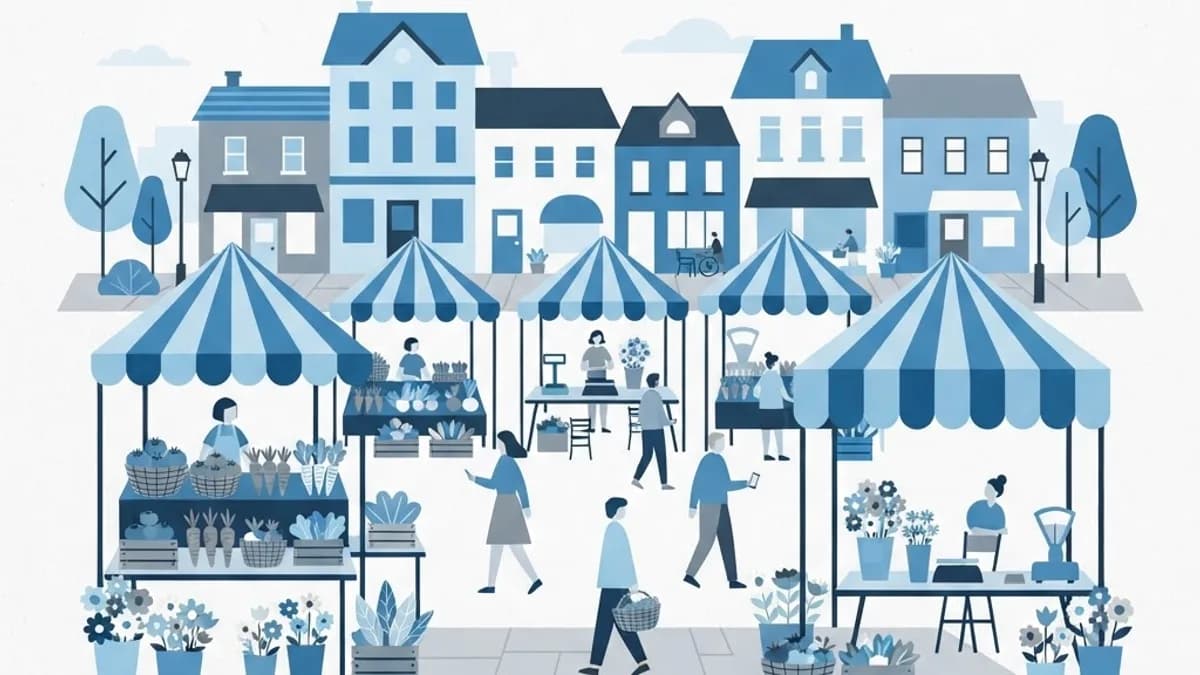
The Harrisonburg Farmers Market sits at the heart of one of the most productive agricultural regions in Virginia. The Shenandoah Valley grows an unusually wide range of crops, and that variety shows up on the tables every market morning.
What makes a downtown market like this one work is proximity. Growers drive short distances, produce is picked within a day, and shoppers can walk from a parking garage to a dozen farms in ten minutes. Add a strong bakery presence and a university population, and you get a market with genuine energy.
Below is everything worth knowing: what you will find, when to go, how to shop efficiently, and what it takes to sell there.
What Is The Harrisonburg Farmers Market?
It is a producer-focused downtown market where farmers and small food businesses from the surrounding valley sell directly to the public. Like most established markets, it operates on set days during the main season with a reduced winter schedule in many years.
Its defining trait is regional depth rather than novelty. The valley supports orchards, dairy, poultry, greenhouse growers, grain and a strong Mennonite farming tradition, so the stall mix includes staples you can build real weekly meals around, not just weekend treats.
Expect vegetables, fruit, eggs, cheese, meat, bread, pastries, honey, mushrooms, cut flowers, plants and prepared foods. Craft and maker vendors round out the lineup, and community tables often share space with growers.
Who Shops And Sells Here?
Downtown location and a college town population create a broad mix.
- Families doing a genuine weekly grocery run, not just browsing.
- Students and young professionals buying bread, coffee and small-batch prepared food.
- Home canners and preservers stocking up during peak tomato and peach weeks.
- Restaurant and café buyers sourcing specialty produce in small quantities.
- Visitors passing through the valley on their way to Skyline Drive or the national forest.
What To Expect At The Stalls
Valley Produce By Season
Spring brings asparagus, greens, spring onions, strawberries and bedding plants. Summer delivers sweet corn, tomatoes, peppers, squash, blackberries and peaches. Autumn shifts to apples, cider, winter squash, sweet potatoes and greens that sweeten after frost.
Meat, Dairy And Eggs
The valley's livestock and dairy tradition means pasture-raised eggs, farmstead cheese, and beef, pork and poultry sold by the cut or in bundles. Bring a cooler bag, because these items need to stay cold on the walk back to your car.
Bakers And Coffee
Sourdough, sticky buns, pies and empanadas typically sell out within the first ninety minutes. Coffee vendors anchor foot traffic, and stalls near them consistently see higher dwell time and sales.
Makers And Local Brands
Soap, pottery, prints and jewelry vendors depend on presentation to compete. The ones who invest in a consistent visual identity, clear signage and matching packaging — the kind of work a social media and banner design service supports — tend to be recognized and remembered week to week.
How To Shop It Efficiently
Downtown markets have a rhythm. Working with it saves money and time.
- Check current days and hours before you go, since seasonal and winter schedules differ.
- Park in a downtown garage rather than circling for street spots on a busy morning.
- Arrive in the first hour if you want bread, eggs, mushrooms or specialty cuts.
- Do a full lap first, noting prices and what looks best, before spending anything.
- Bring cash in small bills plus a card, and ask whether the market uses tokens or SNAP matching programs.
- Buy shelf-stable and heavy items first, then delicate greens and berries last.
- Ask growers what is peaking this week and what will be gone next week. Plan purchases accordingly.
Benefits Of Shopping This Market
The advantages are practical, not just sentimental.
- Produce harvested within a day or two, so flavor and shelf life are noticeably better.
- Direct access to growers who can tell you exactly how something was raised.
- Competitive pricing on in-season bulk produce, especially late in the morning.
- Money stays in the regional farm economy instead of a national distribution chain.
- Access to varieties that never ship well and therefore never reach supermarkets.
Potential Challenges
A realistic view helps you plan.
- Downtown parking fills quickly on peak-season mornings.
- Popular vendors sell out early, so a late arrival limits your options significantly.
- Selection is strictly seasonal, so you will still need a grocery trip for staples.
- Weather affects both vendor turnout and crowd size, sometimes dramatically.
Tips For Prospective Vendors
Selling at an established market is competitive. Preparation matters more than product novelty.
- Apply early and read the producer-only rules carefully. Many markets restrict resold goods.
- Sort out licensing, cottage-food compliance and liability insurance before buying inventory.
- Invest in visible pricing, tiered display and one clear sign with your farm or brand name.
- Capture emails or phone numbers weekly, and support the stall with a simple site and active social media management so customers know where you will be.
Real-World Example
A small valley grower selling mushrooms started with a plain folding table and two varieties. Sales were slow, and she was frequently asked whether she was a reseller rather than a farmer.
She made three changes for the next season. She added a printed board explaining her growing process with photographs, offered a small tasting of sautéed mushrooms, and posted a Friday photo of what she would bring the next morning. Within six weeks she was regularly selling out before the halfway point.
None of those changes involved growing more mushrooms. They addressed credibility, sampling and anticipation — and the weekly posting habit is the same logic behind any effective digital marketing strategy, just executed with a phone camera.
Why It Matters
Markets like Harrisonburg's keep regional agriculture economically viable. Direct sales give growers a far better margin than wholesale, which is often the difference between a farm continuing and a farm being sold.
They also anchor downtown activity. A busy market morning fills nearby cafés, shops and restaurants, and gives residents a reliable reason to gather in public space. That civic function is easy to overlook and hard to replace.
Frequently Asked Questions
When is the Harrisonburg Farmers Market open?
The market runs on set days during the main growing season, typically spring through late autumn, with a reduced winter schedule in some years. Because days and hours change annually, confirm on the market's official page before traveling.
Where should I park?
Use a downtown parking garage rather than hunting for street parking, especially in peak summer months. It is usually faster, cheaper than a ticket, and only a short walk to the stalls.
Do vendors take cards or SNAP?
Many vendors accept cards, but service can be unreliable during busy periods, so carry cash. Many Virginia markets participate in SNAP and nutrition incentive programs — ask at the market information table for current details.
Is it worth visiting as a tourist?
Yes. It is a good first stop for anyone exploring the Shenandoah Valley, and prepared food, baked goods and cider travel well even if you are not cooking that day.
Conclusion
The Harrisonburg Farmers Market rewards early arrivals, cash in small bills, a cooler bag and a willingness to let the season set your menu. For vendors, credibility and consistency beat variety every time.
If you run a farm or food business and need a site with hours, stall location and preorders, our Next.js development team can build a fast, simple one that is easy to update each week.
Enjoyed this article? Share it with others!