
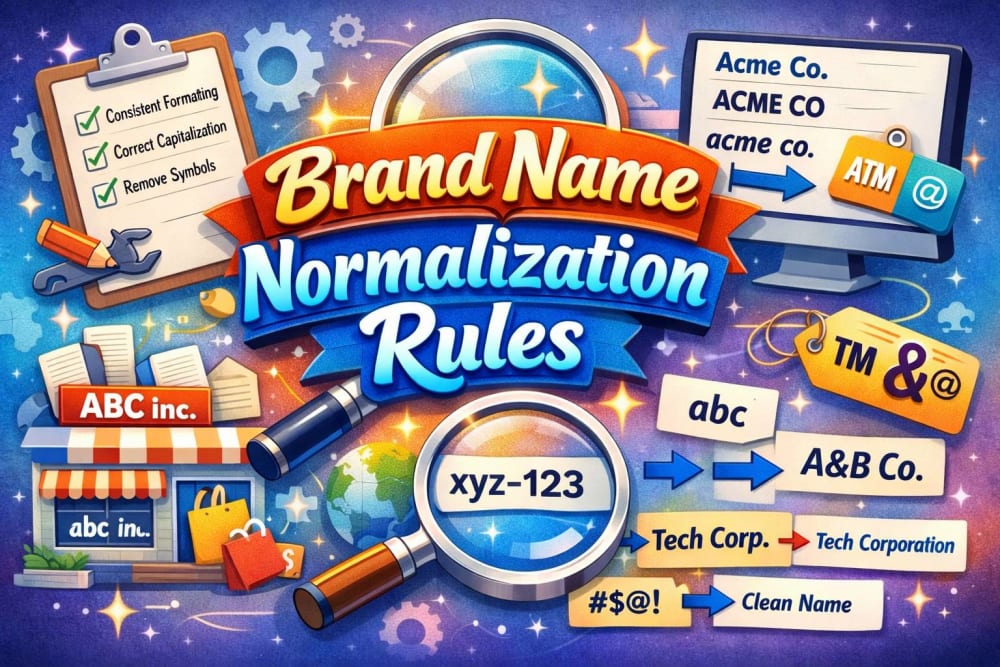
In today’s fast-paced digital world, maintaining consistency in how a brand name is represented across platforms, databases, and marketing channels is crucial. Brand Name Normalization Rules are the set of guidelines that organizations follow to standardize brand names. These rules ensure that whether a brand is referenced on a website, social media, CRM system, or e-commerce platform, it always appears in a consistent and recognizable manner. Consistency not only reinforces brand identity but also improves operational efficiency, data accuracy, and customer trust.
The need for brand name normalization arises from the multiple variations that can occur when brand names are written differently by various users or systems. For instance, a brand like “Coca-Cola” might be entered as “coca cola,” “Coca Cola ®,” or “COCA-COLA” in different systems. Without proper normalization, these variations can create confusion in analytics, affect SEO recognition, and weaken brand visibility. Standardizing the brand name ensures that all references point to the same canonical form, making the brand easily recognizable everywhere.
Understanding Brand Name Normalization
At its core, brand name normalization is about creating rules that dictate the exact way a brand name should appear. These rules may cover aspects such as capitalization, punctuation, spacing, and abbreviation usage. They also address how to handle trademarks, special characters, and regional spelling variations. The ultimate goal is to have one official representation of the brand name that all systems and users adhere to, reducing inconsistencies and improving overall brand management.
A key component of brand name normalization is the creation of a canonical name. This is the standardized version of the brand name that becomes the authoritative form in all references. For example, a company may decide that the canonical form is “Microsoft Corporation” and any variations like “msft” or “Microsoft Corp.” should be normalized to this form. Implementing such canonical mapping ensures uniformity across databases, websites, and marketing content.
Why Brand Name Normalization Matters
The benefits of applying proper brand name normalization rules extend across multiple areas of a business. One of the primary advantages is improved data quality. In large organizations, data often comes from different departments, third-party sources, or user inputs. Inconsistent brand naming can lead to duplicate records, errors in reporting, and difficulties in tracking brand performance. Normalization solves this by ensuring all references are standardized and easily comparable.
Another major benefit is enhanced brand recognition. Consistent presentation of a brand strengthens the audience’s perception and builds trust. Whether a customer encounters a brand on a website, social media, or an email campaign, the familiarity of the standardized name reinforces credibility. This is particularly important for companies operating globally, where variations in spelling, punctuation, or language can occur.
From an operational standpoint, brand name normalization also supports cross-channel consistency. Companies often interact with customers through multiple platforms, including websites, mobile apps, email campaigns, social media, and marketplaces. Applying normalization rules ensures that the brand is represented identically across all touchpoints, providing a seamless experience for the audience. Moreover, it aids in legal compliance, as using the correct trademark symbols and legal suffixes consistently can prevent misrepresentation or legal issues.
Core Rules for Brand Name Normalization
Implementing brand name normalization requires a clear set of rules that address the most common inconsistencies. These rules may include the following:
Capitalization Rules: Determine whether the brand should appear in title case, all caps for acronyms, or another specific format. For example, “IBM” remains in all caps, whereas “Apple Inc.” uses title case.
Punctuation and Spacing: Decide how to handle hyphens, ampersands, or special characters. For instance, “Coca-Cola” should always include the hyphen, and double spaces should be removed.
Abbreviation Handling: Set rules for abbreviations and acronyms. For example, “International Business Machines” may always be represented as “IBM” in marketing content, but “International Business Machines Corporation” may be the canonical form in legal documents.
Legal Suffixes: Standardize the use of suffixes such as Inc., Ltd., or LLC, depending on whether they are part of the brand identity.
Regional Variations: Consider local language differences and spellings, normalizing the name to a single canonical form while accommodating variations for local markets.
Trademark Symbols: Ensure proper and consistent use of ® or ™ symbols across all references.
Database Mapping: Map all variations of a brand name to the canonical form in CRM systems, analytics platforms, and content management systems.
These rules collectively create a framework that eliminates inconsistencies, improves reporting accuracy, and reinforces brand identity.
Implementing Brand Name Normalization
Effective implementation of brand name normalization starts with documenting all rules in a brand style guide. This guide serves as a reference for employees, content creators, and partners, providing clear instructions on how to represent the brand correctly. Automation tools can also help enforce normalization across digital platforms. For example, CRM systems and content management platforms can automatically map variations to the canonical name upon data entry.
Regular audits are essential to maintain normalization. Monitoring databases, marketing content, and online references helps identify deviations and ensure continuous compliance with established rules. Additionally, handling exceptions carefully is critical; some variations may be intentionally used for campaigns or localized branding and should be clearly defined in the style guide.
Examples of Brand Name Normalization
Many global brands successfully apply normalization rules to maintain consistency. For instance, Nike consistently uses the same spelling and capitalization worldwide. Coca-Cola maintains the hyphen in its name across all digital platforms, while IBM always appears in all capital letters. These examples demonstrate how normalization reinforces brand identity and ensures that customers recognize and trust the brand everywhere.
Conclusion
Brand Name Normalization Rules are an essential part of modern brand management. They provide the framework to standardize how a brand name appears across all channels, ensuring consistency, improving data quality, supporting legal compliance, and strengthening brand recognition. By implementing clear rules, creating a style guide, leveraging automation, and performing regular audits, companies can achieve a unified brand presence that resonates with their audience.
For businesses seeking professional support in managing brand consistency and implementing normalization strategies, hire Tulu e Biz to ensure your brand is always represented correctly and consistently across all platforms.
FAQs
1. What are Brand Name Normalization Rules and why are they important?
Brand Name Normalization Rules are the guidelines used to standardize how a brand name appears across all platforms and systems. They are important because they ensure consistency, improve data accuracy, strengthen brand recognition, and maintain a professional image across websites, marketing materials, and databases.
2. How do I implement brand name normalization in my company?
Implementation involves creating a canonical version of the brand name, documenting capitalization, punctuation, abbreviation, and legal suffix rules in a style guide, and using automation tools in CRM and CMS platforms to enforce consistency. Regular audits help maintain adherence to the rules.
3. What common mistakes should I avoid with brand name normalization?
Common mistakes include ignoring legal suffixes, inconsistent use of capitalization, failing to map abbreviations or acronyms correctly, overlooking regional spelling differences, and neglecting to track deviations in databases and marketing content.
4. How does brand name normalization affect SEO and analytics?*
Normalization improves SEO by consolidating search signals to a single brand entity, making the brand more recognizable to search engines. It also ensures accurate analytics reporting, as all references to the brand are tracked uniformly, preventing duplicate or fragmented data.
5. Can brand name normalization be automated?
Yes, many organizations use automation tools in their CRM, CMS, and e-commerce platforms to automatically map variations of a brand name to a canonical form. However, human oversight is still required for exceptions, special campaigns, or localized branding variations.
Enjoyed this article? Share it with others!