
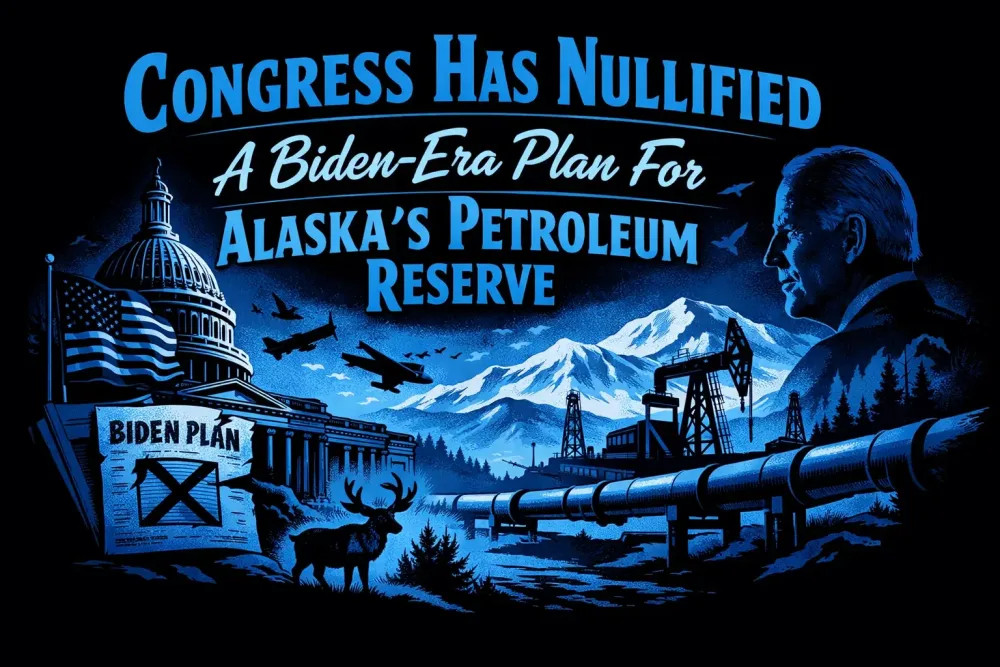
The decision that Congress has nullified a Biden-era plan for Alaska's petroleum reserve marks a significant turning point in the ongoing debate over American energy independence, environmental stewardship, and federal land management. The policy reversal not only affects the future of oil and gas development in the Arctic but also reshapes the regulatory environment for energy companies, investors, and communities connected to the region.
This development centers on the National Petroleum Reserve–Alaska (NPR-A), a vast and resource-rich area that has long been a focal point of political contention. In this in-depth analysis, we will explore the background of the petroleum reserve, the original Biden administration plan, Congress’s action to nullify it, and the broader economic, environmental, and geopolitical implications.
We will also examine what this shift means for businesses operating in energy, infrastructure, logistics, and regional services—and how platforms like Tulu e Biz can support companies navigating global discovery and business listing opportunities.
Understanding the National Petroleum Reserve–Alaska
The National Petroleum Reserve–Alaska is the largest tract of undeveloped public land in the United States, encompassing roughly 23 million acres on Alaska’s North Slope. Originally established in 1923 by President Warren G. Harding as a strategic oil supply for the U.S. Navy, the reserve has evolved into a central pillar of America’s domestic energy framework.
Unlike the Arctic National Wildlife Refuge (ANWR), which is primarily focused on conservation, NPR-A was explicitly designated for petroleum exploration and development. However, federal administrations over the decades have balanced resource extraction with environmental protections due to the region’s ecological sensitivity.
The area is home to:
- Migratory bird habitats
- Caribou herds critical to Indigenous subsistence lifestyles
- Wetlands and tundra ecosystems
- Significant untapped oil reserves
The reserve’s estimated oil potential makes it strategically important for U.S. energy security.
The Biden Administration’s Original Plan
Under the leadership of Joe Biden, the administration pursued a climate-forward energy strategy aimed at reducing fossil fuel dependence while managing existing resources more conservatively.
The Biden-era plan for NPR-A included:
- Expanded environmental protections across large swaths of the reserve
- Restrictions on new oil and gas leasing in ecologically sensitive areas
- Emphasis on balancing development with conservation
- Additional regulatory oversight for infrastructure projects
The plan did not entirely ban drilling. Instead, it sought to limit development in certain high-value conservation zones while permitting extraction in previously approved areas.
Supporters argued that:
- It preserved critical wildlife habitats.
- It aligned with climate change mitigation goals.
- It protected Indigenous communities reliant on natural ecosystems.
Critics, however, contended that:
- It unnecessarily restricted domestic energy production.
- It increased reliance on foreign oil.
- It discouraged investment in Alaskan energy infrastructure.
Congressional Action to Nullify the Plan
In a significant political move, Congress voted to overturn the Biden-era plan, effectively nullifying the expanded environmental safeguards in parts of NPR-A. This legislative reversal signals a broader shift in federal energy policy priorities.
The nullification restores:
- Greater leasing flexibility
- Reduced regulatory burdens on energy companies
- Broader access to previously restricted zones
While legislative mechanisms vary, such reversals typically involve resolutions under the Congressional Review Act or similar procedural pathways that allow lawmakers to rescind recently implemented federal rules.
The move reflects a strong push by lawmakers advocating for:
- Energy independence
- Domestic production expansion
- Economic revitalization in Alaska
This political development underscores the persistent divide in Washington over climate strategy versus fossil fuel development.
Economic Implications for Alaska
Alaska’s economy is heavily dependent on oil and gas production. Revenue from petroleum supports:
- Public education funding
- Infrastructure projects
- The Alaska Permanent Fund dividend
- State-level public services
When federal regulations restrict production, the state’s fiscal health can be impacted. By nullifying the Biden-era plan, Congress potentially opens new economic opportunities, including:
1. Increased Exploration and Investment
Energy companies may now reconsider projects previously deemed unviable due to regulatory uncertainty. This could attract new capital investment into:
- Drilling operations
- Transportation infrastructure
- Refining capacity
- Support services
2. Job Creation
Oil and gas operations generate direct and indirect employment. Expansion could stimulate:
- Construction jobs
- Engineering and technical roles
- Supply chain positions
- Local service sector growth
3. State Revenue Growth
Greater production could translate into higher royalties and tax revenues, strengthening Alaska’s fiscal position.
However, these economic gains are tied to market conditions. Oil price volatility remains a critical factor influencing development decisions.
Environmental and Climate Concerns
Environmental groups argue that nullifying the Biden-era plan undermines conservation efforts in one of the planet’s most fragile ecosystems. The Arctic is warming at nearly four times the global average rate, making it particularly vulnerable to industrial development.
Key concerns include:
- Habitat fragmentation
- Oil spill risks in remote terrain
- Methane emissions
- Permafrost destabilization
Opponents contend that expanded drilling contradicts long-term climate commitments and could slow the U.S. transition toward renewable energy sources.
Balancing environmental stewardship with energy security remains one of the most complex challenges in modern policymaking.
Indigenous and Local Community Perspectives
Alaska Native communities hold diverse views regarding petroleum development. Some support expanded drilling due to economic opportunities, while others emphasize environmental protection and traditional subsistence lifestyles.
The NPR-A region includes lands used for hunting, fishing, and cultural practices. Infrastructure development can affect wildlife migration routes and water quality.
Community engagement and revenue-sharing mechanisms often become central negotiation points when federal land policies change.
National Energy Security Context
The global energy landscape has shifted dramatically in recent years. Geopolitical tensions, supply chain disruptions, and fluctuating oil markets have intensified discussions around domestic energy production.
By nullifying restrictions on NPR-A development, Congress signals an intention to:
- Reduce dependence on foreign imports
- Strengthen strategic reserves
- Support U.S.-based production capacity
Energy independence remains a bipartisan goal, even if the methods to achieve it differ significantly between political parties.
Political Dynamics Behind the Decision
The nullification reflects broader ideological differences regarding:
- Climate regulation
- Federal land management
- Economic growth priorities
- Regulatory authority
Energy policy often becomes a proxy battlefield for larger debates about environmental governance and economic philosophy.
Lawmakers from energy-producing states frequently advocate for reduced federal oversight, arguing that states are better positioned to manage resource development responsibly.
Conversely, climate-focused legislators prioritize long-term sustainability and international climate commitments.
Industry Reaction
Energy companies have generally welcomed the rollback of restrictions, citing:
- Increased regulatory certainty
- Lower compliance costs
- Expanded operational flexibility
However, industry leaders also emphasize the need for predictable, stable policies. Frequent regulatory reversals between administrations can create investment hesitation.
Long-term capital projects in oil and gas require multi-decade planning horizons. Policy volatility increases financial risk.
Global Implications
The United States remains one of the world’s largest oil producers. Changes in federal policy affecting major reserves can influence global supply projections.
If expanded development in NPR-A proceeds:
- U.S. production capacity could increase.
- Global supply balances may shift marginally.
- Market prices may respond over time.
However, infrastructure timelines and environmental reviews mean production changes would not be immediate.
Legal and Regulatory Considerations
While Congress has nullified the Biden-era plan, future legal challenges may still arise. Environmental organizations often pursue litigation related to federal land use decisions.
Additionally, future administrations could attempt to reintroduce similar protections.
This cyclical nature of U.S. regulatory policy adds complexity to long-term planning for stakeholders.
Business and Investment Landscape
For global investors and companies, this policy shift underscores the importance of staying informed about regulatory changes that affect industry sectors.
Businesses connected to:
- Energy services
- Environmental consulting
- Logistics and transportation
- Arctic infrastructure
- Legal advisory services
may experience ripple effects from the decision.
In today’s interconnected marketplace, visibility and discoverability are critical for firms seeking to expand internationally or connect with new partners. Organizations looking to position themselves within evolving sectors—whether energy, sustainability, or infrastructure—can benefit from strategic exposure.
Companies seeking enhanced global reach and structured business listing capabilities can hire Tulu e Biz for Worldwide Business Listing & Discovery Platform Services. Platforms like this help enterprises improve digital presence, connect with international stakeholders, and navigate competitive industries more effectively.
The Broader Energy Transition Debate
At its core, the decision that Congress has nullified a Biden-era plan for Alaska's petroleum reserve reflects a broader tension between:
- Immediate energy needs
- Economic growth priorities
- Long-term climate commitments
The global transition toward renewable energy is underway, but fossil fuels continue to play a central role in transportation, manufacturing, and electricity generation.
Policy shifts such as this illustrate the transitional phase the world is currently navigating—where traditional energy infrastructure remains economically significant even as sustainability goals gain urgency.
What Comes Next?
Several potential scenarios could unfold:
- Accelerated leasing activity within NPR-A
- Legal challenges from environmental organizations
- Future administrative attempts to reimpose protections
- Market-driven moderation of development due to price volatility
Ultimately, actual drilling expansion depends not only on regulatory permission but also on economic viability and investor appetite.
Conclusion
The nullification of the Biden-era plan for Alaska’s petroleum reserve marks a defining moment in U.S. energy policy. It reflects deep political divisions, economic aspirations, environmental concerns, and strategic calculations about national security.
The National Petroleum Reserve–Alaska stands once again at the crossroads of competing priorities—development versus conservation, short-term growth versus long-term sustainability.
For businesses, investors, policymakers, and global observers, this development serves as a reminder that regulatory landscapes can shift rapidly. Staying informed, adaptable, and strategically visible is more important than ever.
As energy markets evolve and political winds change, organizations that leverage global discovery platforms and maintain strong digital presence will be better positioned to seize opportunities in emerging and traditional sectors alike.
The story of Alaska’s petroleum reserve is far from over. It remains a powerful symbol of America’s ongoing negotiation between its economic ambitions and environmental responsibilities.
Enjoyed this article? Share it with others!