
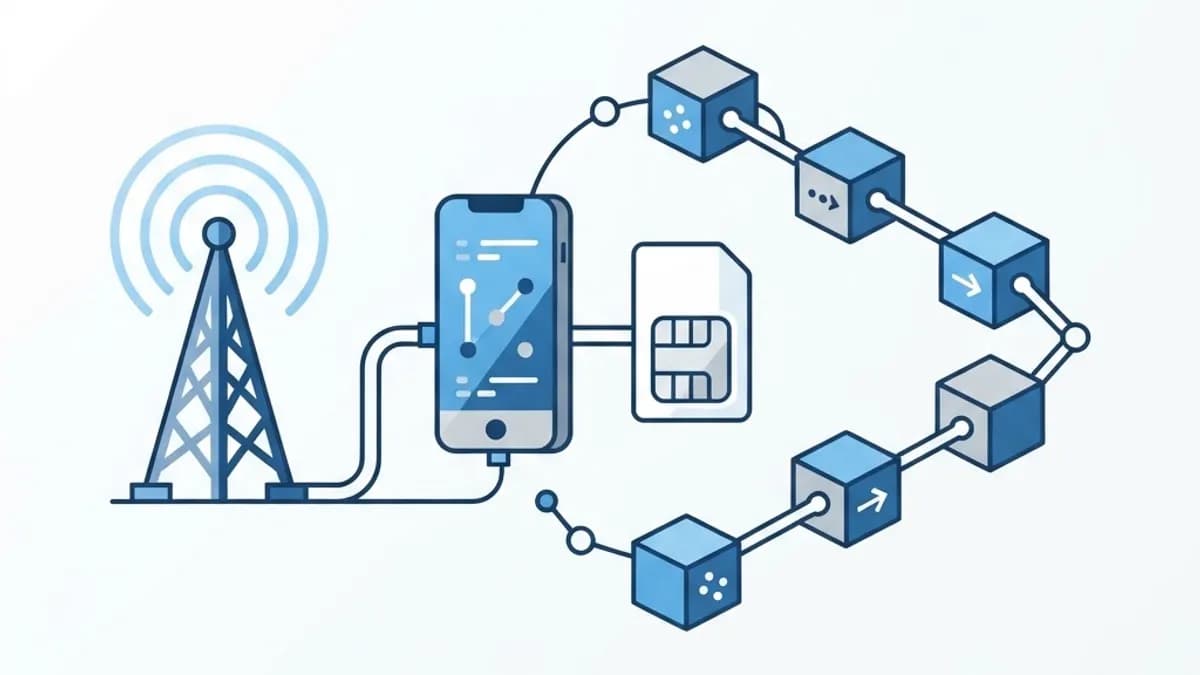
Blockchain in telecom has quietly moved from conference slides to live deployments. Carriers process billions of roaming records, interconnect invoices, and identity checks every month, and most of that work still involves reconciling files between companies that do not fully trust each other's numbers.
That is exactly the kind of problem distributed ledgers were built for. When two operators write to a shared, tamper-evident record, disputes shrink and settlement moves from weeks to near real time.
This article covers where blockchain genuinely helps telecom operators, which use cases deliver measurable savings, and what an honest rollout plan looks like.
What Is Blockchain in Telecom?
Blockchain in telecom means using shared, cryptographically secured ledgers so operators, roaming partners, and service providers can agree on data without a central intermediary. Records such as call detail summaries, roaming agreements, or number portability events are written once and verified by all relevant parties.
Most telecom deployments use permissioned networks rather than public chains. Carriers need confidentiality over commercial rates while still proving that a transaction happened, so private channels and selective disclosure matter more than open transparency.
Smart contracts add automation on top. A roaming agreement encoded as a contract can calculate charges automatically as usage records arrive, removing the monthly invoice argument entirely.
Who Uses Blockchain in the Telecom Sector?
Adoption spans network operators and the wider ecosystem of vendors and regulators around them.
- Mobile network operators automating wholesale roaming and interconnect settlement.
- MVNOs needing transparent usage reconciliation with host networks.
- Tower and infrastructure providers tracking shared asset usage and maintenance records.
- Regulators monitoring number portability, spectrum records, and lawful audit trails.
- IoT and device makers managing eSIM provisioning and device identity at scale.
Key Use Cases and Features
Roaming and Interconnect Settlement
Two operators write usage events to a shared ledger as they occur. Smart contracts price them against the agreed tariff, so both sides see the same running balance. Disputes drop because there is no second version of the file to compare.
Fraud Reduction
Subscription fraud, SIM swap attacks, and roaming fraud all exploit delays in information sharing. A shared ledger surfaces suspicious patterns faster because participating operators see verified events near real time instead of days later.
eSIM and Identity Management
Device provisioning benefits from tamper-evident records of which profile was issued to which device and when. This matters enormously for IoT fleets where thousands of devices activate across borders.
Scalability Through Layer 2
Telecom data volumes are enormous, so throughput planning is essential. Many designs batch records off-chain and anchor proofs periodically. Teams evaluating public-network options should compare approaches described in this analysis of which rollup service is best for blockchain projects.
How to Get Started With a Telecom Blockchain Project
Carriers that succeed treat this as a commercial project with a technical component, not the reverse.
- Pick one bilateral process, usually roaming settlement with a single willing partner.
- Baseline the current cost: dispute volume, days to settle, and staff hours per cycle.
- Agree the data model for what goes on-chain versus what stays in existing systems.
- Encode the tariff logic as a smart contract and test against historical records.
- Run in parallel with the existing process for two or three billing cycles.
- Audit security and key custody before touching production settlement.
- Add partners incrementally, reusing the same contract templates.
Benefits for Operators
The gains are operational and measurable, which is why finance teams often champion these projects once the first pilot reports numbers.
- Faster settlement, moving from monthly cycles toward near-continuous reconciliation.
- Lower dispute costs because both parties share one verified record set.
- Reduced fraud losses through quicker cross-operator visibility.
- Simpler audits with cryptographically verifiable history.
- Better sustainability reporting for energy and equipment data, a theme covered in this article on blockchain for sustainable business practices.
Potential Challenges
Telecom is a heavily regulated, high-volume industry, which creates specific obstacles worth naming upfront.
- Throughput limits that require batching and off-chain storage strategies.
- Commercial confidentiality around tariffs, demanding careful privacy design.
- Legacy BSS and OSS integration, often the largest share of project effort.
- Standards fragmentation, since partners may prefer different frameworks.
Best Practices and Tips
These principles keep telecom blockchain projects grounded in business value.
- Keep raw call records off-chain and anchor only aggregated hashes and settlement outcomes.
- Start bilateral, then expand, rather than trying to launch a large consortium immediately.
- Write tariff logic with versioning so contract changes do not break historical records.
- Involve regulatory and legal teams from the first workshop, not after the pilot.
Real-World Example
Picture two mid-sized operators in neighboring countries with a roaming agreement. Each month, their teams exchanged usage files, found mismatches in a small percentage of records, and spent weeks negotiating adjustments. Cash was tied up in the meantime.
They deployed a permissioned ledger where each hourly usage batch was hashed and written with a signature from both networks. A smart contract applied the agreed tariff and produced a running settlement figure both parties could query at any time. Disputes fell to a fraction of previous levels, settlement moved from monthly to weekly, and the finance teams reallocated staff time to analysis instead of spreadsheet comparison.
Why It Matters
Telecom margins are thin and traffic volumes keep rising. Any process that removes duplicated reconciliation work has an immediate effect on cost per subscriber. Blockchain in telecom is compelling precisely because the industry already operates as a network of partners exchanging structured data.
There is a strategic angle too. As operators expand into IoT connectivity, private 5G, and enterprise services, verifiable multi-party records become part of the product rather than back-office plumbing.
Frequently Asked Questions
Can blockchain handle telecom transaction volumes?
Not by writing every call record on-chain. Practical designs aggregate data off-chain and commit periodic proofs or settlement results, which keeps volumes manageable while preserving verifiability.
Do operators need a cryptocurrency for this?
No. Settlement usually still happens through normal banking channels. The ledger provides the agreed figures; tokens are optional and rarely used in carrier deployments.
Which frameworks are common in telecom?
Permissioned platforms with strong privacy features dominate, since carriers must protect commercial terms while sharing proof of transactions with specific partners.
How long before a pilot shows results?
With one willing partner and clean historical data, most operators can demonstrate measurable dispute reduction within two to three billing cycles after go-live.
Conclusion
Blockchain in telecom delivers value where multiple operators must agree on the same data: roaming settlement, fraud signals, portability, and device identity. Start bilateral, keep heavy data off-chain, encode tariffs as versioned contracts, and measure disputes and settlement days before and after.
If scalability is your main concern, review this comparison of rollup services for blockchain projects before locking in an architecture.
Enjoyed this article? Share it with others!