
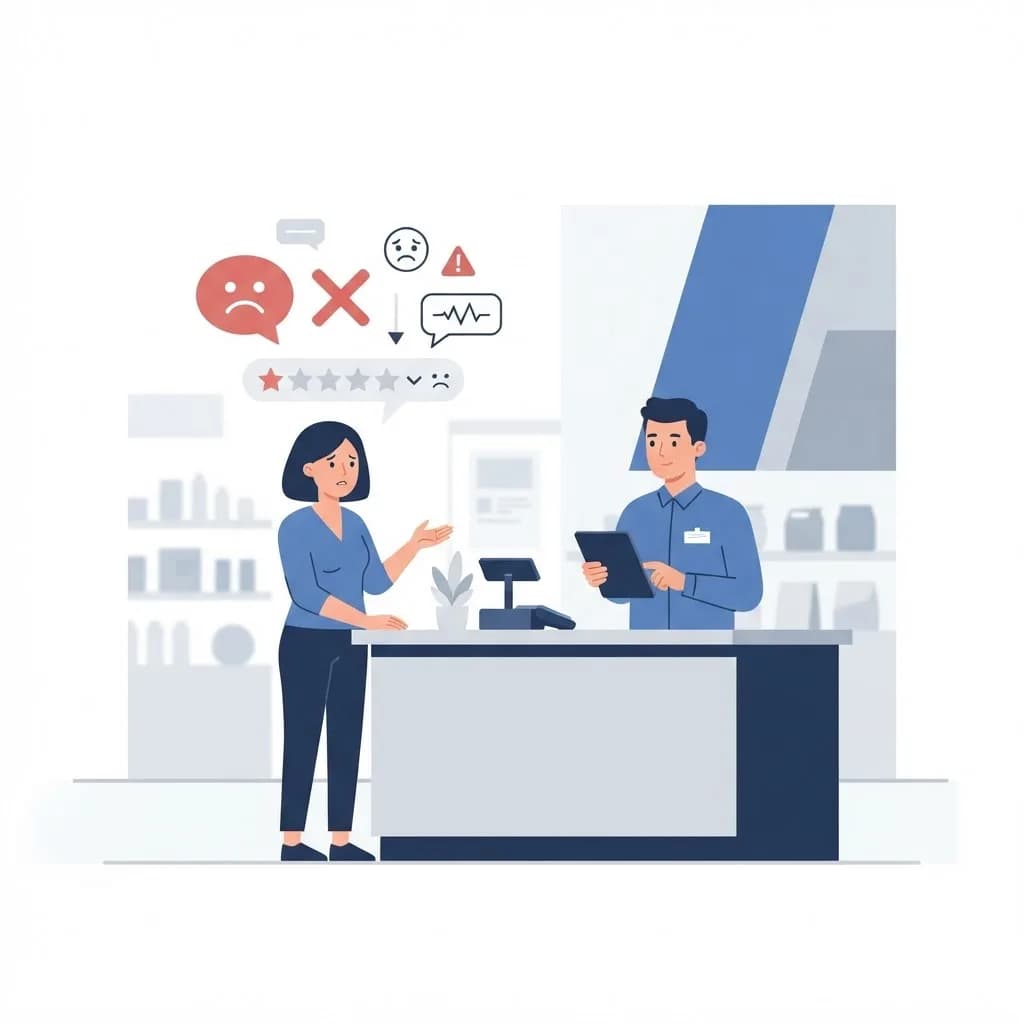
Understanding why customer complaints are common in retail stores is essential for any business that wants to keep shoppers happy and loyal. Retail is fast-paced, high-volume, and deeply personal, which naturally creates friction between expectations and reality.
From long checkout lines to out-of-stock items, small frustrations add up quickly. When complaints go unaddressed, they damage reputation and drive customers to competitors.
In this article, we explore the real reasons behind retail complaints and share practical strategies to turn negative experiences into loyalty-building opportunities.
What Are Retail Customer Complaints?
Retail customer complaints are expressions of dissatisfaction about products, services, or experiences within a store. They can be verbal, written, or shared online through reviews and social media.
The root of most complaints is a gap between expectation and experience. When customers expect fast service, quality products, or fair pricing and do not receive it, frustration follows.
Complaints are not always negative. They provide valuable feedback that, when handled well, helps retailers improve operations and strengthen relationships.
Who Deals With Retail Complaints?
Complaints touch nearly every level of a retail operation, not just frontline staff.
- Store associates handling direct customer interactions
- Managers resolving escalated issues
- Customer service teams managing calls and emails
- Marketing teams monitoring online reviews and social media
- Business owners tracking patterns and long-term reputation
Key Reasons Complaints Happen
Poor Customer Service
Rude, unhelpful, or untrained staff are among the top complaint triggers. Customers remember how they were treated far longer than the product itself.
Product and Stock Issues
Out-of-stock items, defective products, and inaccurate descriptions frustrate shoppers who came in with clear expectations.
Long Wait Times
Slow checkouts and understaffed stores create frustration, especially during peak hours and holidays.
Pricing and Promotion Confusion
Unclear pricing, expired promotions, and checkout discrepancies erode trust. Consistent online and in-store digital marketing messaging helps prevent this confusion.
How to Handle and Reduce Complaints
Reducing complaints requires a proactive, systematic approach rather than reactive damage control.
- Listen fully to the customer without interrupting.
- Acknowledge the issue and apologize sincerely.
- Offer a clear, fair solution quickly.
- Follow up to confirm the customer is satisfied.
- Record the complaint to spot recurring patterns.
- Train staff based on common issues you identify.
Many complaints now appear online first. A responsive presence backed by strong social media management lets you address issues publicly and professionally.
Benefits of Handling Complaints Well
Turning complaints into positive experiences delivers measurable business value.
- Increased customer loyalty and repeat purchases
- Better online reviews and reputation
- Valuable insights for improving operations
- Higher staff confidence in resolving issues
- Reduced customer churn to competitors
Potential Challenges
Managing complaints is not always straightforward and comes with obstacles.
- Emotional or aggressive customers
- Inconsistent policies across staff members
- High volume during peak seasons
- Negative reviews that spread quickly online
Best Practices and Tips
Small operational changes can dramatically reduce complaint frequency.
- Train staff regularly in communication and empathy
- Keep pricing and promotions clear and consistent
- Monitor reviews and respond promptly
- Use feedback data to fix recurring root causes
Real-World Example
Picture a clothing store facing frequent complaints about long checkout lines. Instead of ignoring the feedback, the manager reviews the pattern and adds a mobile checkout option during peak hours.
Within weeks, wait-time complaints drop significantly, online reviews improve, and repeat visits increase. By treating complaints as data rather than annoyances, the store turns a weakness into a competitive advantage.
Why It Matters
Complaints are unavoidable in retail, but how you respond defines your brand. A single well-handled complaint can convert an angry shopper into a loyal advocate.
Ignored complaints, on the other hand, quietly push customers away and damage your reputation in an era where reviews influence nearly every purchase decision.
Frequently Asked Questions
What is the most common retail complaint?
Poor customer service and long wait times consistently rank as the top complaints across retail sectors.
How should staff respond to angry customers?
Listen calmly, apologize sincerely, avoid arguing, and focus on offering a fair, quick solution.
Do online reviews really impact retail sales?
Yes. Most shoppers read reviews before buying, so unresolved complaints online can directly reduce foot traffic and sales.
Can complaints actually help a business?
Absolutely. Complaints reveal weaknesses and give retailers a roadmap for improving products, service, and operations.
Conclusion
Now that you understand why customer complaints are common in retail stores, you can treat them as opportunities rather than threats. With better training, clear communication, and prompt responses, complaints become a powerful tool for growth and loyalty.
If you want to manage feedback and reputation more effectively online, explore professional content writing to craft clear, customer-friendly communication.
Enjoyed this article? Share it with others!