
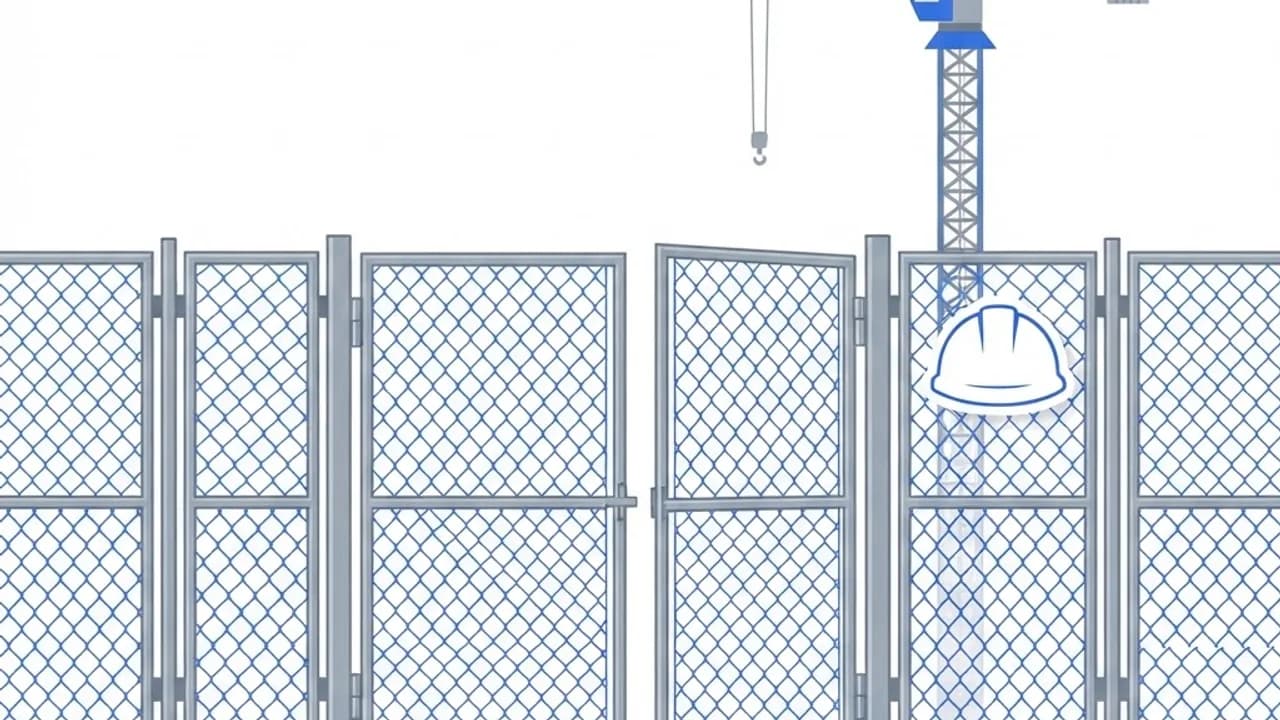
The purpose of a construction site fence goes far beyond marking where the work stops. Site fencing is a legal requirement on most projects, a liability shield, a theft deterrent and, increasingly, a marketing surface.
It is also the cheapest protective control on any site. A continuous perimeter with controlled gates prevents more incidents per dollar than almost any other measure a contractor can install.
This guide explains the functions a construction fence performs, the types available, and how to specify and maintain one that actually does its job.
What Is a Construction Site Fence?
A construction site fence is a temporary perimeter enclosure installed around an active work area. It physically separates the hazardous site from public space, defines the legal boundary of the works, and controls who can enter and where.
Common systems include chain-link mesh panels, welded mesh with debris netting, solid plywood or steel hoarding, and heras-style temporary fencing with concrete or block feet.
A construction fence is a safety control, a security measure and a legal boundary at the same time, which is why specifying it as an afterthought so often causes problems.
Who Needs Construction Site Fencing?
Fencing requirements are usually set by permit conditions and scale with public exposure.
- Contractors on any site accessible to the public
- Urban and infill projects with footpaths and neighbours at the boundary
- Demolition sites requiring hard exclusion zones and debris containment
- Long-duration developments storing plant and materials on site
- Projects near schools, parks or high pedestrian traffic areas
Key Purposes of a Construction Site Fence
Public Safety and Liability Protection
Open excavations, stacked materials and moving plant are lethal to an untrained visitor. Fencing keeps the public out and is a central defence if a trespass injury claim ever arises, particularly where children are involved.
Theft and Vandalism Deterrence
A continuous fence with lockable gates removes casual opportunity, which accounts for a large share of site theft. Solid hoarding adds the further benefit of blocking sightlines to valuable equipment.
Legal Compliance and Boundary Definition
Most jurisdictions require site enclosure as a condition of the building permit, often with minimum heights and signage. The fence also demonstrates where your control of the works begins and ends.
Debris Containment and Branding
Netting and hoarding stop dust and debris reaching footpaths and neighbouring property. Hoarding panels then double as a large, permanently visible advertising surface for the project and the contractor.
How to Specify and Install Site Fencing
Fence design should follow from the site's exposure, not from what is cheapest to hire.
- Check permit conditions for required height, type and signage.
- Walk the boundary and identify every potential access point and sightline.
- Select the fence type based on exposure, duration and debris risk.
- Plan gate locations for vehicle turning, deliveries and pedestrian entry.
- Ensure the fence line preserves a compliant accessible pedestrian route.
- Install with adequate ballast, bracing and anti-lift gate hardware.
- Add warning, no-trespass, PPE and emergency contact signage.
- Fit lighting and reflective elements where the fence abuts traffic.
- Inspect the full perimeter at the start and end of every shift.
Benefits of Proper Site Fencing
Few controls deliver this many outcomes from one installation.
- Substantially reduced public liability exposure
- Lower theft and vandalism losses, and simpler insurance compliance
- Clear demonstration of permit compliance to inspectors
- Dust and debris contained within the site boundary
- Free, high-visibility branding surface for the duration of the project
Potential Challenges
Fences fail for practical reasons more than design reasons.
- Irregular boundaries and gradients that break fence continuity
- Wind loading on solid hoarding requiring engineered bracing
- Gates left open or panels removed for access and not reinstated
- Materials stacked against the fence creating a climbing aid
Best Practices and Tips
Perimeter discipline is a daily habit, not a one-off task.
- Keep the number of gates to the minimum the logistics genuinely require.
- Never stack materials, bins or plant against the outside of the fence.
- Assign one person responsibility for locking down the perimeter each evening.
- Repair damage immediately — a single gap defeats the whole enclosure.
Real-World Example
A city-centre project shared its boundary with a busy footpath and a primary school route. The contractor upgraded from open mesh to solid hoarding with a covered pedestrian walkway, reduced access to one supervised gate, and added debris netting above the hoarding line.
Public complaints dropped to almost nothing and the site recorded no trespass incidents across a fourteen-month build. The hoarding carried project renders and a QR code to the leasing enquiry page, which was built as part of a wider digital sales and enquiry solution and supported by targeted email marketing to registered prospects.
Why Site Fencing Matters
An unfenced construction site is an attractive nuisance in the legal sense: an obvious hazard that draws curiosity, especially from children. Courts have repeatedly held site controllers liable for injuries to people who had no right to be there.
Beyond liability, the fence is the public face of the project for months. Contractors who treat it as a designed surface rather than a rented commodity gain visibility, which is why hoarding graphics are often produced alongside a company's WordPress website development and kept current through ongoing maintenance and support.
Frequently Asked Questions
Is a construction site fence legally required?
In most jurisdictions yes, as a condition of the building or works permit, particularly where the site is accessible to the public. Requirements typically specify minimum height, continuity and signage.
How tall should a construction site fence be?
Around two metres is the usual minimum, with higher enclosures required in high-risk or high-traffic urban locations. Always confirm the figure in your local regulations and permit conditions.
What is the difference between site fencing and hoarding?
Fencing is generally open mesh that allows visibility and airflow. Hoarding is solid panelling that blocks sightlines, contains dust and debris, and provides a printable surface, at higher cost and wind loading.
Can a construction fence be used for advertising?
Yes, and it commonly is. Hoarding graphics are one of the most cost-effective advertising surfaces available, though local councils may regulate signage size and content.
Conclusion
The purpose of a construction site fence is to protect the public, reduce liability, deter theft, satisfy permit conditions and contain debris — all from a single control installed before work begins. Specify it for your actual exposure, install it properly and inspect it daily.
Walk your perimeter today and find the gap you have stopped noticing. And if that hoarding could be doing more for your brand, look into professional logo and brand design to make every metre of it count.
Enjoyed this article? Share it with others!