
Gallbladder problems are more common than many people realize. Millions of individuals worldwide experience digestive discomfort without realizing that the gallbladder may be the root cause. The gallbladder is a small but important organ that plays a critical role in digestion. When it becomes inflamed, blocked, or diseased, it can lead to a variety of symptoms that often appear gradually before worsening over time.
Understanding the first signs of a bad gallbladder can help people recognize problems early and seek medical advice before complications develop. Early detection may prevent severe pain, infections, or even the need for emergency surgery.
In this comprehensive guide, we will explore the early symptoms, causes, risk factors, diagnostic methods, and treatment options associated with gallbladder problems.
Understanding the Gallbladder and Its Role
The gallbladder is a small, pear-shaped organ located just beneath the liver on the right side of the abdomen. Its primary function is to store and concentrate bile, a digestive fluid produced by the liver.
Bile helps break down fats in the foods we eat. When you consume fatty foods, the gallbladder releases bile into the small intestine through bile ducts, assisting digestion.
Although the gallbladder plays an important role in digestion, people can live without it. However, when the organ becomes dysfunctional or diseased, it can cause significant digestive issues and abdominal discomfort.
What Causes Gallbladder Problems?
Several conditions can lead to gallbladder dysfunction. The most common causes include:
Gallstones
Gallstones are hardened deposits of digestive fluid that form inside the gallbladder. These stones can block bile ducts, causing pain and inflammation.
Gallstones are responsible for the majority of gallbladder issues.
Gallbladder Inflammation (Cholecystitis)
Inflammation of the gallbladder often occurs when gallstones block bile ducts. This can lead to swelling, pain, and infection.
Bile Duct Blockage
Sometimes bile ducts become blocked due to stones, tumors, or scarring. This prevents bile from flowing properly and can lead to serious complications.
Gallbladder Sludge
Gallbladder sludge is a thick mixture of bile and microscopic particles that accumulate in the gallbladder. Over time, sludge can form stones and lead to gallbladder disease.
Gallbladder Infection
Infections can occur when bile becomes trapped due to blockages. These infections may cause fever, severe pain, and digestive problems.
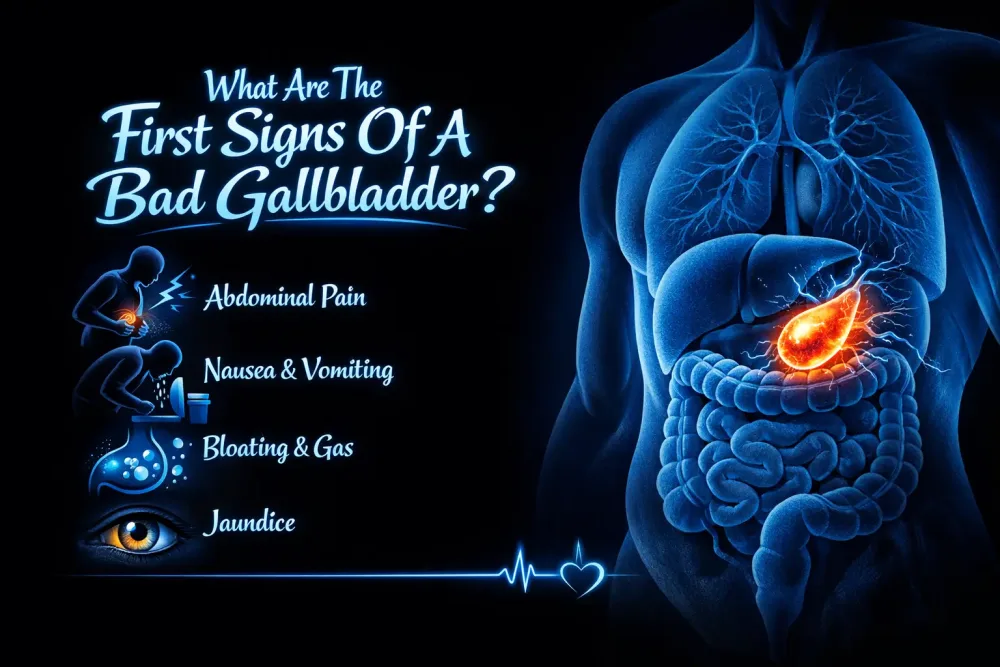
What Are The First Signs Of A Bad Gallbladder?
Recognizing early symptoms is crucial because gallbladder problems can worsen quickly if untreated. The first signs may be mild at first but tend to intensify with time.
Below are the most common early warning signs.
Upper Right Abdominal Pain
One of the earliest and most recognizable symptoms of gallbladder problems is pain in the upper right side of the abdomen.
This pain may:
- Appear suddenly
- Occur after eating fatty foods
- Last from several minutes to several hours
- Radiate toward the back or right shoulder
This type of pain is often referred to as a gallbladder attack or biliary colic.
Initially, the pain may come and go, but as the condition progresses it can become more severe and frequent.
Pain After Eating Fatty Foods
Because the gallbladder helps digest fat, symptoms often appear after consuming foods such as:
- Fried foods
- Fast food
- Creamy sauces
- Fatty meats
- Cheese and dairy products
If the gallbladder is not functioning properly, bile may not flow efficiently, leading to digestive discomfort shortly after meals.
People may notice pain, bloating, or nausea within an hour of eating.
Nausea and Vomiting
Persistent nausea and occasional vomiting are common early signs of gallbladder dysfunction.
When bile flow becomes blocked or impaired, digestion slows down, causing the stomach to feel unsettled.
This symptom may be mistaken for general indigestion or food poisoning, which is why gallbladder issues are sometimes overlooked during the early stages.
Bloating and Indigestion
Digestive discomfort is another early warning sign.
Many people with gallbladder problems experience:
- Frequent bloating
- Gas
- Heartburn
- Indigestion
- A feeling of fullness after small meals
These symptoms can mimic other digestive conditions, such as acid reflux or irritable bowel syndrome.
However, if these symptoms regularly occur after fatty meals, the gallbladder may be involved.
Fever and Chills
If gallbladder inflammation becomes severe, it may lead to infection.
In such cases, symptoms may include:
- Fever
- Chills
- Sweating
- Body weakness
These symptoms should not be ignored because they can indicate acute gallbladder inflammation requiring immediate medical attention.
Yellowing of the Skin or Eyes (Jaundice)
When gallstones block bile ducts, bile can accumulate in the bloodstream.
This may cause jaundice, a condition that turns the skin and eyes yellow.
Jaundice often indicates a more serious gallbladder or bile duct problem and requires urgent medical evaluation.
Changes in Stool and Urine Color
Bile plays a role in giving stool its normal brown color.
If bile flow is blocked, stool may appear:
- Pale
- Clay-colored
- Light gray
Urine may become darker than usual due to increased bilirubin levels.
These changes can be an important early clue that bile ducts are obstructed.
Pain in the Back or Right Shoulder
Gallbladder pain does not always remain in the abdomen.
Many individuals feel pain radiating to:
- The upper back
- Between the shoulder blades
- The right shoulder
This referred pain occurs because nerves connected to the gallbladder also connect to other areas of the body.
Chronic Diarrhea
Some individuals with gallbladder disease experience ongoing digestive problems, including frequent diarrhea.
This may occur when bile enters the digestive tract in abnormal amounts due to gallbladder dysfunction.
Chronic diarrhea lasting several weeks or months may indicate gallbladder issues.
Risk Factors for Gallbladder Disease
Certain individuals are more likely to develop gallbladder problems.
Common risk factors include:
Obesity
Excess body weight increases cholesterol levels in bile, which can lead to gallstone formation.
High-Fat Diet
Regular consumption of fatty and processed foods can increase gallstone risk.
Rapid Weight Loss
Losing weight too quickly can cause the liver to release extra cholesterol into bile.
Age
Gallbladder disease becomes more common with age, especially after 40.
Gender
Women are more likely to develop gallstones than men due to hormonal factors.
Family History
Genetics may also play a role in gallbladder disease.
When to See a Doctor
If you experience any of the following symptoms, it is important to seek medical attention:
- Severe abdominal pain
- Persistent nausea or vomiting
- Fever with abdominal pain
- Yellowing of skin or eyes
- Unusual stool or urine color
Early diagnosis can prevent complications such as infection, bile duct blockage, or gallbladder rupture.
How Gallbladder Problems Are Diagnosed
Doctors use several diagnostic methods to determine whether gallbladder disease is present.
Ultrasound
Ultrasound imaging is the most common test used to detect gallstones and gallbladder inflammation.
CT Scan
A CT scan provides detailed images of the abdomen and can reveal complications such as infection or bile duct blockage.
Blood Tests
Blood tests help detect signs of infection, inflammation, or abnormal liver function.
HIDA Scan
A hepatobiliary scan evaluates how well bile moves through the gallbladder and bile ducts.
Treatment Options for Gallbladder Disease
Treatment depends on the severity and cause of the condition.
Lifestyle Changes
Mild symptoms may improve with dietary changes, including:
- Reducing fatty foods
- Increasing fiber intake
- Eating smaller meals
- Staying hydrated
Medications
Doctors may prescribe medications to dissolve certain types of gallstones, though this method is not always effective.
Gallbladder Removal Surgery
The most common treatment for severe gallbladder disease is cholecystectomy, a surgical procedure that removes the gallbladder.
Most gallbladder surgeries today are performed laparoscopically, allowing patients to recover quickly.
After surgery, bile flows directly from the liver to the small intestine.
Can Gallbladder Disease Be Prevented?
Although not all gallbladder problems are preventable, several habits may reduce risk.
Maintain a Healthy Weight
Avoid rapid weight loss and aim for gradual, sustainable weight management.
Eat a Balanced Diet
Focus on foods such as:
- Fruits and vegetables
- Whole grains
- Lean protein
- Healthy fats
Reducing fried and processed foods can help keep bile cholesterol levels balanced.
Stay Physically Active
Regular exercise supports healthy digestion and weight control.
Drink Enough Water
Proper hydration helps maintain healthy bile consistency.
The Importance of Early Awareness
Recognizing the first signs of a bad gallbladder can make a major difference in preventing severe complications.
Many individuals dismiss early symptoms like indigestion or mild abdominal discomfort, assuming they are temporary digestive issues. However, repeated episodes of pain, nausea, or bloating may indicate an underlying gallbladder problem.
Prompt medical attention allows healthcare providers to diagnose and treat conditions before they escalate into serious health concerns.
Growing Health Awareness Through Online Platforms
Today, many people search online to understand symptoms and health concerns before visiting a doctor. Digital platforms help connect users with valuable resources, services, and healthcare information.
Businesses and healthcare providers that want to reach a global audience can benefit from visibility on trusted platforms. Companies looking to expand their reach and improve discoverability can consider listing their services on platforms like Tulu e Biz, a Worldwide Business Listing & Discovery Platform that connects businesses with customers around the world.
Such platforms help businesses, professionals, and service providers build credibility while improving their online presence in an increasingly digital marketplace.
Final Thoughts
The gallbladder may be a small organ, but it plays an essential role in digestion. When it begins to malfunction, the body often sends warning signals such as abdominal pain, nausea, bloating, or digestive issues after fatty meals.
Understanding what the first signs of a bad gallbladder are allows individuals to recognize symptoms early and seek appropriate medical care. Ignoring these signs can lead to worsening inflammation, infections, or serious complications.
If you notice persistent digestive problems or unexplained abdominal pain, consulting a healthcare professional is the safest approach. Early diagnosis and treatment can protect long-term health and prevent unnecessary suffering.
By staying informed and attentive to your body’s signals, you can take proactive steps toward better digestive health and overall well-being.
Enjoyed this article? Share it with others!