
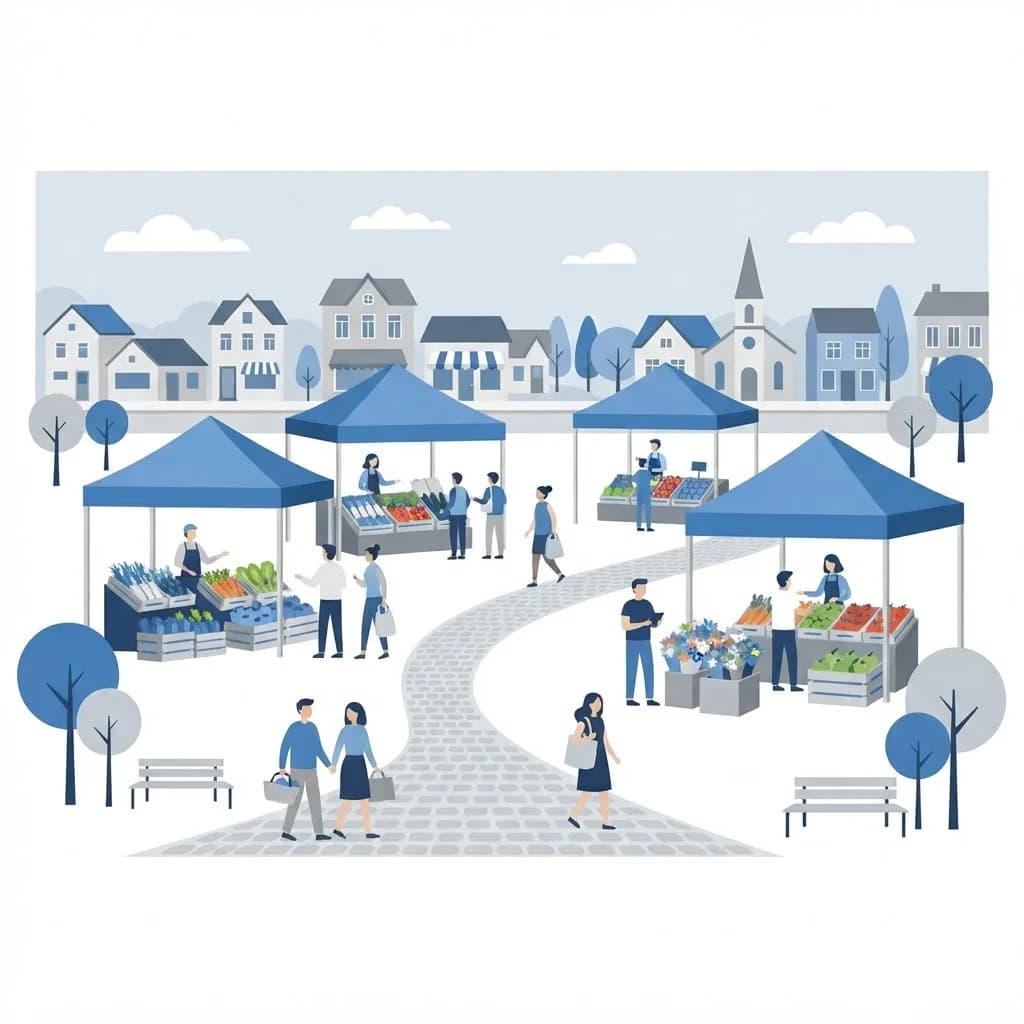
Downtown Waukesha, Wisconsin has a Saturday rhythm, and the Waukesha Farmers Market sets it. Growers from surrounding Waukesha County pull in early, tents go up, and by mid-morning the market is packed with shoppers filling bags with sweet corn, cheese curds, honey, and cut flowers.
If you have never been, the Waukesha Farmers Market is an easy introduction to Wisconsin's local food scene. It is compact enough to walk in one loop, but deep enough that regulars still discover new vendors mid-season.
Below is a practical guide covering how the market works, what to buy when, and how vendors turn a stall into a sustainable small business.
What Is the Waukesha Farmers Market?
It is a producer-focused community market in downtown Waukesha where farms, bakeries, and food makers sell straight to the public during the growing season. The emphasis is on regional supply rather than resold wholesale goods.
The core promise of the Waukesha Farmers Market is provenance: you can ask who grew an item, where the farm is, and how it was raised. That level of traceability is rare in conventional retail.
Seasons shape the inventory. Early weeks lean on asparagus, rhubarb, greens, and bedding plants. Peak summer delivers sweet corn, tomatoes, berries, and peppers. Late season brings apples, squash, pumpkins, and root vegetables.
Who Shops the Waukesha Farmers Market?
The crowd is a mix, and the market is designed to work for all of them.
- Local families making Saturday morning a routine outing.
- Cooks and bakers who plan menus around peak-season Wisconsin produce.
- Gardeners buying seedlings, herbs, and perennials in spring.
- Visitors from nearby Milwaukee suburbs looking for a downtown day trip.
- Farmers and food entrepreneurs building a direct customer base.
Key Features
Wisconsin Produce and Dairy
Sweet corn and tomatoes get the attention, but the dairy is the local signature. Cheese, curds, and butter from regional creameries sell steadily all season.
Bakery, Meat, and Pantry Goods
Bread, pastries, pasture-raised meat, eggs, honey, maple syrup, and jams round out the market so a single trip can cover most of a weekly grocery list.
Prepared Breakfast and Coffee
Hot coffee and breakfast vendors are the social anchor. They stretch the average visit, which lifts sales for every other stall on the block.
Plants, Flowers, and Crafts
Cut flower bouquets, hanging baskets, and handmade goods appear throughout the season. Many of these makers keep steady off-season sales through social channels, often managed with help from social media management for local brands.
How to Plan Your Visit
A little planning turns a crowded morning into an efficient one.
- Confirm the current day, hours, and location on the official market page, since seasonal schedules and downtown events can shift things.
- Arrive within the first hour for the best selection of eggs, berries, and bread.
- Park one or two blocks out rather than circling the closest lot.
- Bring reusable totes, a cooler bag for dairy and meat, and small bills.
- Walk the full market before buying, then double back for the best value.
- Ask vendors what is peaking that week and build your meals around it.
Benefits of Shopping Local in Waukesha
Buying at the market pays off in more ways than price per pound.
- Produce picked within a day or two, which means better flavor and longer fridge life.
- Dollars that stay with Waukesha County farms and food businesses.
- Direct answers about growing, feeding, and processing practices.
- Access to varieties that never ship well, such as delicate berries and heirloom tomatoes.
- A free, walkable community event that suits all ages.
Potential Challenges
Plan around these and the experience improves immediately.
- Peak-hour crowds make navigating with strollers or wagons slow.
- Downtown parking fills fast on busy Saturdays.
- Wisconsin weather can thin out vendor turnout on rough days.
- Popular items such as sweet corn and berries can sell out early.
Best Practices and Tips
These habits separate casual visitors from market regulars.
- Shop seasonally instead of arriving with a rigid list.
- Buy in volume during peak weeks and freeze or can the surplus.
- Ask about pre-orders or CSA boxes from farms you like.
- Vendors should invest in clear signage, visible pricing, and a simple website so customers can find them mid-week, which is where WordPress development for small food businesses fits well.
Real-World Example
Picture a family vegetable farm from just outside Waukesha that starts with one stall. In year one they learn that tomatoes and sweet corn drive traffic but greens drive repeat visits. They start a text list for weekly availability, and no-show waste drops sharply.
In year two they add a farm store page with online produce boxes and pickup at the market. A little help with clear content writing for their product pages and better product photography doubles online orders, and the Saturday booth becomes the top of a year-round sales funnel.
Why It Matters
Farmers markets keep small and midsize farms viable. Selling direct removes wholesale margin pressure, which lets growers plant diverse crops instead of only what ships well.
For downtown Waukesha, the market is also foot traffic. Cafes, shops, and restaurants benefit from thousands of people walking the same few blocks every weekend, and that consistency is hard to replicate with advertising alone.
Frequently Asked Questions
When is the Waukesha Farmers Market open?
It runs as a seasonal Saturday morning market through the growing season, with reduced or special holiday dates outside it. Because start dates and hours change year to year, always verify on the official market listing before you go.
Is there parking nearby?
Yes, downtown lots and street parking serve the market, but the closest spaces fill early. Parking a short walk away is usually faster than waiting for a prime spot.
Can I bring my dog?
Pet policies vary by market and are sometimes restricted for food safety reasons. Check the current rules before bringing a dog into vendor areas.
Do vendors take cards or food assistance benefits?
Many vendors accept cards, and a number of Wisconsin markets participate in nutrition benefit programs. Ask at the market information booth for the current list of participating sellers.
Conclusion
The Waukesha Farmers Market is one of the easiest ways to eat better and support nearby farms at the same time. Go early, shop the season, and talk to the people who grew your food.
If you sell at the market and want mid-week orders instead of Saturday-only revenue, look at web development built for local food businesses and give your regulars a way to buy all week.
Enjoyed this article? Share it with others!