
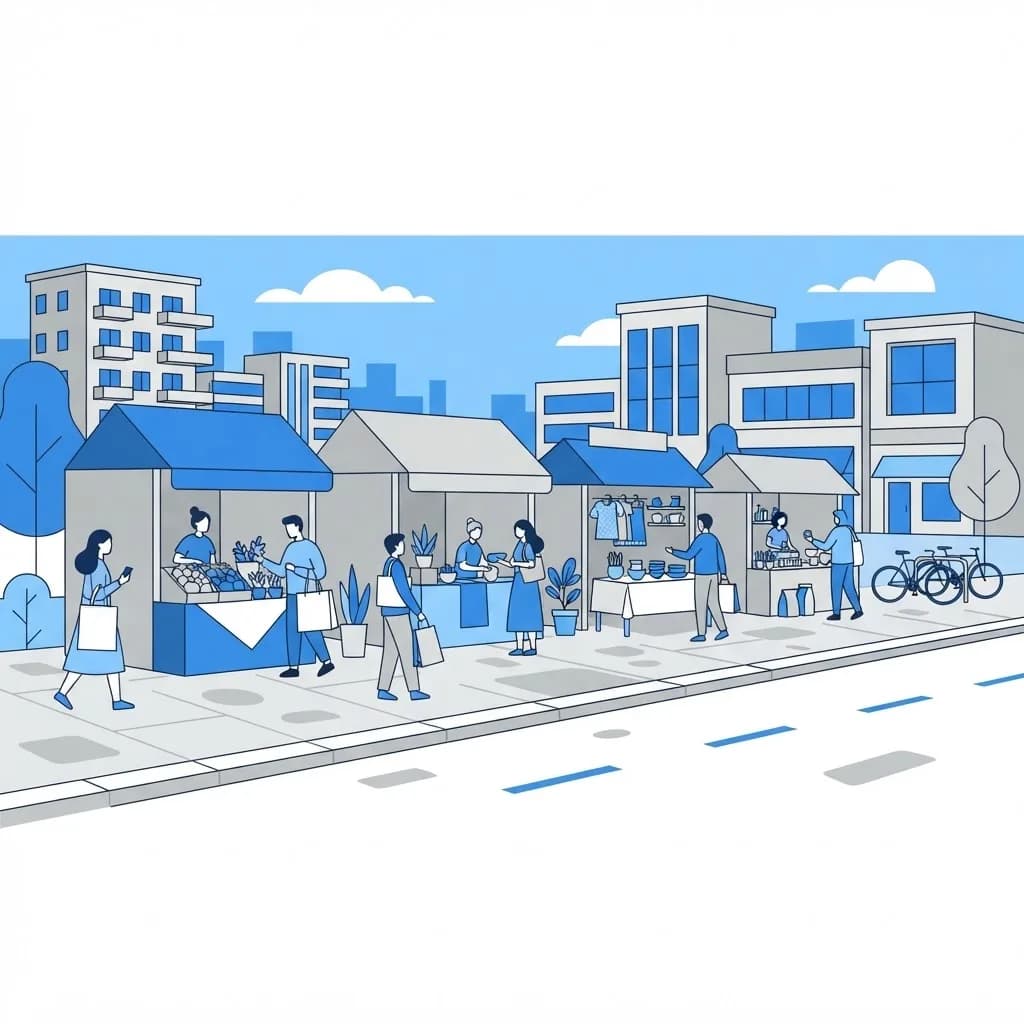
A good neighborhood market changes the way a community shops. Vine Street Market is one of those places where produce, prepared food, handmade goods, and conversation share the same block. Instead of a warehouse aisle, you get a row of stalls and the people who actually made or grew what they sell.
Markets named after Vine Street exist in several towns, and each has its own personality. What they share is a format: independent vendors, a walkable footprint, seasonal rhythms, and a schedule that regulars memorize.
This guide explains how a market like Vine Street Market works, who benefits most from shopping there, and how vendors turn a weekend stall into a real business.
What Is Vine Street Market?
Vine Street Market is a community-focused marketplace where small vendors sell directly to shoppers. Depending on the location, it may run as a weekly open-air market, a covered market hall, or a hybrid with a permanent core of tenants plus rotating pop-ups.
The defining feature of Vine Street Market is direct trade: the person behind the table usually grew the vegetables, baked the bread, roasted the coffee, or built the product by hand. That shortens the supply chain and puts more of every dollar back into the local economy.
Because vendors rotate seasonally, no two visits look identical. Spring brings greens and seedlings, summer brings stone fruit and tomatoes, and autumn shifts to squash, apples, and preserved goods.
Who Uses Vine Street Market?
Street markets serve a wider audience than people expect. They are not only for shoppers chasing heirloom tomatoes.
- Families who want fresher produce and a low-cost weekend outing.
- Home cooks and local chefs sourcing seasonal, small-batch ingredients.
- Makers and farmers testing products before investing in retail space.
- New residents looking for an easy way to meet neighbors.
- Small business owners using the market as a low-risk sales channel.
Key Features
Seasonal Produce and Fresh Food
Produce is usually harvested within a day or two of sale, which is why flavor and shelf life are noticeably better than long-haul shipping. Vendors can also tell you exactly how something was grown.
Prepared Food and Coffee
Most markets anchor themselves with breakfast items, coffee, and street food. This is what keeps people on site longer, and longer visits mean higher spending across every stall.
Handmade and Artisan Goods
Ceramics, candles, soap, jewelry, and printed goods fill out the vendor mix. Many of these sellers run online shops alongside the stall, often supported by ecommerce solutions built for small product catalogs.
Community Programming
Live music, cooking demonstrations, kids' activities, and holiday markets turn a shopping trip into an event and drive repeat attendance.
How to Get Started as a Shopper or Vendor
Whether you are visiting for the first time or applying for a stall, a little preparation goes a long way.
- Check the official market page or social feed for the current day, hours, and seasonal schedule before you go.
- Arrive early for the best selection, or late for end-of-day markdowns on perishables.
- Bring reusable bags, a cooler for meat or dairy, and small bills, since not every vendor has strong mobile signal.
- Walk the full market once before buying so you can compare prices and quality.
- If you want to sell, request the vendor application, review insurance and permit requirements, and plan your booth setup and pricing.
- Build a simple brand kit before your first market day, including signage, a logo, and a product list.
Benefits of Shopping at Vine Street Market
The advantages go well beyond fresher groceries.
- Shorter time from harvest to plate, which means better taste and nutrition.
- More money stays in the local economy compared with national chains.
- Direct access to the producer, so you can ask about growing or sourcing practices.
- Lower packaging waste and fewer transport miles.
- A genuine social space that strengthens neighborhood ties.
Potential Challenges
Markets are rewarding but not frictionless, and it helps to know the trade-offs in advance.
- Limited hours mean you cannot shop on your own schedule.
- Weather can shrink vendor turnout at open-air markets.
- Some specialty items cost more than supermarket equivalents.
- Parking near a busy street market is often tight during peak hours.
Best Practices and Tips
A few habits will make every visit better, and they also apply to vendors trying to build loyal customers.
- Shop the season instead of a fixed list, then plan meals around what looks best.
- Talk to vendors and ask what they are proudest of that week.
- Follow your favorite stalls online so you know when they will be there.
- Vendors should collect emails at the booth and follow up with a simple newsletter, which is why email marketing for small vendors converts so well.
Real-World Example
Consider a two-person bakery that starts with one folding table at Vine Street Market. In month one they sell out of sourdough by 10 a.m. and learn that pastries move faster than loaves. By month three they add a pre-order form so regulars can reserve bread, which cuts waste to almost zero.
By the end of the season, that pre-order page has become a small online storefront with pickup windows, and the market booth doubles as a marketing channel. A clean, fast site built with modern Next.js web development handles the ordering, while a simple professional logo and brand identity makes the stall look established rather than temporary.
Why It Matters
Places like Vine Street Market are economic incubators disguised as weekend errands. They give new food and craft businesses a way to validate an idea without signing a commercial lease, and they give shoppers transparency that a barcode cannot provide.
They also make streets feel alive. Foot traffic supports nearby shops, and a busy market becomes a reason for people to stay in the neighborhood instead of driving to a mall.
Frequently Asked Questions
What time is best to visit Vine Street Market?
The first hour usually has the widest selection, especially for eggs, bread, and popular produce. If you care more about deals than variety, the final hour is often when vendors discount perishable stock.
Do vendors accept cards?
Most do, using mobile card readers, but connectivity can be unreliable at outdoor markets. Carrying some cash in small bills is still the safest approach.
How do I become a vendor?
Contact the market management team for the current application, fees, and required permits or insurance. Prepare product photos, pricing, and a booth plan, since many markets curate their vendor mix to avoid duplicate categories.
Is the market open year round?
Many street markets run a full outdoor season and switch to a reduced indoor or holiday schedule in winter. Always confirm current dates on the official listing before traveling.
Conclusion
Vine Street Market is worth building into your routine. You get better ingredients, direct contact with producers, and a genuine sense of place, all in one walkable trip.
If you sell at a market like this and want your online presence to match the quality of your booth, explore website design services for small local brands and turn weekend customers into year-round ones.
Enjoyed this article? Share it with others!