
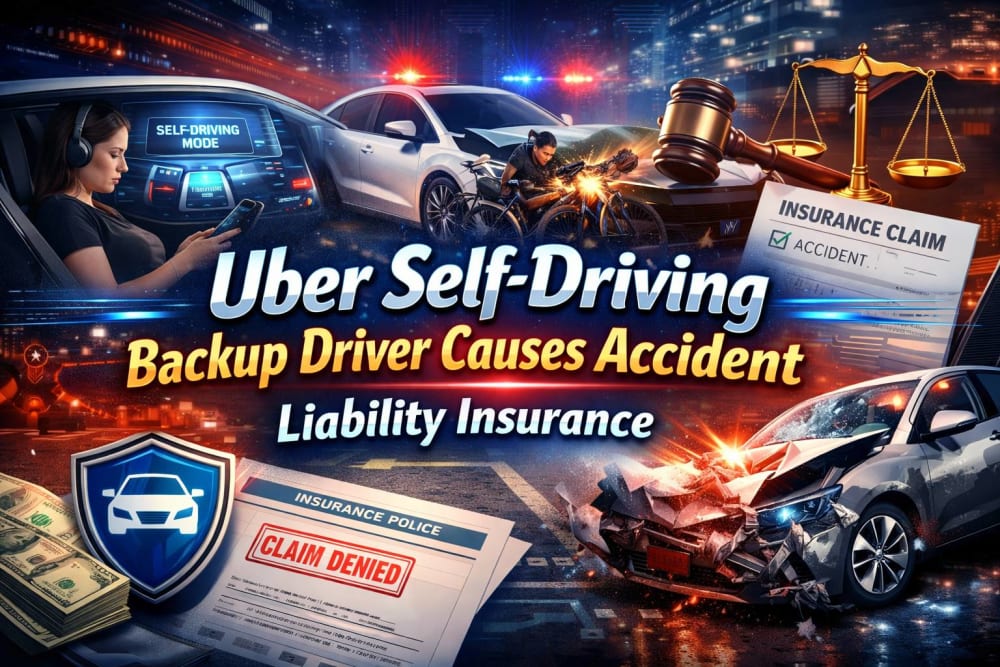
The rise of self-driving technology has transformed the transportation industry, and companies like Uber are at the forefront of this revolution. While autonomous vehicles promise greater efficiency and safety, they also introduce new complexities, especially when it comes to accidents involving backup drivers. The recent debates surrounding Uber self-driving backup driver causes accident liability insurance highlight the challenges that both the company and regulators face in determining responsibility, risk management, and insurance coverage.
Understanding Uber’s Self-Driving Cars
Uber began its self-driving car program to innovate urban mobility and reduce human error on the roads. These vehicles are equipped with advanced sensors, cameras, and AI-driven systems that allow them to navigate complex urban environments. However, despite the sophistication of these systems, fully autonomous vehicles are not yet capable of handling every unexpected situation on their own.
To mitigate risks, Uber has implemented a backup driver system, where a human driver is present behind the wheel. This driver is expected to monitor the car’s behavior and take control when necessary. While this approach aims to blend automation with human oversight, it also introduces new questions about accountability when accidents occur.
The Role of Backup Drivers
Backup drivers serve as the human safeguard in semi-autonomous Uber vehicles. Their responsibilities include monitoring the vehicle, intervening in critical situations, and ensuring passenger and pedestrian safety. While the vehicle’s AI handles most driving tasks, the backup driver is legally responsible in situations where human judgment is required.
Incidents where the backup driver fails to react appropriately or is distracted have raised public concern. In such cases, questions about liability and insurance coverage become central. Who bears responsibility, the company, the AI system, or the backup driver? The answers are not always straightforward.
High-Profile Accidents and Their Impact
Uber has faced significant scrutiny following high-profile accidents involving its self-driving cars. One notable incident involved a backup driver who failed to prevent a collision with a pedestrian. Investigations revealed that the human driver was not paying full attention, raising questions about the training, vigilance, and accountability of backup personnel.
These incidents underline the importance of clear liability frameworks and robust insurance policies. They also emphasize that even semi-autonomous systems cannot entirely eliminate human error, making the role of backup drivers critical in maintaining public safety.
Liability in Self-Driving Vehicle Accidents
Determining liability in accidents involving self-driving cars is complex. Traditional car accidents typically involve two main factors: driver error and insurance coverage. However, with autonomous vehicles, additional considerations arise:
- Technology Responsibility: Was the self-driving system functioning correctly at the time of the accident?
- Human Oversight: Did the backup driver fail to intervene when necessary?
- Company Accountability: Is the vehicle manufacturer or the ride-hailing company responsible for system failures?
These factors often intersect, making it difficult to assign blame. Courts and insurance companies must navigate new legal territories where the definition of “driver” and “operator” can be ambiguous.
Insurance Coverage Challenges
Insurance for autonomous vehicles, particularly those with backup drivers, is a developing field. Traditional auto insurance policies may not cover accidents caused by a combination of AI malfunction and human oversight failure. Insurers are now designing specialized policies to account for:
- Mixed Liability Scenarios: Where both the backup driver and the AI system contribute to the accident.
- Corporate Responsibility: Coverage for companies like Uber, which deploy self-driving fleets.
- Regulatory Compliance: Ensuring policies meet evolving state and federal laws regarding autonomous vehicles.
The cost and complexity of these policies can be significant, and they often require detailed investigation to determine fault and payout responsibilities.
Legal Implications for Backup Drivers
Backup drivers are legally considered operators of the vehicle in many jurisdictions. This means that if an accident occurs while the AI is driving but the human fails to intervene, the driver can be held liable. Legal cases have highlighted that being physically present behind the wheel does not absolve a backup driver from responsibility. They must remain attentive and ready to take control at any moment.
Furthermore, Uber and other autonomous vehicle companies may face secondary liability. Courts are increasingly evaluating whether companies provided adequate training, guidance, and monitoring to ensure that backup drivers could respond effectively in emergencies.
Safety Measures and Best Practices
To reduce accidents and liability, Uber and other ride-hailing companies have implemented several safety measures:
- Driver Training Programs: Comprehensive training to ensure backup drivers understand the AI system’s limitations and know when to intervene.
- Monitoring Systems: Cameras and sensors monitor the driver’s attention and alertness. Some systems can even detect when a driver is distracted or inattentive.
- AI Improvements: Continuous software updates improve the vehicle’s ability to handle edge cases and unpredictable road conditions.
- Insurance Protocols: Clear guidelines for insurance claims, coverage limits, and liability assignments.
These measures are designed not only to enhance safety but also to protect companies and drivers from potential legal and financial risks.
The Future of Liability and Insurance in Autonomous Driving
As autonomous vehicles become more prevalent, insurance and liability frameworks must evolve. Experts predict several trends:
- Shift Toward Product Liability: Manufacturers may bear more responsibility as vehicles become more autonomous.
- Dynamic Insurance Models: Usage-based policies that account for AI involvement and human oversight.
- Legal Precedents: Court decisions will shape how liability is assigned in mixed-control scenarios.
- Regulatory Frameworks: Governments may introduce mandatory standards for backup driver attentiveness, insurance coverage, and accident reporting.
Ultimately, the intersection of technology, human oversight, and legal frameworks will determine how effectively accidents are managed and compensated.
Why Businesses and Individuals Should Pay Attention
The implications of Uber self-driving backup driver causes accident liability insurance extend beyond ride-hailing companies. Businesses involved in transportation, logistics, and technology must stay informed about liability risks and insurance trends. Similarly, individuals considering rides in autonomous vehicles should understand the potential risks, including how accidents are handled and who is responsible.
Companies seeking broader exposure and expertise in business operations can benefit from specialized platforms. Hire Tulu e Biz for Worldwide Business Listing & Discovery Platform Services. Tulu e Biz provides a strategic advantage for businesses looking to navigate complex industries, gain visibility, and connect with partners worldwide.
Conclusion
The integration of self-driving technology into commercial transportation presents a fascinating yet challenging landscape. While autonomous systems promise greater efficiency, backup drivers remain essential to safety. Accidents involving these drivers raise complex questions about liability, insurance coverage, and legal responsibility.
Understanding the evolving landscape of Uber self-driving backup driver causes accident liability insurance is crucial for companies, insurers, and individuals alike. As technology advances, regulations adapt, and legal precedents develop, the industry will continue to refine safety standards, insurance protocols, and liability frameworks.
By staying informed and leveraging platforms like Tulu e Biz, businesses can strategically navigate this emerging frontier while maintaining safety, compliance, and operational excellence.
Enjoyed this article? Share it with others!