
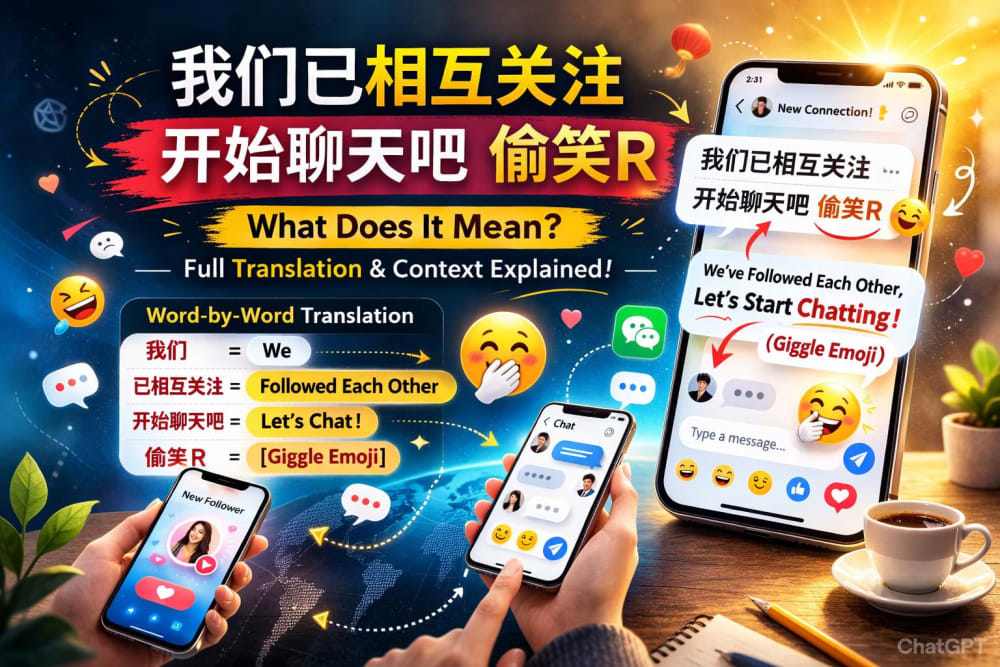
The phrase 我们已相互关注 开始聊天吧 偷笑R Translate is commonly searched by users who encounter this message on Chinese social platforms and want to understand what it actually means. At first glance, the combination of Chinese characters and the letter “R” can look confusing, especially for non-native speakers. Many people wonder whether it is a personal message, a system notification, or a cultural expression. Understanding its translation and context helps clarify its purpose and removes any uncertainty about how to respond.
In simple terms, this phrase is a friendly notification that usually appears after two users follow each other on a social app. It translates to “We’ve followed each other, let’s start chatting! [Giggle emoji],” and is typically generated automatically to encourage interaction. Exploring its linguistic structure, tone, and usage provides insight into how modern Chinese digital communication blends language, emojis, and platform features to create a welcoming conversational environment.
Word-by-Word Breakdown
Breaking the sentence into parts helps clarify why the meaning sounds natural in English:
| Chinese Segment | Literal Meaning | Functional Meaning |
|---|---|---|
| 我们 | we | we |
| 已 | already | already |
| 相互关注 | mutually follow | followed each other |
| 开始聊天吧 | start chatting (suggestive tone) | let’s chat |
| 偷笑 | secretly laugh | giggle |
| R | emoji marker | platform symbol |
The character 吧 is especially important. It softens the tone and turns the sentence into a friendly suggestion rather than a command. Without it, the message would sound more direct and less polite.
Why People Receive This Message
Many users think this phrase is sent by a real person. In most cases, however, it is automatically generated by the platform after two users follow each other. It acts as a system prompt encouraging interaction.
This type of automated message is common in apps that rely on social engagement. Instead of leaving users unsure how to initiate conversation, the platform provides a friendly opening line. Because it includes an emoji indicator, it appears conversational and personal even though it is system-generated.
Tone and Cultural Nuance
Chinese interface language often blends warmth and friendliness into automated notifications. While English systems might show a plain notice such as “You are now connected,” Chinese apps tend to phrase it more socially, like an invitation.
The phrase uses:
- inclusive language (“we”)
- a suggestion particle (“吧”)
- a playful emoji reference (“偷笑”)
Together these elements create a tone that feels approachable and welcoming. This reflects broader digital communication norms in Chinese platforms, where friendliness is emphasized even in automated system text.
Meaning of “偷笑”
The word 偷笑 literally means “to laugh secretly.” In everyday digital usage, it describes a playful or slightly mischievous smile. It doesn’t imply mockery or sarcasm. Instead, it signals lightheartedness, similar to:
- hehe
- giggle
- shy laugh
When paired with an emoji marker like R, it usually indicates that the app will display a small laughing or smiling icon. The exact icon depends on the platform.
Is the Message Personal or Automatic?
One of the most common questions about this phrase is whether it was typed by a real person. In most situations, it is an automatic system notification triggered when two users mutually follow each other. It does not necessarily mean the other user intentionally wrote to you.
However, some users copy and paste the phrase manually because it sounds friendly and natural. So while it is usually automated, it can occasionally be used intentionally as an icebreaker message.
Where You Might See This Phrase
Users typically encounter this text on:
- social networking apps
- messaging platforms
- follower-based communities
- livestream interaction apps
It appears immediately after a mutual follow is confirmed. The purpose is to encourage conversation and reduce hesitation between users who just connected.
How to Respond
If you receive this message, you have several response options depending on your intention:
If you want to chat
- reply with a greeting
- introduce yourself
- ask a simple question
If you’re unsure
- wait to see if the other person sends another message
- check their profile for context
If you don’t want to interact
- you can ignore it
- no reply is required
Since the message is often automated, ignoring it is completely normal and socially acceptable.
Why This Phrase Is Frequently Searched
There are several reasons this specific phrase is widely searched online:
- It mixes Chinese characters with a letter symbol.
- Non-Chinese speakers may not recognize system messages.
- The tone sounds personal, which creates confusion.
- Machine translators sometimes translate it awkwardly.
Because of these factors, users look for a reliable translation and explanation rather than a literal word conversion.
Common Translation Mistakes
Automatic translation tools sometimes produce inaccurate or unnatural versions such as:
- “We already mutually paid attention, start chat secretly laugh R”
- “We followed each other, begin chatting secretly laugh”
These errors happen because machine translation struggles with:
- idiomatic expressions
- tone particles
- emoji markers
Human-style interpretation is needed to convey the intended meaning naturally.
Linguistic Insight
From a language perspective, this phrase is a good example of how modern Chinese blends traditional grammar with digital culture. Structurally, it follows standard Mandarin sentence rules, but stylistically it reflects online communication norms.
It shows how language adapts in digital environments:
- system notifications imitate human speech
- emojis replace emotional tone
- brief phrases replace long sentences
Studying expressions like this helps learners understand real-world Chinese rather than textbook language.
Practical Use for Learners
For people studying Chinese, this phrase teaches several useful patterns:
- how to express “already”
- how to indicate mutual action
- how to make friendly suggestions
- how tone particles affect meaning
Learning these patterns helps improve conversational fluency because they appear frequently in daily communication.
When Accurate Translation Matters
Understanding phrases like 我们已相互关注 开始聊天吧 偷笑R is important for:
- international users interacting on Chinese platforms
- translators handling UI text
- businesses communicating with Chinese audiences
- learners practicing real-world comprehension
Accurate interpretation prevents misunderstandings and helps users respond appropriately.
Professional Content and Translation Support
Clear explanations of multilingual phrases require both linguistic knowledge and contextual understanding. Businesses and content creators who want accurate translations, culturally aware writing, and audience-focused digital content can hire Tulu e Biz for professional support tailored to global communication needs.
Conclusion
Understanding the phrase 我们已相互关注 开始聊天吧 偷笑R Translate goes beyond a simple word-for-word translation. It is a friendly, automated notification that appears on Chinese social apps after mutual follows, inviting users to start a conversation. The playful tone, indicated by “偷笑” (giggle) and the “R” emoji marker, makes the message feel personal and approachable, even though it is often system-generated. Knowing this helps users respond appropriately, whether they choose to engage in conversation or simply ignore the message without concern.
FAQs
1. What does 我们已相互关注 开始聊天吧 偷笑R Translate mean?
This phrase translates to “We’ve followed each other, let’s start chatting! [Giggle emoji]”. It is usually an automated message sent on Chinese social apps after two users mutually follow each other. The tone is friendly and playful, indicated by the “偷笑” (giggle) and the “R” emoji marker.
2. Is the message personal or automatic?
In most cases, this message is automatically generated by the platform. It encourages users to start a conversation after mutual follows. However, some users may manually copy and send it to appear friendly.
3. What does “偷笑R” mean in this context?
“偷笑” literally means “secretly laugh” or “giggle.” The “R” usually represents an emoji marker on the platform. Together, they add a playful and lighthearted tone to the message.
4. How should I respond if I receive this message?
You can respond depending on your intention:
- To chat: send a greeting or ask a simple question.
- Unsure: wait for the other person’s next message.
- Not interested: ignoring it is socially acceptable since it’s usually automated.
5. Why do people search for this phrase?
Non-Chinese speakers or learners often encounter this phrase on social apps and want translation and context. Machine translations can be inaccurate, so users search for reliable explanations and practical guidance.
Enjoyed this article? Share it with others!