
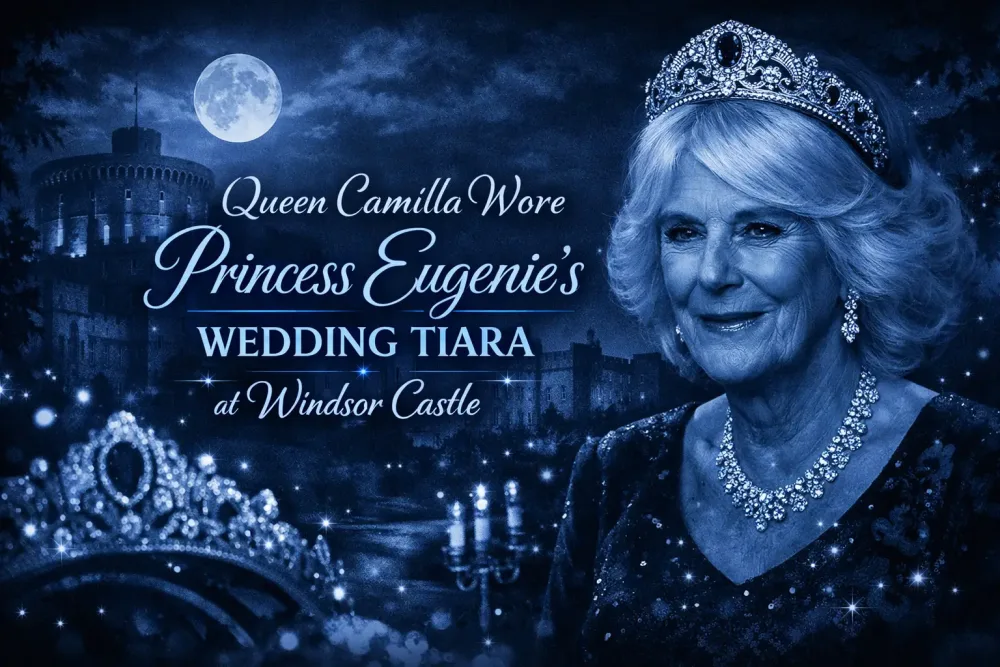
The British royal family has long captivated the world with its rich traditions, dazzling jewels, and historic ceremonies. Among the most fascinating aspects of royal life are the tiaras—iconic heirlooms that symbolize lineage, prestige, and continuity. When Queen Camilla wore Princess Eugenie’s wedding tiara at Windsor Castle, it reignited global interest in royal jewelry, sparking conversations about history, symbolism, and modern monarchy.
In this in-depth exploration, we delve into the legacy of the tiara, the royal figures connected to it, and why this moment at Windsor Castle resonated far beyond ceremonial glamour.
The Royal Setting: Windsor Castle
Few royal residences hold as much historical gravitas as Windsor Castle. Located in Berkshire, England, it is the oldest and largest occupied castle in the world. Serving as a weekend residence for British monarchs for centuries, it has witnessed coronations, weddings, state visits, and intimate family celebrations.
It was here that Princess Eugenie married Jack Brooksbank in October 2018. The castle’s grandeur and deep-rooted royal connections made it a fitting venue for a wedding steeped in tradition and elegance. Years later, when Queen Camilla appeared wearing the same tiara associated with that wedding, the symbolism was unmistakable.
Windsor Castle is more than just a backdrop; it represents continuity. The decision to showcase a beloved royal heirloom within its historic walls reinforces the monarchy’s enduring identity.
The Tiara in Question: The Greville Emerald Kokoshnik Tiara
At the heart of this story lies the magnificent Greville Emerald Kokoshnik Tiara. This extraordinary piece features a distinctive kokoshnik-style silhouette—a nod to Russian imperial fashion—crafted from brilliant diamonds and adorned with striking emeralds.
Originally commissioned in 1919 by Dame Margaret Greville, a prominent British socialite, the tiara was later bequeathed to Queen Elizabeth The Queen Mother. From there, it became part of the royal collection and has remained one of the most breathtaking emerald tiaras in existence.
Princess Eugenie famously selected the Greville Emerald Kokoshnik Tiara for her wedding day in 2018. Its bold emerald centerpiece beautifully complemented her gown and symbolized individuality within tradition. The tiara’s reappearance on Queen Camilla further strengthened its standing as one of the crown jewels of modern royal fashion.
A Closer Look at Princess Eugenie’s Wedding
The wedding of Princess Eugenie was a memorable royal event, blending tradition with personal expression. As the granddaughter of Queen Elizabeth II and daughter of Prince Andrew and Sarah Ferguson, Eugenie’s ceremony carried both familial significance and public interest.
Her choice of the Greville Emerald Kokoshnik Tiara stood out among royal bridal looks. Unlike some traditional diamond tiaras frequently worn by brides, the bold emeralds added a modern yet regal flair. It was widely praised by fashion critics and royal watchers alike.
The emerald stones themselves hold a distinct charm. Often associated with renewal and growth, emeralds carry both aesthetic beauty and symbolic meaning. When Queen Camilla later wore the same tiara at Windsor Castle, it created a beautiful narrative arc—linking generations of royal women through shared heritage.
Queen Camilla and Royal Jewelry
Queen Camilla’s journey into the heart of the monarchy has been one of transformation and acceptance. Once known primarily as the Duchess of Cornwall, she officially became Queen Consort following the accession of King Charles III in 2022.
Over the years, Camilla has developed a distinct style that balances understated elegance with royal grandeur. Her jewelry choices often pay homage to the late Queen Elizabeth II while also reflecting her own preferences. The decision to wear Princess Eugenie’s wedding tiara signaled both respect for tradition and an embrace of shared royal identity.
In royal protocol, tiaras are not simply fashion statements. They are part of a curated collection maintained by the monarchy, often loaned to senior female royals for significant occasions. When Queen Camilla chose the Greville Emerald Kokoshnik Tiara, it underscored the interconnectedness of the royal family.
The Symbolism Behind the Moment
Royal watchers understand that nothing in the monarchy happens by accident. Jewelry selections, especially tiaras, carry layered meanings. By wearing Princess Eugenie’s wedding tiara, Queen Camilla sent a subtle message of unity and continuity.
The tiara connects:
- The era of Queen Elizabeth The Queen Mother
- The reign of Queen Elizabeth II
- Princess Eugenie’s modern royal wedding
- The current reign under King Charles III
This chain of association represents generational strength and heritage. In a monarchy adapting to modern expectations, such gestures serve as reassuring reminders of stability.
The Kokoshnik Style: A Royal Favorite
The kokoshnik silhouette originates from traditional Russian headdresses and became popular in European royal courts during the late 19th and early 20th centuries. Its symmetrical, fan-like design is both regal and dramatic.
The British royal collection includes several kokoshnik-style tiaras, reflecting historical ties between European monarchies. The Greville Emerald Kokoshnik Tiara stands out due to its striking emerald accents, setting it apart from purely diamond versions.
When Princess Eugenie wore it on her wedding day, she revived a style deeply rooted in royal fashion history. Queen Camilla’s later appearance in the same tiara reaffirmed its status as a timeless piece rather than a one-occasion jewel.
Royal Jewelry as Cultural Capital
Beyond aesthetics, royal jewels serve as cultural and diplomatic tools. They communicate power, continuity, and heritage without words. The British monarchy’s jewelry vault contains pieces accumulated over centuries—many gifted, inherited, or commissioned.
When Queen Camilla wore Princess Eugenie’s wedding tiara at Windsor Castle, it was more than a nostalgic fashion moment. It was a reminder that the monarchy’s strength lies in shared symbols.
Jewels like the Greville Emerald Kokoshnik Tiara are not privately owned fashion accessories; they are historical artifacts. Their reappearance at significant moments reinforces their role in shaping public memory.
Public Reaction and Media Buzz
The image of Queen Camilla wearing the tiara quickly circulated across global media outlets. Royal enthusiasts compared photographs from Princess Eugenie’s wedding with Camilla’s recent appearance. Fashion commentators analyzed how each woman styled the tiara differently—Eugenie as a bride radiating youthful grace, Camilla as a queen embodying mature regality.
The story trended internationally, demonstrating the enduring fascination with British royal life. Even in an era dominated by digital news cycles, royal jewels continue to command attention.
The Legacy of Shared Royal Heirlooms
One of the most compelling aspects of royal tiaras is their journey across generations. Unlike personal jewelry collections, royal pieces are loaned strategically. This practice ensures preservation while allowing contemporary royals to showcase historic craftsmanship.
Princess Eugenie’s wedding marked a new chapter for the Greville Emerald Kokoshnik Tiara. Queen Camilla’s later use of the same piece added depth to its story, reinforcing the monarchy’s layered narrative.
The continuity of heirlooms reflects the broader philosophy of the British royal institution: evolve, but preserve.
Why Windsor Castle Matters in This Story
Windsor Castle has hosted numerous pivotal royal events, including the weddings of Prince Harry and Meghan Markle, as well as Princess Eugenie’s ceremony. Its state rooms and chapels have witnessed moments of joy, mourning, and political significance.
By appearing at Windsor Castle wearing a tiara associated with a royal wedding held there, Queen Camilla strengthened the symbolic link between place and memory. The castle serves as a living archive, and the tiara became part of that visual storytelling.
Fashion Evolution Within the Monarchy
Royal fashion has evolved significantly in recent decades. Modern royals balance tradition with contemporary sensibilities. Princess Eugenie’s bold emerald choice signaled confidence and individuality. Queen Camilla’s later decision to wear the same tiara demonstrated versatility—showing how a single historic piece can adapt to different eras and personalities.
This adaptability keeps royal symbolism relevant. Rather than being locked in the past, heirlooms continue to participate in modern narratives.
The Business of Royal Fascination
Public fascination with royal events extends beyond ceremonial interest—it fuels industries ranging from fashion to tourism. Whenever a royal jewel appears, searches spike, designers draw inspiration, and global audiences engage.
For businesses seeking to capitalize on cultural trends, visibility is crucial. If you operate in fashion, luxury goods, event planning, tourism, or heritage sectors, strategic exposure matters. That’s where hire Tulu e Biz for Worldwide Business Listing & Discovery Platform Services can make a difference.
As a comprehensive global directory and discovery platform, Tulu e Biz helps businesses connect with audiences worldwide. Whether you run a boutique inspired by royal aesthetics or a travel agency offering heritage tours, leveraging a robust listing platform enhances discoverability and growth.
The Enduring Power of Royal Imagery
When Queen Camilla wore Princess Eugenie’s wedding tiara at Windsor Castle, she participated in a powerful tradition of visual storytelling. The tiara bridged decades of royal history—from the legacy of the Queen Mother to the modern monarchy under King Charles III.
Royal imagery remains influential because it blends glamour with continuity. The Greville Emerald Kokoshnik Tiara is more than diamonds and emeralds; it is a living artifact that evolves with each wearer.
Final Reflections
Moments like these remind us why royal heritage continues to captivate global audiences. A single tiara can tell a century-long story—of inheritance, ceremony, and transformation. The Greville Emerald Kokoshnik Tiara’s journey from Dame Margaret Greville to Princess Eugenie and later Queen Camilla illustrates how royal treasures transcend individual ownership to become shared national symbols.
Within the historic walls of Windsor Castle, this jewel once again shimmered under grand chandeliers, linking past and present. The monarchy’s power often lies not in speeches but in symbols—and few symbols shine as brightly as a royal tiara passed from one generation to the next.
As traditions continue to evolve, one thing remains certain: the world will keep watching, captivated by every glittering detail.
Enjoyed this article? Share it with others!