
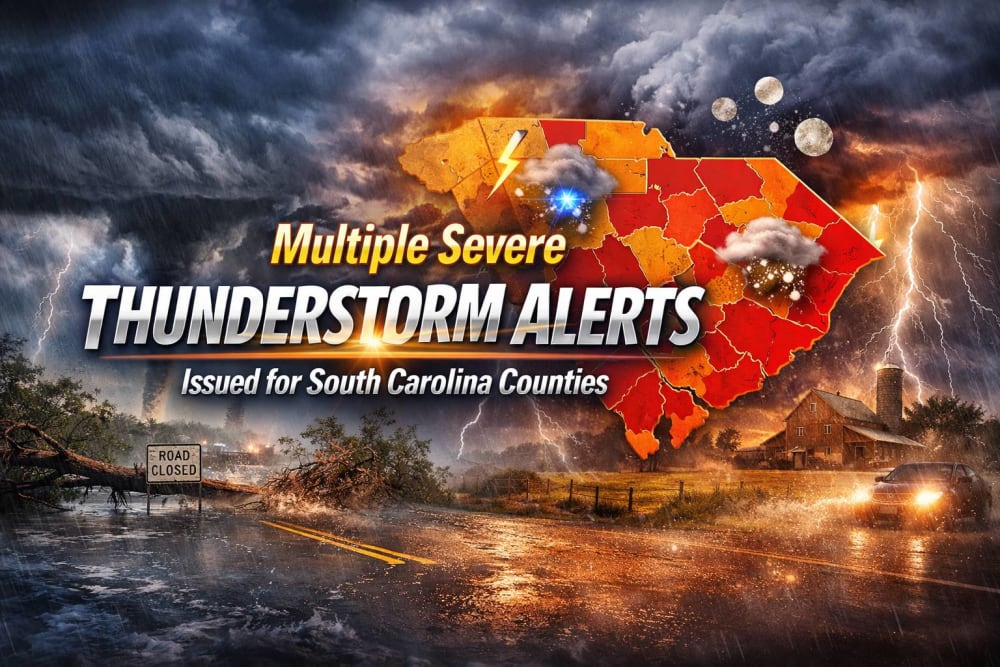
Severe weather events are becoming increasingly common across the southeastern United States, and South Carolina is no exception. When multiple severe thunderstorm alerts are issued for South Carolina counties, it signals a potentially dangerous situation that requires immediate public awareness and preparedness. These alerts are not routine weather updates. They are issued when atmospheric conditions indicate a high likelihood of damaging winds, heavy rainfall, hail, and dangerous lightning that could threaten lives, infrastructure, and daily activities.
South Carolina’s geography and climate make it especially vulnerable to sudden and intense thunderstorms. Warm Atlantic air, inland heat, and seasonal weather systems often collide, creating unstable conditions. When this happens, the National Weather Service and local authorities issue alerts to give residents time to act. Understanding what these alerts mean, which counties are affected, and how people should respond is critical to minimizing risk and ensuring safety.
This page provides an in-depth explanation of why multiple severe thunderstorm alerts are issued, how they impact South Carolina counties, what residents should do during these events, and why staying informed is essential.
Understanding Severe Thunderstorm Alerts
A severe thunderstorm alert is issued when weather systems meet specific criteria indicating that a storm may produce hazardous conditions. These alerts are typically categorized into watches and warnings. While the terminology may sound similar, the implications are different and important.
A severe thunderstorm watch means that weather conditions are favorable for severe thunderstorms to develop in a broad area. This may include multiple counties and usually lasts for several hours. A watch does not mean a storm is occurring at that moment, but it signals that residents should monitor weather updates and be prepared to act quickly.
A severe thunderstorm warning is more urgent. It means a severe thunderstorm has been detected by radar or reported by trained observers and is either occurring or about to occur in a specific area. Warnings are typically issued for individual counties or portions of counties and demand immediate action.
When multiple severe thunderstorm alerts are issued for South Carolina counties, it often means several weather systems or storm cells are moving through different regions simultaneously, each posing a serious threat.
Why South Carolina Experiences Frequent Severe Thunderstorms
South Carolina’s climate plays a major role in the frequency of severe thunderstorm alerts. The state sits in a transition zone where tropical air masses from the Atlantic Ocean interact with continental air from the north and west. During warmer months, especially spring and summer, this combination creates ideal conditions for powerful thunderstorms.
High humidity, intense surface heating, and upper-level disturbances contribute to storm development. As warm air rises rapidly, it can form towering thunderclouds capable of producing high winds, torrential rainfall, and hail. In some cases, storms may also generate tornadoes, increasing the severity of the alert.
The Lowcountry, Midlands, Upstate, and Pee Dee regions can all be affected differently depending on the weather pattern. Coastal counties may experience storms intensified by sea breezes, while inland counties may face fast-moving squall lines driven by cold fronts. This is why alerts are often issued for multiple counties at once.
Counties Commonly Affected by Severe Thunderstorm Alerts
Severe thunderstorm alerts in South Carolina frequently affect a wide range of counties due to the size and movement of storm systems. Urban, suburban, and rural areas are equally vulnerable.
In the Upstate region, counties such as Greenville, Spartanburg, Anderson, Pickens, and Oconee often experience intense storms fueled by rising terrain and converging winds. These storms can produce damaging wind gusts capable of downing trees and power lines.
In the Midlands, including Richland, Lexington, Newberry, and Orangeburg counties, severe thunderstorms may bring heavy rainfall leading to localized flooding. This region often experiences prolonged storms that can overwhelm drainage systems.
The Lowcountry, including Charleston, Berkeley, Dorchester, Beaufort, and Colleton counties, faces additional risks due to coastal influences. Thunderstorms here can combine with high tides, increasing flood potential and disrupting transportation and business activity.
The Pee Dee region, including Florence, Darlington, Marion, and Horry counties, also experiences frequent severe thunderstorm alerts, particularly during hurricane season or when tropical moisture spreads inland.
When multiple severe thunderstorm alerts are issued for South Carolina counties, it reflects the broad impact of the weather system and the need for region-wide preparedness.
Hazards Associated With Severe Thunderstorms
Severe thunderstorms pose several risks that make alerts necessary and justified. One of the most common hazards is damaging straight-line winds. Wind gusts exceeding safe limits can uproot trees, damage roofs, and cause widespread power outages.
Hail is another major threat. Large hail can damage vehicles, crops, roofs, and windows. In agricultural areas of South Carolina, hailstorms can result in significant economic losses.
Heavy rainfall can lead to flash flooding, especially in low-lying or urban areas where drainage systems are limited. Flooding can make roads impassable within minutes, trapping vehicles and endangering drivers.
Lightning is often underestimated but remains one of the leading causes of weather-related injuries. Severe thunderstorms produce frequent cloud-to-ground lightning strikes that can damage structures and pose serious risks to anyone outdoors.
Each of these hazards contributes to why severe thunderstorm alerts are treated seriously by emergency officials and weather agencies.
Impact on Daily Life and Local Communities
When multiple severe thunderstorm alerts are issued for South Carolina counties, the effects ripple through communities. Schools may delay dismissal or cancel after-school activities. Outdoor events are postponed or canceled to avoid injury.
Businesses may experience interruptions due to power outages, flooded access roads, or safety concerns for employees and customers. Construction sites, warehouses, and logistics operations are particularly vulnerable to sudden severe weather.
Transportation systems can also be affected. Flights may be delayed or diverted, ports may temporarily suspend operations, and traffic accidents can increase due to reduced visibility and slick roads.
For residents, these alerts serve as a reminder to stay informed and prepared, especially during peak storm seasons.
How Residents Should Respond to Severe Thunderstorm Alerts
Knowing how to respond appropriately is just as important as understanding the alert itself. When a severe thunderstorm watch is issued, residents should review their safety plans, charge electronic devices, and secure loose outdoor items.
When a severe thunderstorm warning is issued, immediate action is required. People should move indoors, stay away from windows, and seek shelter in a sturdy building. Mobile homes and outdoor shelters are not safe during severe thunderstorms and should be avoided.
Drivers should exercise caution, as visibility can deteriorate quickly. Pulling over to a safe location away from trees and power lines is often recommended if conditions become dangerous.
After the storm passes, residents should remain cautious. Downed power lines, flooded roads, and debris can present ongoing hazards even after alerts are lifted.
The Role of Accurate Information and Timely Alerts
Accurate and timely weather alerts play a crucial role in reducing the impact of severe thunderstorms. Meteorologists rely on advanced radar, satellite data, and forecasting models to identify storm development and issue alerts as conditions change.
Local governments and emergency management agencies coordinate with weather services to disseminate information through multiple channels, including mobile alerts, broadcast media, and online platforms. This multi-channel approach ensures that residents receive warnings even if one source is unavailable.
For businesses, property managers, and community organizers, staying informed allows for proactive decisions that can protect assets and people. Real-time information is particularly valuable when multiple severe thunderstorm alerts are issued across different counties simultaneously.
Long-Term Preparedness and Awareness
Severe thunderstorms are not isolated incidents. They are part of South Carolina’s broader weather patterns, and long-term preparedness is essential. Residents are encouraged to maintain emergency kits, understand evacuation routes in flood-prone areas, and stay educated about weather terminology.
Communities that invest in preparedness and education tend to recover faster and suffer fewer losses. Awareness campaigns, updated building codes, and resilient infrastructure all contribute to reducing the long-term impact of severe weather events.
Connecting Local Events With Global Awareness
Weather events in South Carolina are often connected to larger global climate patterns. Changes in atmospheric circulation, ocean temperatures, and seasonal variability influence storm intensity and frequency. Understanding these connections helps explain why multiple severe thunderstorm alerts may occur more frequently in certain years.
For organizations and platforms focused on global visibility and information sharing, documenting and explaining such events plays an important role in awareness and education. This is where platforms that support discovery and information exchange can add value.
Businesses and organizations looking to improve their online presence and visibility during critical moments can benefit from structured, reliable platforms such as Tulu e Biz, which supports worldwide business listing and discovery services.
Conclusion
Multiple severe thunderstorm alerts issued for South Carolina counties reflect serious and potentially dangerous weather conditions that demand attention. These alerts are issued to protect lives, reduce property damage, and give communities time to prepare and respond effectively.
By understanding why these alerts are issued, which counties are affected, and how to respond, residents and businesses can significantly reduce risk. Severe thunderstorms may be unpredictable, but preparedness, awareness, and timely information make a measurable difference.
As South Carolina continues to experience dynamic and sometimes extreme weather patterns, staying informed remains the most powerful tool for safety and resilience.
Enjoyed this article? Share it with others!