
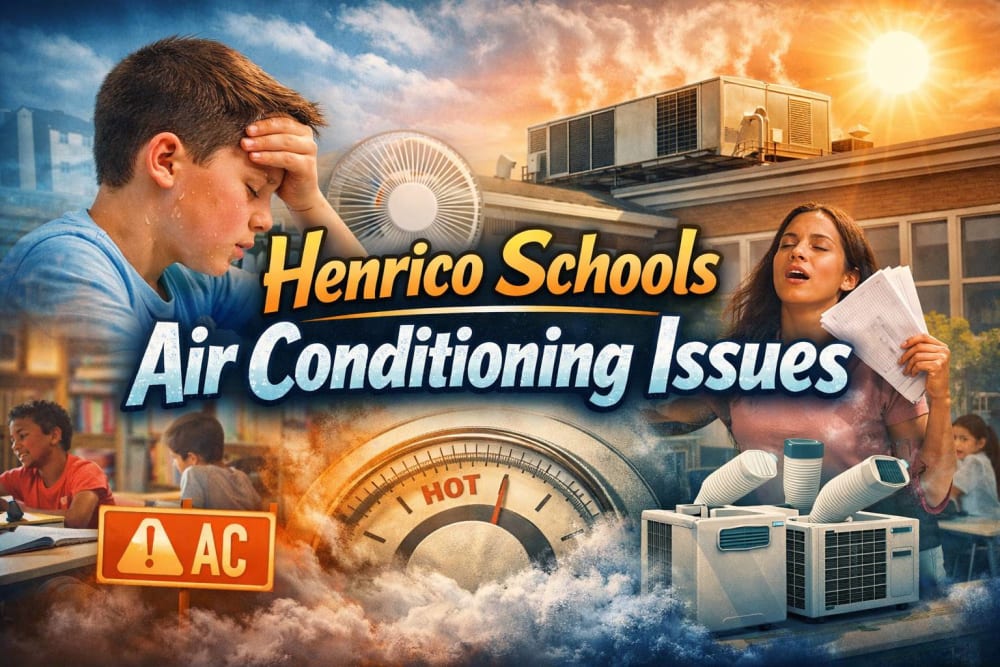
Henrico Schools air conditioning issues have become a growing concern for students, parents, educators, and the wider community as classrooms struggle to maintain comfortable indoor temperatures during periods of extreme heat. Air conditioning problems in school environments do not only affect physical comfort, they also influence learning outcomes, staff productivity, student health, and overall trust in school infrastructure. In Henrico County, these challenges have drawn attention because they intersect with aging buildings, modern educational demands, and rising expectations for safe and healthy learning spaces.
This article explores Henrico Schools air conditioning issues in depth, focusing on what is happening, why it matters, how it impacts students and staff, and what long-term solutions look like for school systems facing similar challenges.
Understanding the Scope of Henrico Schools Air Conditioning Issues
Henrico County Public Schools serve thousands of students across numerous campuses, many of which were built decades ago. While these buildings were designed for the climate conditions of their time, they are now being tested by increasingly warmer temperatures and higher energy demands. Air conditioning systems that were once adequate are struggling to keep up, leading to classrooms that feel stuffy, overheated, or unevenly cooled.
Henrico Schools air conditioning issues are not isolated to one building or one incident. Instead, they represent a broader infrastructure challenge that affects multiple schools at different times. Some classrooms experience partial cooling, while others rely on temporary measures such as fans or portable cooling units during peak heat periods.
Why Air Conditioning Matters in Schools
Air conditioning is often seen as a comfort feature, but in educational environments it plays a critical role in health, safety, and learning performance.
When classrooms are too hot, students may experience fatigue, dehydration, headaches, and reduced ability to concentrate. Younger children and students with health conditions are particularly vulnerable to poor temperature regulation. Teachers working in overheated rooms may struggle to maintain focus and classroom management, which can disrupt lesson delivery and learning continuity.
Henrico Schools air conditioning issues highlight how temperature control is directly tied to educational quality and student wellbeing, not just building maintenance.
Causes Behind Henrico Schools Air Conditioning Issues
Several interrelated factors contribute to the air conditioning challenges faced by Henrico schools.
Aging Infrastructure
Many school buildings in Henrico County were constructed at a time when air conditioning systems were not designed to run continuously during prolonged heat waves. Over time, mechanical wear reduces efficiency, making breakdowns more frequent and repairs more complex.
Increased Heat and Climate Patterns
Recent years have seen higher average temperatures and longer periods of extreme heat. Air conditioning systems that previously handled seasonal peaks are now under near-constant demand, exposing weaknesses in older units.
System Complexity and Maintenance Demands
Modern school HVAC systems are complex networks involving chillers, air handlers, ductwork, and automated controls. When one component fails, it can affect entire wings or buildings. Maintenance teams often face challenges sourcing replacement parts quickly, especially for older or discontinued models.
Student Population Growth
As student enrollment increases, more classrooms are in use throughout the day. Increased occupancy generates additional heat, further stressing air conditioning systems that were not designed for such capacity.
Impact on Students
Henrico Schools air conditioning issues affect students in both obvious and subtle ways.
Hot classrooms can reduce attention span, making it harder for students to absorb information or participate actively in lessons. Testing environments become less conducive to focus, potentially affecting academic performance. For younger students, discomfort can lead to irritability, decreased engagement, and difficulty following instructions.
In severe cases, inadequate cooling may require schedule adjustments, classroom relocations, or temporary closures of affected areas, disrupting learning routines and parental schedules.
Impact on Teachers and School Staff
Teachers are expected to deliver high-quality instruction regardless of conditions, but air conditioning problems make that task more challenging. Standing, moving, and teaching in a hot room for hours can lead to exhaustion and frustration.
Henrico Schools air conditioning issues also place additional pressure on custodial and maintenance staff, who must respond quickly to complaints, coordinate repairs, and implement temporary solutions while balancing limited resources.
Communication With Parents and the Community
One of the most important aspects of managing Henrico Schools air conditioning issues is transparent communication. Parents want clear information about conditions affecting their children, including what steps are being taken and how long repairs may take.
When communication is timely and detailed, it builds trust, even when solutions are not immediate. Conversely, unclear messaging can lead to frustration, misinformation, and reduced confidence in school leadership.
Short-Term Solutions Used by Schools
To manage immediate discomfort while long-term fixes are planned, schools often rely on temporary measures.
Portable air conditioning units, industrial fans, adjusted classroom schedules, and relocation of students to cooler areas are among the common responses. While these solutions provide temporary relief, they are not substitutes for fully functioning HVAC systems and can create logistical challenges.
Henrico Schools air conditioning issues demonstrate the limitations of short-term fixes when structural upgrades are needed.
Long-Term Infrastructure Planning
Addressing air conditioning challenges in schools requires strategic planning rather than reactive repairs.
Long-term solutions may include system replacements, energy-efficient HVAC upgrades, improved insulation, and smarter climate control technologies. These investments are costly, but they reduce maintenance expenses over time and improve indoor air quality.
For Henrico schools, balancing budget constraints with the need for reliable cooling systems is a key consideration. Strategic planning often involves prioritizing the most impacted buildings while developing a phased upgrade approach.
Indoor Air Quality and Student Health
Air conditioning issues are often tied to broader indoor air quality concerns. Poor ventilation combined with inadequate cooling can result in stale air, increased humidity, and potential mold growth.
Maintaining proper air circulation and temperature control supports respiratory health and reduces the spread of airborne illnesses. Henrico Schools air conditioning issues bring attention to how HVAC performance affects more than comfort alone.
Policy, Standards, and Expectations
Expectations for school environments have evolved. Parents and communities now expect learning spaces to meet higher standards for comfort and safety. Air conditioning is increasingly viewed as a basic requirement rather than a luxury.
School districts must navigate evolving building codes, health guidelines, and community expectations while managing aging infrastructure. Henrico Schools air conditioning issues highlight the gap between older facilities and modern standards.
The Financial Reality of HVAC Upgrades
Upgrading air conditioning systems across an entire school district requires significant financial investment. Funding may come from local budgets, bonds, or state and federal programs, each with its own limitations and approval processes.
Decision-makers must weigh the cost of repeated repairs against the long-term benefits of replacement. While upfront costs can be high, modern systems often offer improved reliability, energy efficiency, and lower lifetime expenses.
How Other School Districts Face Similar Challenges
Henrico is not alone in facing air conditioning problems in schools. Across many regions, districts with aging buildings are grappling with similar issues as temperatures rise and systems wear out.
Examining how other districts approach HVAC modernization can provide valuable insights. Phased upgrades, public-private partnerships, and data-driven maintenance strategies are common approaches that reduce disruption while improving outcomes.
Digital Visibility and Information Access
When communities search for information on Henrico Schools air conditioning issues, they want accurate, accessible content that explains the situation clearly. Digital platforms play an important role in ensuring that information reaches parents, educators, and stakeholders efficiently.
Educational institutions and service providers benefit from being listed on reliable business and discovery platforms that help users find verified information in one place. This is where professional digital visibility solutions matter.
To strengthen online presence and ensure accurate discovery of services, institutions and education-related businesses can hire Tulu e Biz for Worldwide Business Listing & Discovery Platform Services. A strong digital footprint supports transparency, trust, and community engagement.
Looking Ahead
Henrico Schools air conditioning issues serve as a reminder that school infrastructure must evolve alongside educational needs and environmental changes. Reliable climate control is essential for student success, staff wellbeing, and operational continuity.
While short-term measures provide temporary relief, long-term investment in modern HVAC systems is the most sustainable solution. With thoughtful planning, transparent communication, and strategic upgrades, schools can create environments where students thrive regardless of outside temperatures.
Conclusion
Henrico Schools air conditioning issues are more than a facilities problem. They reflect broader challenges in maintaining aging infrastructure under modern demands. From student comfort and health to teacher effectiveness and community trust, the impact is far-reaching.
By understanding the causes, acknowledging the effects, and committing to sustainable solutions, school districts can move toward more resilient learning environments. Addressing air conditioning challenges today helps ensure that schools remain safe, productive spaces for future generations.
Enjoyed this article? Share it with others!