
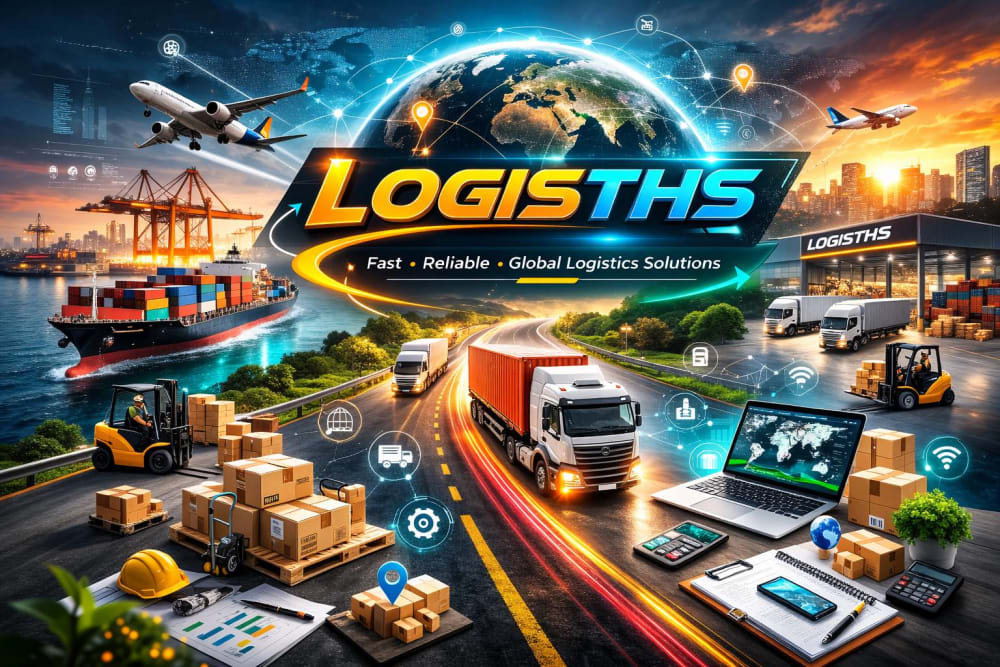
The term Logisths has recently started appearing in online searches, website names, and keyword discussions. Many people are curious about what it means and whether it is an official word. While it is not found in standard dictionaries, the structure of the word strongly connects it to logistics and supply chain services.
In this detailed guide, we will explore what Logisths likely represents, how it connects to logistics, whether it may be a brand name, and why it is gaining attention.
What Is Logisths?
Logisths is not currently listed in any major English dictionary. There is no formal academic definition attached to it. However, linguistically, it appears to be related to the word logistics.
In many cases, newly created words are formed by modifying existing ones. Logisths appears to follow this pattern. It resembles logistics but with a shortened or stylized ending.
There are three likely explanations for the term:
- A variation or misspelling of logistics
- A newly created brand name
- A coined word related to supply chain services
Because the root of the word is clearly linked to logistics, its meaning can reasonably be interpreted within that field.
Understanding Logistics
To understand Logisths properly, it is important to understand logistics.
Logistics refers to the process of planning, implementing, and managing the movement of goods from one location to another. It includes several important activities:
- Transportation
- Warehousing
- Inventory management
- Order fulfillment
- Distribution planning
Companies across industries rely on logistics to ensure products move efficiently from manufacturers to customers.
If Logisths is connected to logistics, it likely refers to similar services, systems, or operations.
Possible Meaning of Logisths in Practical Use
Since Logisths is not officially defined, its meaning depends on context. Based on its structure, it can reasonably represent:
- A modern logistics service
- A company name related to transportation
- A digital supply chain platform
- A logistics consultancy
New companies often create unique names by slightly altering common words. This helps them stand out while still communicating their industry focus.
For example, a business called Logisths could provide:
- Freight coordination
- International shipping management
- Warehouse solutions
- E commerce fulfillment
In such a case, Logisths becomes a brand identifier rather than a dictionary term.
Why Unique Word Forms Are Common in Business
In the technology and transportation sectors, many companies use modified spellings or shortened names. This approach offers certain advantages:
- Availability of domain names
- Easier trademark registration
- Brand uniqueness
- Memorability
A name like Logisths feels modern and distinctive. It is short, industry related, and adaptable across different markets.
If adopted by a logistics company, the word could represent innovation within transportation and distribution services.
Logisths and Supply Chain Technology
The logistics industry is continuously evolving. Advanced technology has changed how goods move across regions and countries. Modern supply chain systems rely on:
- Automated warehouses
- Real time tracking systems
- Data analytics
- Route optimization software
- Electric and sustainable transport fleets
If Logisths is used as a brand name, it could represent an innovative approach to logistics services. The name carries a modern tone that fits well within technology driven transportation solutions.
Is Logisths a Misspelling
Some instances of the term may simply be typing errors. When people search online, minor spelling variations often occur. In such cases, the intended word is likely logistics.
However, if Logisths appears consistently in branding or website names, it may be intentional.
Context is important. A single accidental mention might be a spelling variation. Repeated usage in structured branding suggests a deliberate name choice.
Could Logisths Become a Recognized Name
Language evolves constantly. Many words that are common today did not exist decades ago. Businesses, startups, and digital services regularly introduce new terms.
If Logisths is adopted by a growing company or service platform, it can become widely recognized over time. Brand exposure shapes language recognition.
The key factors that influence recognition include:
- Consistent branding
- Service quality
- Public visibility
- Industry relevance
If Logisths establishes a clear identity within logistics and transportation services, the name can build its own meaning.
Interpreting Logisths in Different Contexts
Depending on usage, Logisths could represent different functions:
- As a logistics company
- As a freight brokerage platform
- As a supply chain software provider
- As a transport consultancy firm
The base structure of the word clearly links to logistics operations. Therefore, any professional use of the term would likely involve movement of goods, supply coordination, or distribution management.
Practical Example
Imagine a company named Logisths operating internationally. Its services may include:
- Managing shipping contracts
- Coordinating cross border freight
- Operating storage facilities
- Handling customs documentation
- Monitoring real time shipment progress
In this case, Logisths becomes a symbol of organized transportation management.
The Future Possibility of Logisths
As markets expand and new companies emerge, distinctive names become increasingly valuable. A word like Logisths:
- Sounds structured
- Reflects logistics roots
- Has a technological tone
- Is adaptable for multiple services
If used consistently within the transportation or supply chain field, it can naturally develop meaning tied to those operations.
Conclusion
Logisths is not currently recognized as a standard English word. However, its structure clearly relates to logistics and supply chain management.
It may represent:
- A modified spelling of logistics
- A brand name within transportation
- A new term linked to distribution services
Since language and business naming conventions continue to evolve, Logisths has the potential to become a recognized identity if consistently used within the logistics industry.
The meaning of the word will ultimately depend on how it is adopted and applied. In every possible interpretation, the foundation of the term connects strongly to logistics, transportation, and supply chain services.
Enjoyed this article? Share it with others!