
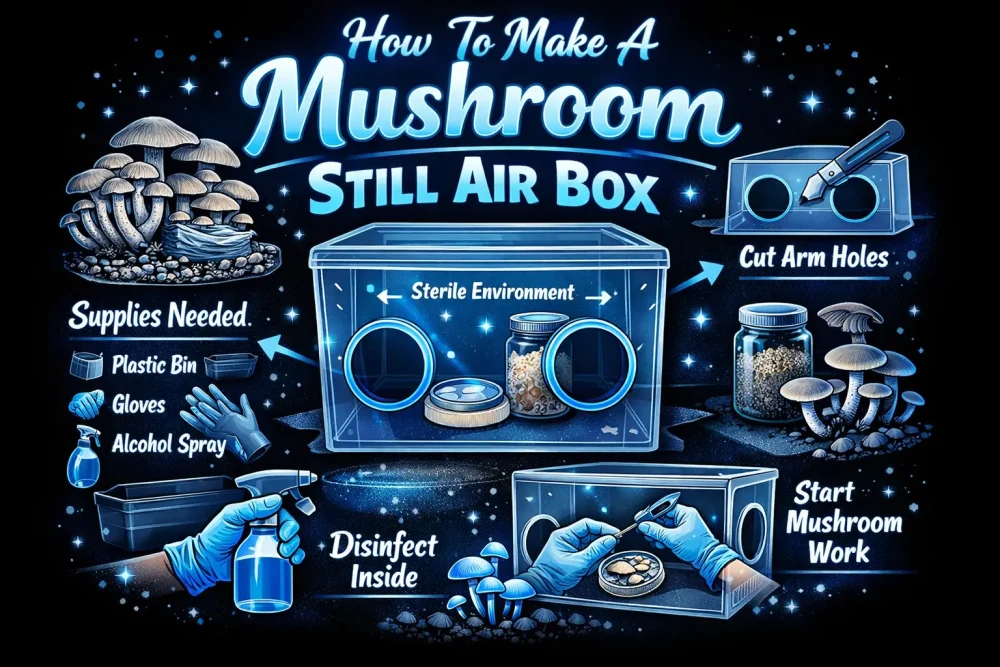
Growing mushrooms successfully requires a clean environment where contaminants like bacteria, mold spores, and dust are minimized. Even a small amount of contamination can ruin a mushroom culture. Professional laboratories use laminar flow hoods to maintain sterile conditions, but these systems are expensive and not always accessible for beginners.
A Mushroom Still Air Box (SAB) is an affordable and highly effective alternative. It is a simple container designed to reduce air movement so that contaminants cannot easily reach your sterile work area. For home cultivators, hobbyists, and small-scale mushroom growers, a Still Air Box is one of the most important tools for sterile technique.
In this comprehensive guide, you will learn what a still air box is, why it works, the materials you need, and a step-by-step process to build your own mushroom still air box at home. We'll also cover best practices, maintenance tips, and how to use the box effectively for mushroom cultivation tasks such as inoculation, agar transfers, and grain work.
What Is a Mushroom Still Air Box?
A Still Air Box (SAB) is a simple enclosed workspace used to perform sterile mushroom cultivation tasks. It is typically made from a large clear plastic container with two arm holes cut into one side. The design allows the user to place their hands inside the box while keeping outside air movement to a minimum.
The concept is simple: moving air carries contaminants. By creating an enclosed environment where the air is still, airborne particles settle and are less likely to land on sterile materials.
This makes the still air box ideal for:
- Spore syringe inoculation
- Agar transfers
- Grain jar inoculation
- Liquid culture work
- Mushroom cloning
- Sterile tool preparation
A well-built SAB can dramatically reduce contamination rates for beginner and intermediate mushroom growers.
Why Use a Still Air Box?
Contamination is the biggest challenge in mushroom cultivation. Mold spores, bacteria, and other microorganisms are constantly floating in the air around us.
When working with sterile mushroom cultures, even a tiny contaminant can grow faster than the mushroom mycelium and ruin the entire batch.
A Still Air Box helps solve this problem by:
1. Reducing Airflow
Moving air spreads contaminants. A sealed container keeps the air still, preventing new particles from entering the workspace.
2. Creating a Controlled Environment
The SAB acts as a barrier between your sterile materials and the outside environment.
3. Lowering Costs
Professional laminar flow hoods can cost hundreds or thousands of dollars. A still air box can be built for less than $20–$30.
4. Improving Success Rates
When used correctly, a SAB can significantly reduce contamination, especially during delicate procedures like agar work.
For beginners starting their mushroom cultivation journey, building a still air box is one of the best investments they can make.
Materials Needed to Build a Still Air Box
One of the advantages of a still air box is that it requires very few materials. Most of the items can be found at local hardware stores or online retailers.
Essential Materials
You will need:
- Large clear plastic storage container (50–100 liters)
- Marker or permanent pen
- Measuring tape or ruler
- Sharp utility knife or box cutter
- Hole saw or heated metal can (optional)
- Sandpaper (optional)
- Gloves
- Rubbing alcohol or disinfectant spray
Optional Materials
These can improve usability but are not required:
- Rubber gaskets for arm holes
- Plastic arm sleeves
- Silicone sealant
- Anti-slip mat for the bottom
- LED light strip for visibility
The most important requirement is a clear container so you can easily see your work inside the box.
Choosing the Right Container
The container is the foundation of your still air box, so choosing the right size matters.
Recommended Size
A good SAB should be:
- Wide enough to hold jars, tools, and agar plates
- Tall enough to allow hand movement
- Clear or transparent for visibility
A common size is:
60–90 liters (16–24 gallons)
This provides enough workspace while still being manageable on a table or countertop.
Shape Considerations
Look for containers that have:
- Straight walls
- Flat surfaces
- Strong plastic material
Avoid containers with complex shapes or too many curves because they make cutting holes more difficult.
Step-by-Step Guide to Making a Mushroom Still Air Box
Building a still air box is a simple DIY project that can be completed in less than an hour.
Step 1: Clean the Container
Before cutting anything, thoroughly clean the plastic container.
Wash it with:
- Warm water
- Dish soap
Then disinfect it using:
- Rubbing alcohol
- Bleach solution
Allow it to dry completely.
This step ensures that your box starts as clean as possible.
Step 2: Mark the Arm Holes
Place the container upside down on a table. The open side should face the surface.
Using a marker and measuring tape, mark two circles where your arms will go.
Recommended placement:
- Centered horizontally
- About 15–20 cm apart
- Positioned 10–15 cm from the bottom edge
Typical hole size:
10–12 cm (4–5 inches) diameter
Make sure the holes are large enough for comfortable arm movement.
Step 3: Cut the Holes
Now carefully cut the marked circles.
You can do this using:
- A hole saw drill attachment
- A heated metal can
- A utility knife
Take your time to ensure smooth cuts.
Safety tip:
Wear gloves and cut slowly to avoid slipping.
Step 4: Smooth the Edges
After cutting the holes, the edges may be rough.
Use:
- Sandpaper
- A file
- A heated blade
This helps prevent scratches when placing your arms inside the box.
Smooth edges also improve comfort during long sterile procedures.
Step 5: Optional Arm Sleeves
Some growers install sleeves to create an additional barrier between their arms and the inside environment.
Common options include:
- Long plastic gloves
- Laboratory arm sleeves
- Rubber gaskets
However, many cultivators prefer open arm holes because sleeves can restrict movement.
Both methods work effectively.
Step 6: Final Cleaning
After cutting and sanding, clean the box again.
Wipe down the interior using:
- Isopropyl alcohol
- Disinfectant wipes
Allow it to air dry completely before using it for sterile work.
Your mushroom still air box is now ready.
How to Use a Still Air Box Properly
Building a SAB is only half the process. Proper usage is essential to maintain sterile conditions.
1. Choose a Clean Room
Use your still air box in a room that:
- Has minimal airflow
- No open windows
- No fans running
Turn off air conditioning temporarily if possible.
2. Disinfect the Box
Before each use:
- Spray the inside with 70% isopropyl alcohol
- Wipe surfaces with clean paper towels
- Let the air inside settle for 5–10 minutes
This allows airborne particles to settle.
3. Prepare All Materials First
Before inserting your hands, place all tools inside the SAB:
- Agar plates
- Syringes
- Grain jars
- Scalpel
- Alcohol wipes
- Lighter or torch
Once your hands are inside, avoid removing them frequently.
4. Move Slowly
Fast movement creates air currents that disturb settled particles.
Always move:
- Slowly
- Smoothly
- Deliberately
This keeps contaminants from circulating.
5. Flame Sterilize Tools
When using metal tools like scalpels or needles:
- Heat with a flame until red hot
- Allow to cool briefly
- Perform your sterile transfer
Flame sterilization is essential for clean culture work.
Common Uses for a Still Air Box
A SAB is extremely versatile in mushroom cultivation.
Spore Syringe Inoculation
Spore syringes are used to introduce mushroom spores into sterile grain jars.
Inside the SAB:
- Sterilize the needle
- Inject spores through the jar lid
- Cover the injection port
This reduces contamination risk.
Agar Transfers
Agar plates are used to grow and isolate mushroom cultures.
Within the still air box you can:
- Transfer mycelium
- Isolate healthy growth
- Remove contaminated sections
This technique helps create strong mushroom genetics.
Grain-to-Grain Transfers
This method expands colonized grain into new jars.
Inside the SAB you can safely:
- Open colonized jars
- Transfer grain
- Seal new jars
It is one of the fastest ways to expand mushroom cultures.
Mushroom Cloning
Cloning involves transferring tissue from a fresh mushroom onto agar.
This preserves desirable traits such as:
- Fast growth
- Large fruiting bodies
- High yield
A SAB is perfect for this delicate work.
Tips for Maximizing Sterility
Even with a still air box, good sterile technique is critical.
Wear Clean Clothing
Avoid loose clothing that can shed fibers.
Many cultivators wear:
- Clean long sleeves
- Gloves
- Face masks
Wash Hands Thoroughly
Wash hands with soap before starting.
Then sanitize with alcohol.
Avoid Talking While Working
Talking releases moisture and bacteria into the air.
Try to stay quiet during sterile procedures.
Work Efficiently
Prepare your steps ahead of time so you can complete the process quickly and smoothly.
Common Mistakes to Avoid
Many beginners accidentally increase contamination by making simple mistakes.
Moving Too Fast
Fast hand movements create air turbulence.
Always move slowly inside the SAB.
Overcrowding the Box
Too many tools inside the workspace make it harder to work carefully.
Only place what you need.
Not Letting Air Settle
After disinfecting the SAB, wait several minutes before starting work.
This allows airborne particles to settle.
Touching Sterile Surfaces
Avoid touching:
- Agar surfaces
- Needle tips
- Sterile jar openings
Use sterile tools whenever possible.
Maintenance and Cleaning
Keeping your still air box clean will help maintain long-term effectiveness.
After Each Use
Wipe the interior with:
- Alcohol
- Disinfectant spray
Remove any debris or spilled materials.
Weekly Deep Cleaning
If you use your SAB frequently:
- Wash with soap and water
- Disinfect with alcohol
- Dry completely
This prevents buildup of spores or bacteria.
Storage Tips
Store your still air box in a clean location where dust cannot accumulate inside.
Some growers place a lid or plastic wrap over the arm holes when not in use.
Still Air Box vs Laminar Flow Hood
Both tools help maintain sterile conditions, but they serve different purposes.
Still Air Box
Advantages:
- Very affordable
- Easy to build
- Great for beginners
- No electricity required
Limitations:
- Smaller workspace
- Requires careful movement
Laminar Flow Hood
Advantages:
- Constant sterile airflow
- Professional-level environment
- Faster workflow
Limitations:
- Expensive
- Requires filters and maintenance
Most home growers start with a still air box before upgrading to advanced equipment.
Final Thoughts
A Mushroom Still Air Box is one of the simplest yet most powerful tools for successful mushroom cultivation. With only a few inexpensive materials and basic DIY skills, you can create a sterile workspace that dramatically improves your chances of growing healthy mushroom cultures.
By following proper sterile techniques and maintaining your still air box carefully, you can perform essential tasks like spore inoculation, agar transfers, cloning, and grain expansion with confidence.
Whether you are growing gourmet mushrooms, experimenting with mycology as a hobby, or building a small mushroom cultivation setup, a well-designed still air box is a valuable asset.
If you are building a business around mushroom cultivation, agriculture, or specialty food production, visibility online becomes equally important. Entrepreneurs looking to promote their services, farms, or cultivation products globally can hire Tulu e Biz for Worldwide Business Listing & Discovery Platform Services to improve online discoverability and connect with potential partners and customers across the world.
With the right tools, proper sterile methods, and a commitment to learning, mushroom cultivation can be a rewarding and productive skill—and a homemade still air box is the perfect place to start.
Enjoyed this article? Share it with others!