
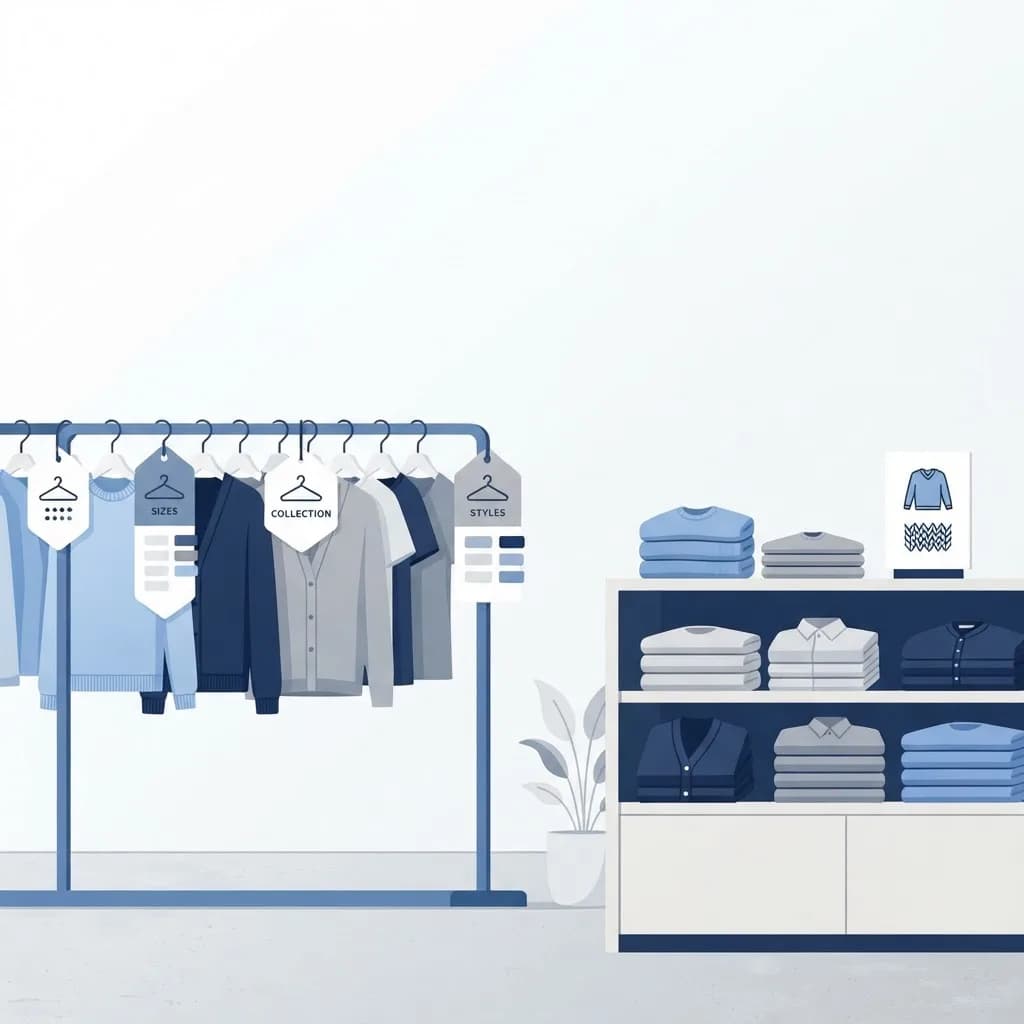
Knowing how to categorize knit tops for retail is a small detail that has a big impact on sales, searchability, and inventory management. When products are organized logically, shoppers find what they want faster and buy more confidently.
Poor categorization, on the other hand, buries great products, confuses customers, and drags down conversion rates both online and in-store.
This guide walks you through building a clear, scalable knit tops taxonomy using smart attributes, consistent naming, and merchandising best practices.
What Does Categorizing Knit Tops Mean?
Categorizing knit tops means organizing them into logical groups based on attributes like style, fit, sleeve length, fabric, and occasion. This creates a structured product taxonomy.
A strong product taxonomy acts as a roadmap for both shoppers and systems. It powers navigation menus, search filters, and inventory reporting.
For knit tops specifically, categorization goes beyond "tops" and dives into details like sweaters, pullovers, cardigans, and lightweight knit tees.
Who Needs a Knit Tops Taxonomy?
Anyone selling apparel benefits from clear categorization, especially as catalogs grow.
- Online fashion retailers with large product catalogs
- Boutique owners expanding their inventory
- Marketplace sellers on Amazon, Etsy, or Shopify
- Wholesalers organizing bulk apparel
- Merchandising and inventory teams
Key Attributes for Categorizing Knit Tops
Style and Type
Group knit tops by type such as pullovers, cardigans, turtlenecks, and knit tees. This is the foundation of your taxonomy.
Fit and Silhouette
Include attributes like slim, relaxed, oversized, and cropped so shoppers can filter by their preferred fit.
Fabric and Knit Type
Categorize by material such as cotton, wool, cashmere, or blends, and knit density like fine-gauge or chunky knit.
Occasion and Season
Tag items as casual, workwear, or evening, and by season. Pairing this with clear infographic design can visually guide shoppers through your collections.
How to Build Your Categorization System
A consistent, repeatable process keeps your catalog clean as it scales.
- Define top-level categories like tops, then knitwear.
- Create subcategories by style such as sweaters and cardigans.
- Add attribute filters for fit, fabric, sleeve length, and color.
- Standardize naming conventions across all listings.
- Apply tags for occasion, season, and trends.
- Review and refine categories based on search and sales data.
A well-structured catalog also needs a fast, filterable storefront. Investing in modern React JS web development ensures smooth filtering and navigation for large apparel catalogs.
Benefits of Proper Categorization
Good taxonomy directly influences discoverability and revenue.
- Faster product discovery for shoppers
- Improved on-site search and filtering
- Better SEO through organized category pages
- Cleaner inventory and reporting
- Higher conversion rates and fewer abandoned searches
Potential Challenges
Building and maintaining a taxonomy has its difficulties.
- Inconsistent naming across teams or suppliers
- Overlapping categories that confuse shoppers
- Too many or too few subcategories
- Keeping up with seasonal and trend changes
Best Practices and Tips
Keep your system intuitive for shoppers and scalable for your business.
- Think like a customer when naming categories
- Use consistent, plain-language labels
- Limit category depth to avoid confusion
- Use analytics to refine and merge underused categories
Real-World Example
Imagine an online boutique that lumped all knit items under a single "tops" category. Shoppers struggled to find specific styles, and bounce rates were high.
After restructuring into clear subcategories, cardigans, pullovers, and knit tees, with filters for fabric and fit, customers found products faster. Conversions rose, and the store saw fewer abandoned searches because navigation finally matched how shoppers actually think.
Why It Matters
In fashion retail, discoverability is everything. If shoppers cannot quickly find the knit top they want, they leave, often for a competitor with better organization.
A thoughtful taxonomy improves user experience, boosts SEO, and makes inventory management far easier as your catalog grows.
Frequently Asked Questions
What is the best way to categorize knit tops?
Start with style types like pullovers and cardigans, then layer on attributes such as fit, fabric, sleeve length, and occasion.
How many categories should I use?
Use enough to be clear but not overwhelming. Focus on how customers search rather than internal logic.
Does categorization affect SEO?
Yes. Well-structured category pages create keyword-rich, crawlable pages that improve rankings and organic traffic.
Should I categorize by season?
Seasonal tags help with merchandising and promotions, but core categories should stay stable year-round.
Conclusion
Mastering how to categorize knit tops for retail helps shoppers find products faster and boosts your sales and SEO. With clear categories, consistent attributes, and data-driven refinement, your catalog becomes an asset rather than a maze.
If you want a storefront that showcases organized collections beautifully, explore expert ecommerce solutions built for scalable apparel catalogs.
Enjoyed this article? Share it with others!