
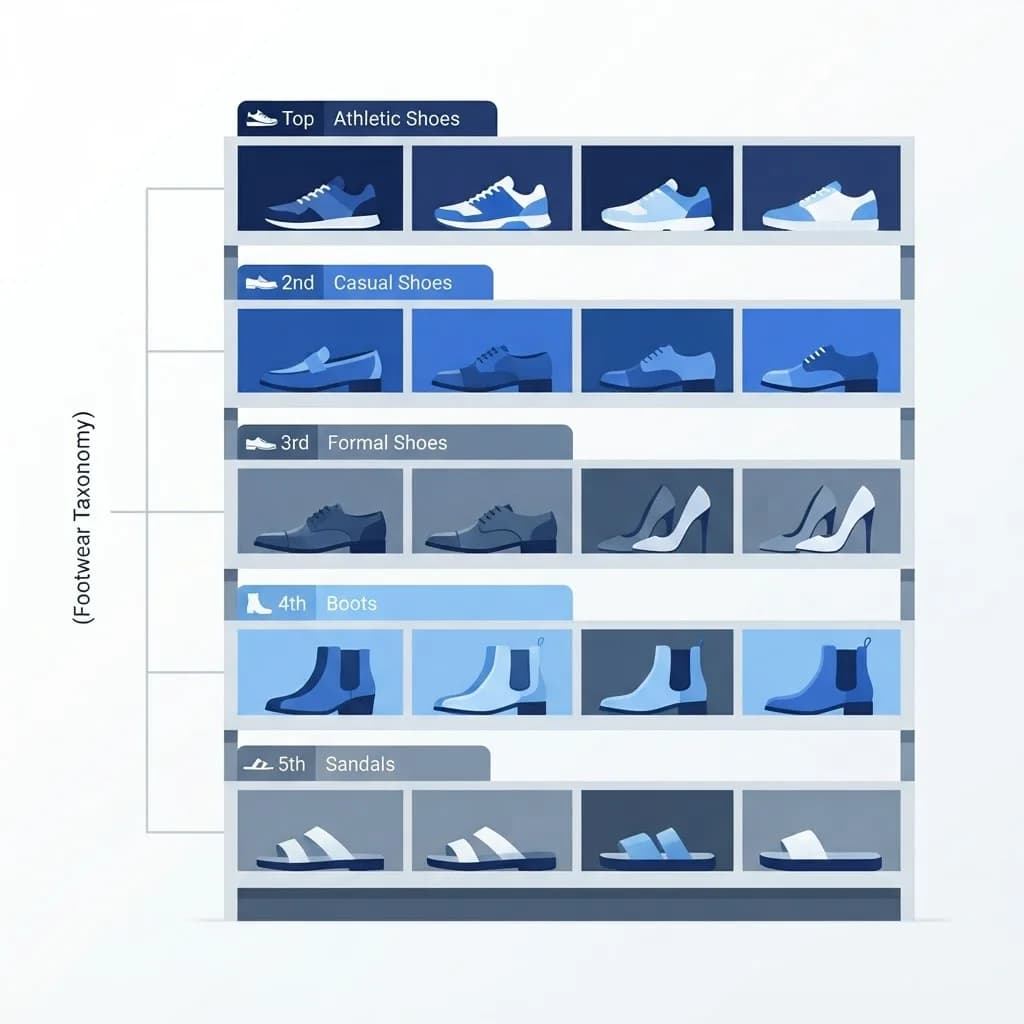
Figuring out how to categorize Crocs footwear in retail taxonomy is a practical challenge many sellers face. Crocs blend casual comfort, clogs, sandals, and lifestyle appeal, which makes them tricky to slot into a single category.
Getting this right improves searchability, filtering, and sales, helping shoppers find exactly the Crocs style they want without frustration.
This guide breaks down how to categorize Crocs footwear using clear attributes, logical category structures, and merchandising best practices for both online and in-store retail.
What Does Categorizing Crocs Mean?
Categorizing Crocs footwear means placing each product into logical groups based on type, style, use case, and audience within your retail taxonomy.
The challenge is that Crocs span multiple footwear categories, from classic clogs to sandals, sliders, and even boots, so a single flat category rarely works.
A strong taxonomy organizes these variations so customers can filter by style, gender, size, and purpose with ease.
Who Needs to Categorize Crocs Properly?
Accurate footwear categorization benefits many types of sellers.
- Online footwear and fashion retailers
- Marketplace sellers on Amazon, eBay, or Shopify
- Department stores with large catalogs
- Specialty shoe stores
- Wholesalers organizing bulk footwear
Key Attributes for Categorizing Crocs
Footwear Type
Start with core types like clogs, sandals, sliders, and boots. This forms the backbone of your Crocs taxonomy.
Audience and Gender
Segment by men, women, kids, and unisex, since Crocs offers styles across all demographics.
Use Case and Occasion
Categorize by purpose such as casual, work, water-friendly, or outdoor to match shopper intent.
Style and Customization
Include attributes for colors, patterns, and Jibbitz charms. Clear infographic design can help visually explain customization options to buyers.
How to Build Your Crocs Taxonomy
A structured approach keeps your footwear catalog clean and searchable.
- Set a top-level category such as footwear.
- Create a Crocs or clogs subcategory.
- Break down by type: clogs, sandals, sliders, boots.
- Add filters for gender, size, color, and use case.
- Standardize product naming across listings.
- Refine categories using search and sales data.
A fast, filterable storefront is key for footwear. Modern Next JS web development ensures smooth navigation across large product catalogs.
Benefits of Proper Crocs Categorization
Clear categorization improves both user experience and revenue.
- Faster product discovery for shoppers
- More accurate search and filtering
- Better SEO through structured category pages
- Cleaner inventory management
- Higher conversions and fewer abandoned searches
Potential Challenges
Categorizing versatile products like Crocs has its difficulties.
- Overlap between clogs, sandals, and sliders
- Handling unisex and multi-audience styles
- Managing seasonal and limited-edition releases
- Keeping naming consistent across suppliers
Best Practices and Tips
Keep your taxonomy shopper-friendly and scalable.
- Categorize based on how customers search
- Use consistent, plain-language labels
- Enable multiple filters like size, color, and type
- Review analytics to merge or refine categories
Real-World Example
Consider an online shoe store that listed all Crocs under a single "Crocs" tag. Shoppers looking for kids' sandals or water-friendly styles struggled to filter results.
After restructuring into clear subcategories, clogs, sandals, and sliders, with filters for gender and use case, customers found products faster. Conversions improved noticeably because navigation finally matched how people actually shop for footwear.
Why It Matters
In footwear retail, discoverability drives sales. If shoppers cannot quickly find the exact Crocs style they want, they abandon the search or go to a competitor.
A well-structured taxonomy improves user experience, boosts SEO, and simplifies inventory management as your catalog grows and evolves.
Frequently Asked Questions
What category do Crocs belong to?
Crocs are primarily categorized as clogs but also span sandals, sliders, and boots depending on the style.
Should Crocs be split by gender?
Yes. Segmenting by men, women, kids, and unisex helps shoppers filter results more effectively.
How do I handle unisex Crocs?
Tag them as unisex and make them visible under multiple relevant filters rather than forcing one gender category.
Does categorization affect SEO for footwear?
Yes. Structured category pages create keyword-rich, crawlable pages that improve search rankings and traffic.
Conclusion
Learning how to categorize Crocs footwear in retail taxonomy helps shoppers find products faster and boosts your sales and SEO. With clear types, smart filters, and data-driven refinement, your footwear catalog becomes far more effective.
If you want a storefront that showcases footwear collections beautifully, explore expert ecommerce solutions built for scalable retail catalogs.
Enjoyed this article? Share it with others!