
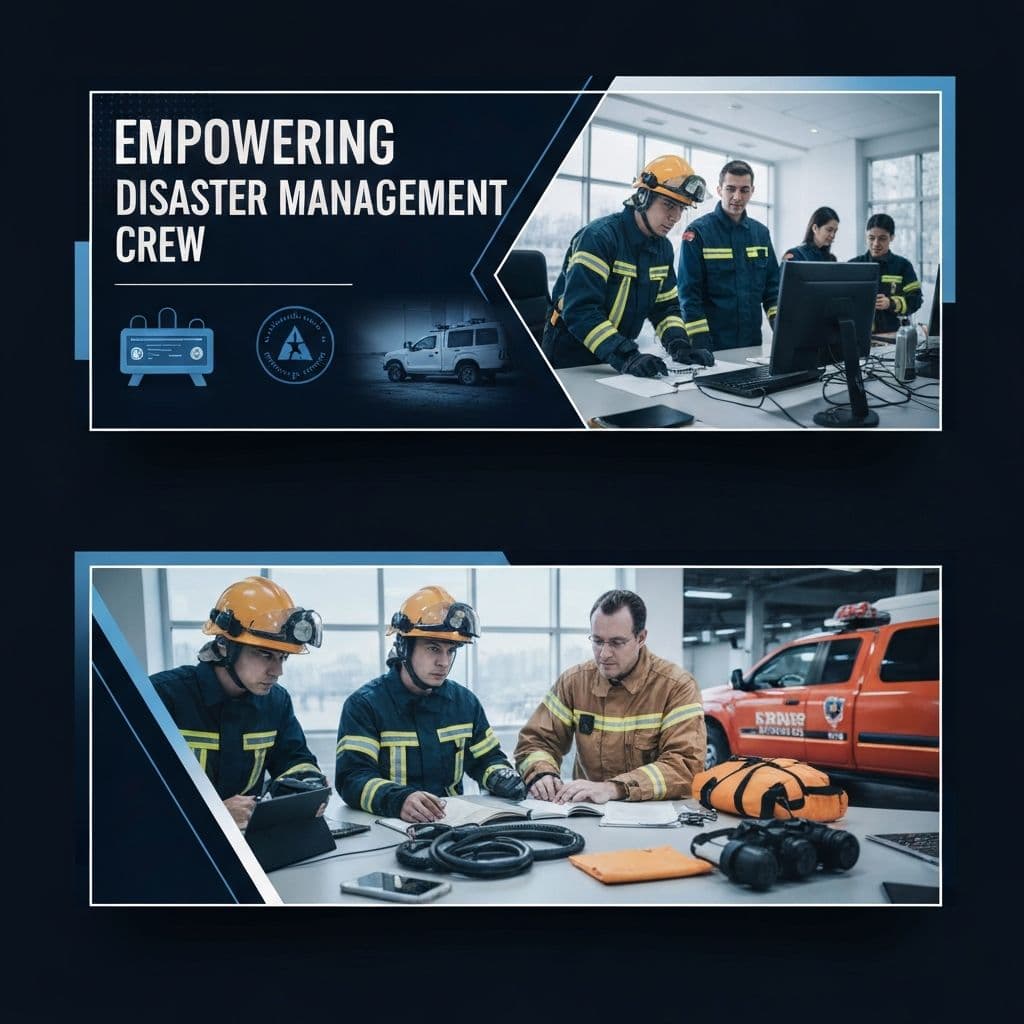
Understanding Disaster Management Crew Challenges
Disaster management professionals operate under extreme stress, physical danger, and emotional strain while serving critical community needs during emergencies. Effective empowerment requires comprehensive understanding of the multifaceted challenges these professionals face daily. Resource constraints, inadequate training opportunities, insufficient equipment, and limited mental health support create systemic obstacles that impair response effectiveness and threaten crew member wellbeing. Addressing these challenges requires coordinated investment across multiple dimensions simultaneously.
The disaster management workforce encompasses diverse professionals including emergency responders, logistics coordinators, medical personnel, communications specialists, and community liaisons. Each role presents distinct challenges and empowerment needs, requiring tailored support approaches. Recognizing this diversity enables targeted interventions addressing specific role requirements. Tulu E Biz supports initiatives enhancing emergency preparedness and community resilience through comprehensive planning approaches.
Comprehensive Training and Skill Development
Ongoing professional training represents a cornerstone of disaster management crew empowerment. Regular training programs covering technical skills, crisis decision-making, and interpersonal communication maintain crew competency and build confidence in high-stress situations. Specialized training tracks develop expertise in specific disaster types—floods, earthquakes, wildfires, hazmat incidents—enabling focused preparation for likely scenarios. Cross-functional training promotes understanding across disciplines, improving coordination during complex incidents.
Simulation-based training exercises provide safe environments for practicing emergency response without actual disaster consequences. Table-top exercises develop decision-making under uncertainty and resource constraints. Full-scale simulations engage equipment and personnel in realistic scenarios revealing vulnerabilities and training gaps. After-action reviews following training and actual incidents capture lessons learned, driving continuous improvement. Investment in training generates measurable improvements in response effectiveness and crew confidence.
Equipment and Resource Adequacy
Modern disaster response requires sophisticated equipment, vehicles, communication systems, and supply reserves. Chronic under-investment in disaster management infrastructure forces crews to improvise with inadequate resources, compromising safety and response effectiveness. Adequate funding ensures equipment remains current, vehicles function reliably, and supply inventories contain essential materials. Technology investments in communication systems, data management, and situational awareness tools improve coordination and decision-making during chaotic emergency conditions.
Personal protective equipment must meet current safety standards and accommodate crew members across diverse physical characteristics. Backup systems ensure continued functioning when primary equipment fails. Regular maintenance schedules preserve equipment functionality and prevent failures during critical moments. Equipment procurement decisions should incorporate crew input based on practical experience identifying most-needed capabilities.
Mental Health and Psychological Support Services
Disaster management professionals experience psychological trauma exposure during career tenure, facing incidents involving loss of life, injury, family separation, and community destruction. Comprehensive mental health services including counseling, peer support programs, and crisis intervention resources help manage traumatic stress. Organizational cultures normalizing mental health discussions and support-seeking behavior remove stigma barriers preventing help access. Peer support programs leveraging experienced crew member mentoring provide immediately accessible support during difficult times.
Critical incident stress management programs activate following particularly traumatic events, providing professional psychological support during acute stress response periods. Family support services address secondary trauma affecting crew member families. Long-term psychological monitoring identifies developing mental health challenges before crisis points. Proactive mental health investment prevents burnout, substance abuse, and suicide—serious occupational hazards in emergency services.
Fair Compensation and Benefits Structures
Adequate compensation reflects the essential nature of disaster management work and occupational hazards inherent to emergency response. Current compensation levels often fall below comparable professional roles requiring similar education and risk assumption. Competitive salary structures enable recruitment of talented professionals and reduce turnover disrupting organizational continuity and team cohesion. Hazard pay and incident bonuses acknowledge extraordinary risks assumed during disaster response.
Comprehensive benefits packages including health insurance, disability coverage, and retirement planning support long-term financial security. Family benefits provide dependents income protection if crew members suffer catastrophic injuries or fatality. Specialized workers' compensation addressing disaster response–specific injuries ensures adequate coverage for occupational hazards. Benefits administration clarity prevents confusion regarding coverage and claim processes.
Organizational Culture and Leadership Development
Supportive organizational cultures valuing crew member wellbeing, professional development, and voice in decision-making enhance empowerment across all dimensions. Leadership training develops managers capable of supporting diverse team members, fostering psychological safety, and making ethical decisions under pressure. Shared decision-making processes incorporating crew member input into policy development build ownership and commitment. Recognition programs celebrating individual and team achievements sustain morale during demanding periods.
Transparent communication regarding organizational challenges, resource constraints, and strategic priorities builds trust between leadership and crew members. Regular feedback mechanisms ensure leadership understands crew member concerns and perspectives. Career development pathways enable advancement based on merit and demonstrated capability, creating internal mobility opportunities.
Community Engagement and Integration
Disaster management effectiveness improves substantially when communities understand professional roles, respect crew member expertise, and cooperate with emergency response directives. Community outreach programs build public awareness of disaster preparedness, appropriate emergency responses, and crew member safety. Positive media coverage highlighting crew member heroism and professionalism enhances public support and political prioritization of resource allocation. Integration of disaster management personnel into community organizations strengthens relationships and trust.
Pre-disaster community relationships improve post-disaster recovery coordination. Communities understanding local crew member capabilities and operational procedures cooperate more effectively. Public education regarding personal emergency preparedness reduces post-disaster demands on professional crew members, enabling focus on most critical assistance needs.
Continuous Improvement and Adaptation
Disaster management represents an evolving field requiring continuous adaptation to emerging threats and demonstrated improvements. Regular performance evaluation and after-action analysis identify improvement opportunities. Participation in professional associations facilitates knowledge sharing across jurisdictions. Investment in research regarding disaster response effectiveness drives innovation and best practice adoption. Dynamic approaches prevent stagnation and enable responsiveness to changing conditions.
Technology integration including artificial intelligence, advanced analytics, and predictive modeling enhances disaster forecasting and resource allocation. Drone technology improves situational awareness and rescue capabilities. Real-time data integration enables informed decision-making based on current conditions. Strategic technology adoption improves response effectiveness while remaining mindful of implementation challenges and training requirements.
Enjoyed this article? Share it with others!