
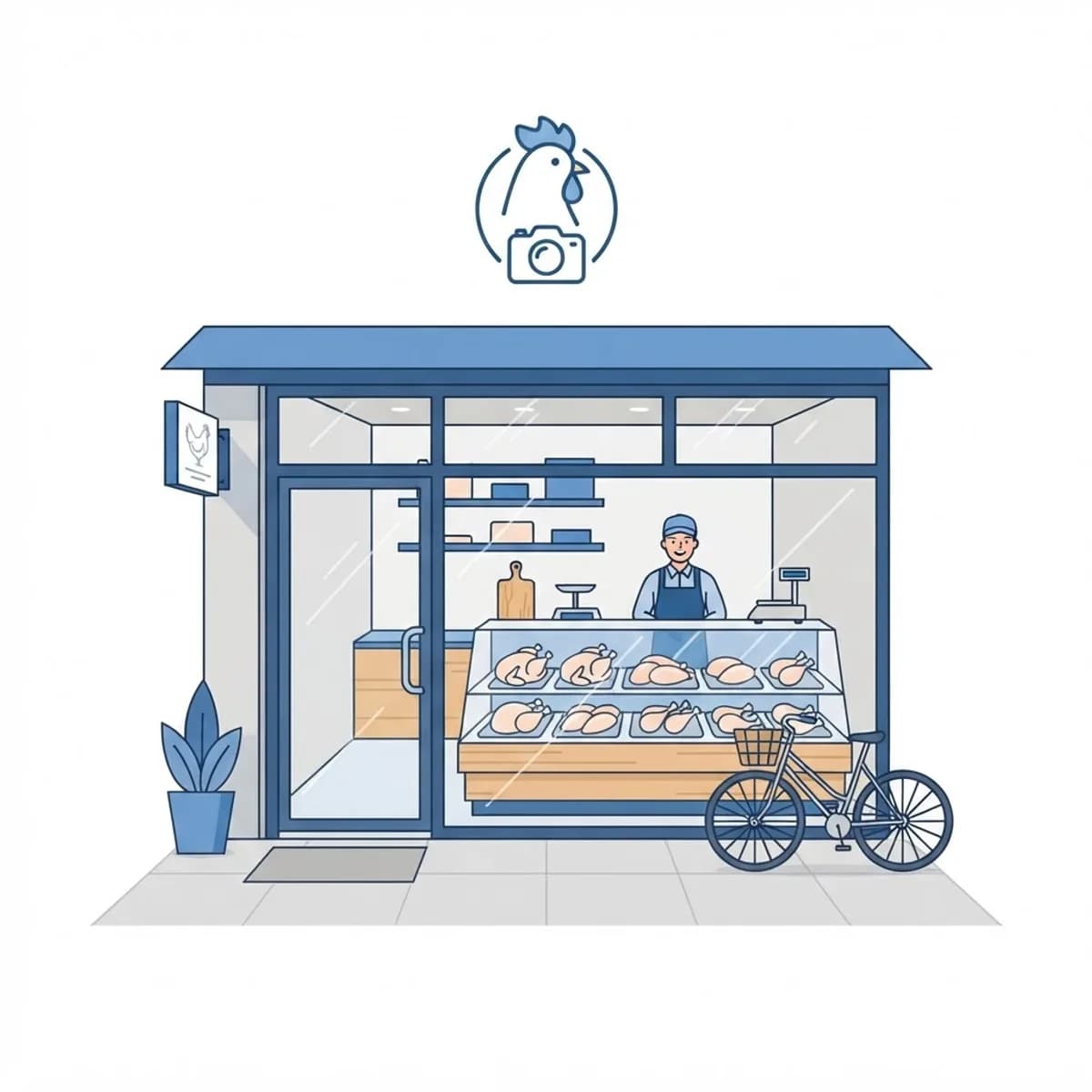
People search for Bello Poultry Market photos for two very different reasons. Some are shoppers deciding whether a butcher shop looks clean and trustworthy before driving over. Others are poultry sellers studying how competitors present their product visually.
Both goals come down to the same skill: reading a photo accurately. Images reveal a surprising amount about a fresh poultry business, from storage temperature discipline to how quickly stock turns over.
This guide covers what to look for in poultry market photos, what genuinely signals quality, and how small shops can photograph fresh meat in a way that builds trust instead of suspicion.
What Are Bello Poultry Market Photos?
Bello Poultry Market photos generally refers to customer and owner-uploaded images of a halal or fresh poultry shop, including the storefront, display counters, cut chicken, and packaging.
These images function as informal proof. For fresh food businesses, photos are the strongest trust signal a customer sees before walking in, often carrying more weight than a written description.
Photos alone cannot certify safety, but combined with reviews and visible licensing they give shoppers a reasonable basis for a first visit.
Who Uses Poultry Shop Photos?
Different visitors read the same photo very differently, which is worth knowing whether you are shopping or selling.
- Home cooks checking cleanliness and cut variety before visiting
- Restaurant and catering buyers assessing bulk supply capability
- Shoppers verifying halal or certification signage in the frame
- Competing shop owners studying display and pricing presentation
- Food photographers and marketers building a visual content library
Key Things to Look For in the Photos
Display Case Condition
Look at the glass, the trays, and the ice. Clean glass, separated trays, and fresh ice suggest daily discipline. Pooling liquid, mixed products, and crowded trays suggest the opposite.
Product Colour and Texture
Fresh chicken appears pink to pale pink with a moist but not slimy surface. Grey patches, dull edges, or excessive liquid in the tray are warning signs even in a flattering photo.
Staff Hygiene Practices
Check for gloves, aprons, hair covering, and clean cutting surfaces. Photos that accidentally capture good habits are more convincing than staged shots.
Storefront and Signage
Visible business hours, certification plaques, and price boards show a shop that expects scrutiny. Well-lit, uncluttered exteriors also photograph better, which is why many shops invest in professional social media post and banner design for their displays.
How to Evaluate a Poultry Market Before Visiting
A five-minute review process saves a wasted trip and protects your kitchen.
- Search the shop name with the city to find its map profile and photo gallery.
- Sort photos by most recent, since older images may show a previous owner or fit-out.
- Compare owner-posted photos with customer-posted ones for consistency.
- Read reviews that mention freshness, smell, weighing accuracy, and cut quality.
- Call to confirm today's stock, cut options, and whether they take advance orders.
- On your first visit, buy small, inspect closely, and judge the smell in person.
Benefits of Strong Photos for a Poultry Business
For shop owners, photography is one of the cheapest and highest-return investments available.
- Higher click-through from map listings and local search results
- Immediate trust from customers who cannot yet smell or touch the product
- Fewer phone calls asking what cuts and sizes are available
- Reusable content for menus, delivery apps, and printed price boards
- Stronger differentiation from competitors with no photos at all
Potential Challenges
Fresh meat is genuinely difficult to photograph, and mistakes can hurt more than help.
- Harsh overhead lighting makes raw poultry look grey and unappetising
- Heavy filters or colour grading trigger suspicion about authenticity
- Cluttered backgrounds distract from the product
- Outdated photos create expectation gaps when customers arrive
Best Practices and Tips
You do not need studio equipment. You need consistency and honest framing.
- Shoot in indirect daylight or with a soft diffused light source near the counter
- Photograph the same angles weekly so your gallery always looks current
- Include one wide storefront shot, one counter shot, and several close-ups of individual cuts
- Keep the visual style consistent across platforms with planned social media management
Real-World Example
A neighbourhood poultry shop had one blurry exterior photo on its map listing and almost no online discovery. The owner spent one morning taking twenty photos with a phone near the front window, where daylight was soft and even.
He uploaded a storefront shot, a clean counter shot, and close-ups of whole chicken, boneless breast, wings, and mince, with prices written on a tidy chalkboard in frame. Within weeks, listing views climbed and walk-in customers began arriving already knowing what they wanted, which shortened queues during evening rush.
Why It Matters
Fresh food purchases are trust purchases. Bello Poultry Market photos, and photos of any poultry shop, are how that trust gets built before a customer ever opens the door.
For shoppers, learning to read those images protects your money and your health. For owners, good photography is the lowest-cost way to compete with larger, better-funded stores.
Frequently Asked Questions
Can I tell if chicken is fresh from a photo?
Partly. Colour, tray liquid, and ice condition give useful clues, but smell and texture can only be judged in person. Use photos to shortlist shops, not to make the final call.
Where can I find current photos of a poultry market?
Check the shop's map listing, its social media pages, and recent customer reviews with attached images. Sort by newest so you are not judging an outdated fit-out.
How should a poultry shop photograph its products?
Use soft natural light, a clean neutral background, and honest colour. Show the counter, individual cuts, and packaging, and refresh the set regularly.
Do photos really affect how many customers visit?
Yes. Listings with clear, current photos consistently earn more clicks and calls than listings with none, especially in food categories where hygiene is a concern.
Conclusion
Whether you are researching Bello Poultry Market photos as a shopper or building your own gallery as an owner, the same principles apply: current images, honest lighting, visible hygiene, and clear pricing.
If you want your shop to look as good online as it does in person, we can help with professional graphic design and visual branding.
Enjoyed this article? Share it with others!