
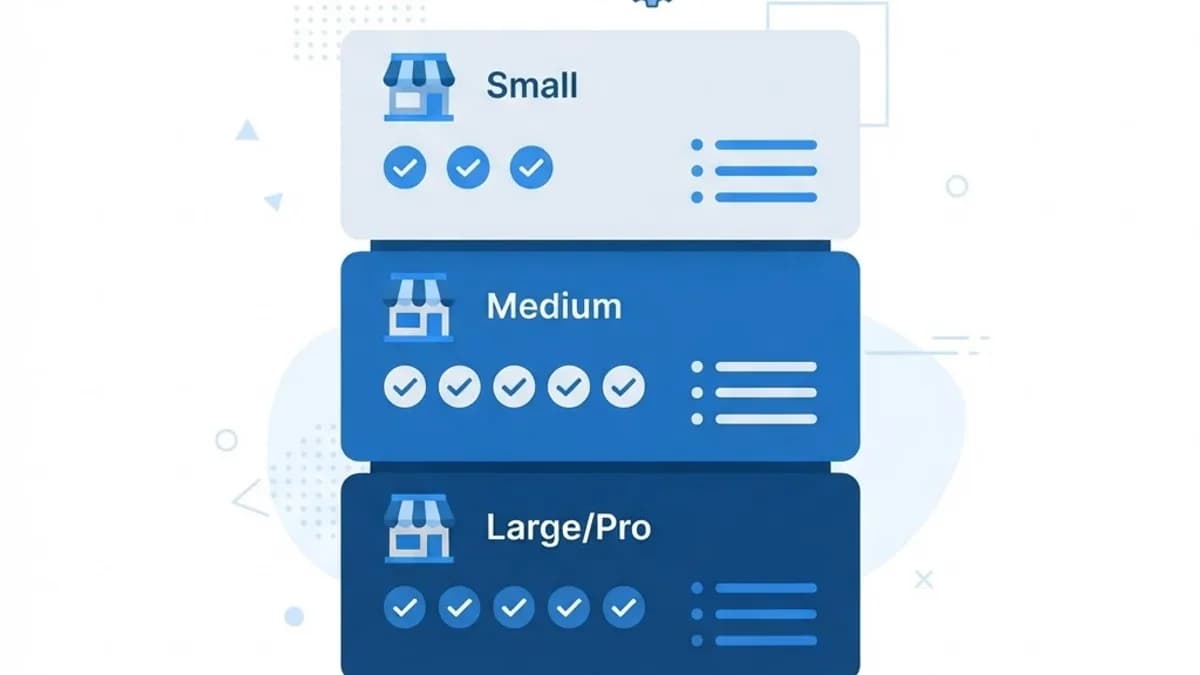
Every marketing agency sells packages, and almost all of them look the same on a pricing page. Three columns, a list of checkmarks, and prices that range from a few hundred dollars to several thousand a month. For a small business owner comparing options, it is nearly impossible to tell what you are actually buying.
Digital marketing packages for small business can be genuinely good value or a slow drain on cash, and the difference usually is not visible on the pricing table. It is in the hours, the seniority of the people doing the work and whether the deliverables match your actual bottleneck.
This guide breaks down what belongs in each tier, what fair pricing looks like in the current market, and the specific questions that reveal whether a package is worth buying.
What Are Digital Marketing Packages?
A package is a bundled set of recurring marketing services sold at a fixed monthly price — typically some combination of SEO, content, social media management, paid ad management and reporting.
Agencies package services because it makes pricing predictable for both sides and lets them standardize delivery. That standardization is efficient, but it also means a package may include work your business does not need while omitting the one thing it does.
The most useful way to evaluate a package is to convert its price into hours. A 1,500 dollar monthly retainer at typical agency rates buys roughly 10 to 15 hours of work. Ask yourself whether the promised deliverable list is realistically achievable in that time.
Who Should Buy a Package?
Packages suit businesses that need consistent execution more than bespoke strategy.
- Small businesses without any internal marketing staff
- Owners currently doing marketing themselves and running out of hours
- Local service businesses needing steady SEO and review management
- Companies wanting predictable costs rather than variable project billing
- Businesses testing marketing seriously for the first time with limited budget
Key Components by Tier
Entry Tier — Roughly 500 to 1,500 Dollars Monthly
This level should cover local SEO fundamentals: Google Business Profile management, citation consistency, basic on-page optimization, review monitoring and monthly reporting. Expect one modest content piece at most. Anything promising full SEO plus social plus ads at this price is spreading a handful of hours impossibly thin.
Mid Tier — Roughly 1,500 to 4,000 Dollars Monthly
Here you should get meaningful content production, ongoing technical SEO, link acquisition, managed paid campaigns and conversion improvements. This is the range where most small businesses see genuine momentum, because there are enough hours to do more than maintenance.
Growth Tier — 4,000 Dollars and Above
At this level expect multi-channel execution, dedicated strategy time, custom reporting and often development work. Packages here should include website improvements, since conversion optimization frequently outperforms additional traffic. Some agencies bundle ongoing website maintenance and support at this tier, which is worth confirming.
What Should Always Be Included
Regardless of tier, insist on transparent reporting tied to leads or revenue, your ownership of all accounts and assets, and a named point of contact. Packages lacking any of these are structurally risky no matter how attractive the price.
How to Choose the Right Package
Work backward from your bottleneck rather than forward from a price list.
- Identify your actual constraint — not enough traffic, poor conversion, weak reputation or slow follow-up.
- Calculate what one new customer is worth so you can judge acceptable cost per lead.
- Request the hour allocation behind each package tier, not just deliverables.
- Ask who specifically performs the work and what their experience level is.
- Confirm reporting includes leads and revenue, not just rankings and impressions.
- Verify you own the website, ad accounts, analytics and all content produced.
- Start with the shortest reasonable commitment and defined 90-day success criteria.
Benefits of Package-Based Marketing
For the right business, packages solve real problems.
- Predictable monthly cost that fits small business cash flow planning
- Consistent execution rather than sporadic bursts when the owner has time
- Access to multiple specialties for less than one salaried hire
- Established processes and tooling from day one
- Accountability through scheduled reporting and review meetings
Potential Challenges
Packages carry recognizable failure modes worth watching for.
- Standardized deliverables that do not address your specific bottleneck
- Extremely low-cost packages that are largely automated with minimal human attention
- Long contracts with heavy early termination penalties
- Reporting built around metrics that look impressive but do not correlate with revenue
Best Practices and Tips
A few habits dramatically improve what you get out of any package.
- Convert price to hours before comparing tiers; it exposes unrealistic promises instantly
- Ask for two references from businesses your size in a similar industry
- Insist on lead tracking from the first month so you have a baseline to judge against
- Consider bundling design work — coordinated social media post and banner design often costs less inside a package than purchased separately
Real-World Example
An eight-person HVAC company bought a 900 dollar monthly package promising SEO, social media, blogging and ad management. After eight months, rankings had barely moved and leads were flat. Reviewing the scope revealed the agency was allocating about six hours a month across four disciplines — roughly ninety minutes each.
The company moved to a 2,600 dollar package focused solely on local SEO and paid search, dropping social entirely. Within five months inbound calls rose by more than half. Spending more on less was the correct answer, because concentration beat coverage.
Why It Matters
Small businesses have narrow margins for wasted spend. A poorly chosen package does not just cost the monthly fee — it costs a year of momentum and often leaves the owner convinced marketing does not work.
Evaluating digital marketing packages for small business properly, on hours and outcomes rather than checkmarks, is one of the highest-leverage decisions an owner makes. It determines whether the next twelve months compound or evaporate.
Frequently Asked Questions
What is a realistic monthly budget for a small business?
Most small businesses see genuine traction starting around 1,500 to 3,000 dollars monthly for a focused single-channel program. Below roughly 1,000 dollars, expect maintenance rather than growth unless the scope is very narrow.
Are cheap packages ever worth it?
Occasionally, when tightly scoped — for example, Google Business Profile management and review generation alone for a local service business. They fail when they promise comprehensive multi-channel coverage at a price that cannot fund it.
Should I sign a long-term contract?
Six months is reasonable for SEO, since results genuinely take that long. Twelve months with penalties before any results are demonstrated is not. Negotiate a review point at 90 days with a clear exit if agreed metrics are missed.
What if I only need one service?
Then buy only that service. Unbundled, focused engagements almost always outperform diluted packages for businesses with a single clear bottleneck, and most agencies will accommodate the request.
Conclusion
The right package is the one aimed at your actual constraint, staffed by people you have met, priced at a level that funds real hours, and reported against leads rather than rankings. Everything else is presentation.
If you are unsure which constraint is limiting your growth, an audit before purchasing is worth the delay — start by reviewing digital marketing services scoped to small business budgets.
Enjoyed this article? Share it with others!