Solar has one of the most expensive customer acquisition problems in home services. Between purchased leads, door canvassing and paid ads, many installers spend well over 2,000 dollars to close a single residential system. Digital marketing for solar companies done properly is the most reliable way to bring that number down and stop renting your pipeline from lead vendors.
The challenge is that solar buyers behave differently from other home service customers. They research for weeks or months, compare three or four quotes, and are heavily influenced by incentive deadlines and utility rate changes.
This guide covers the channels that build owned demand — local search, education content, review strategy and structured nurture — and how to measure them against the purchased leads you are probably still buying.
What Is Digital Marketing for Solar Companies?
It is the practice of generating and converting your own solar inquiries through search, content, paid media, email and reputation rather than buying shared leads from aggregators.
The distinction matters financially. A purchased lead is typically sold to three or four competitors simultaneously. An inquiry generated through your own site is exclusive, arrives warmer and closes at a substantially higher rate.
Solar marketing is fundamentally education marketing. The homeowner needs to understand payback period, financing, incentives and roof suitability before they will commit, and whoever teaches them best usually earns the contract.
Who Needs It?
The economics favor almost any installer, but especially those in specific positions.
- Regional residential installers competing against large national players
- Companies overly dependent on purchased or shared lead sources
- Installers expanding into commercial or agricultural solar
- Solar plus storage providers whose offering requires more explanation
- New entrants in markets with strong incentives and low local awareness
Key Features of a Solar Marketing Program
Local SEO Around Utility Territories
Solar economics vary by utility, not just by city. Build pages around specific service territories and rate structures, since payback math and net metering rules differ meaningfully between them. This specificity ranks well and pre-qualifies visitors.
Incentive and Payback Content
The highest-converting solar content answers the money question directly: what will this cost, what incentives apply, and how long until it pays for itself. Keep this content current, because federal, state and utility incentives change frequently and outdated numbers destroy trust immediately.
Calculators and Interactive Tools
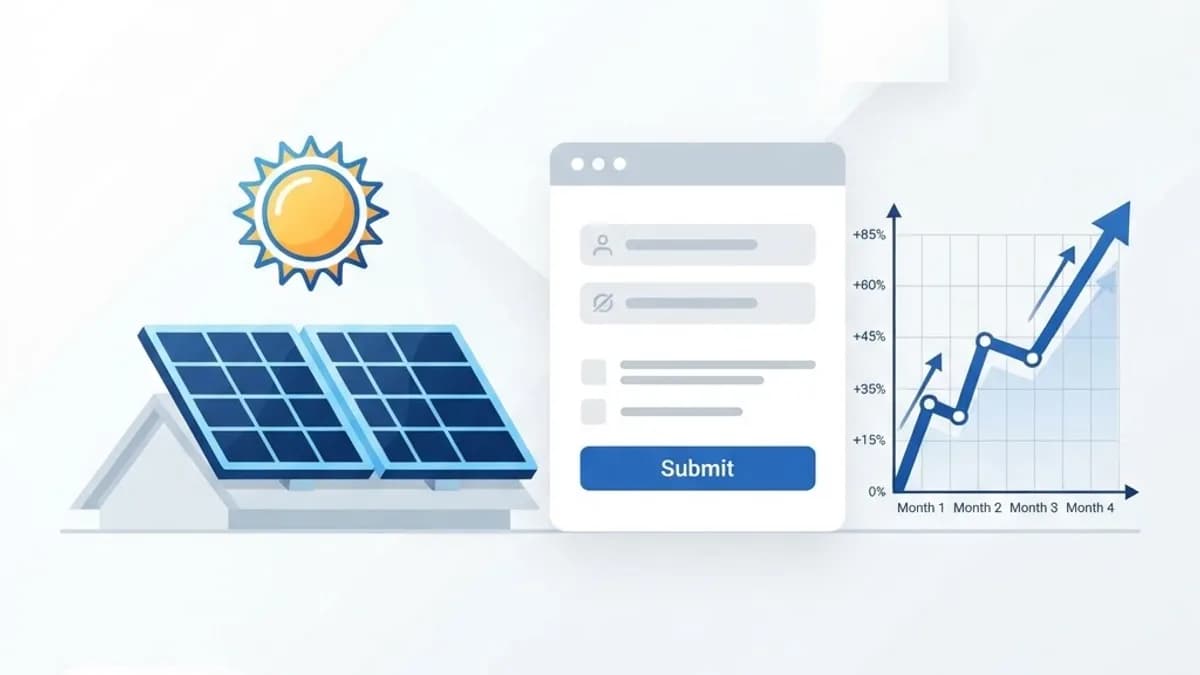
A savings estimator or roof suitability checker converts far better than a contact form because it gives the visitor something before asking for information. These require real engineering, and installers often build them through custom web application development rather than off-the-shelf widgets.
Reputation and Social Proof
Solar carries reputational baggage from aggressive sales practices industry-wide. Abundant, recent, detailed reviews plus real installation photos from recognizable local neighborhoods do more to overcome skepticism than any ad creative.
How to Get Started
Build owned demand gradually while your purchased leads keep the crews busy.
- Calculate your true cost per install by channel, including purchased leads and canvassing labor.
- Complete your Google Business Profile with installation photos and full service areas.
- Create pages for each utility territory you serve, with accurate local incentive details.
- Publish a thorough, honest guide to solar costs and payback in your specific market.
- Add a savings calculator or assessment tool as your primary conversion offer.
- Build an email nurture sequence for the majority of prospects who are not ready yet.
- Compare owned lead cost against purchased lead cost quarterly and shift budget accordingly.
Benefits
Owned demand generation changes the structure of a solar business, not just its marketing.
- Exclusive leads that close at meaningfully higher rates than shared ones
- Lower blended cost per install over time as organic visibility compounds
- Better-educated prospects, shortening consultations and reducing cancellations
- Insulation from lead vendor price increases and quality degradation
- Stronger brand trust in a category where consumer skepticism is high
Potential Challenges
Solar marketing carries some specific difficulties.
- Incentive and policy changes can invalidate content and campaign messaging overnight
- Long consideration periods mean months between first click and signed contract
- Paid search competition from national installers and lead aggregators is intense and expensive
- Industry-wide reputation issues mean you must overcome distrust you did not create
Best Practices and Tips
The installers with the healthiest acquisition costs tend to share these habits.
- Publish real pricing ranges — vagueness drives buyers to competitors who are transparent
- Update incentive content the moment policy changes; stale numbers are worse than none
- Photograph every install and use genuine local imagery rather than stock panels
- Keep long-cycle prospects engaged with automated email nurture campaigns tied to incentive deadlines
Real-World Example
A residential installer in a strong incentive state was buying roughly 80 percent of its leads at about 250 dollars each, closing near 8 percent. It built three utility-specific pages, a plainly written local cost and payback guide, and a simple savings calculator, then set up a six-month email sequence for calculator users who did not book.
Eighteen months later, owned inquiries made up nearly half of the pipeline and closed at 19 percent. Blended cost per install dropped by roughly a third, and the company stopped raising its purchased lead budget entirely.
Why It Matters
Solar margins are under sustained pressure from equipment pricing, financing costs and policy shifts. Acquisition cost is one of the few variables an installer directly controls, and it is where most companies leak the most money.
Digital marketing for solar companies is essentially an investment in owning your demand rather than renting it. Every month of compounding organic visibility reduces dependence on channels whose prices you cannot influence.
Frequently Asked Questions
Are purchased solar leads worth it?
They fill capacity quickly but at declining efficiency, since the same lead is sold to multiple installers. Most successful companies use them as a supplement while building owned channels rather than as a permanent foundation.
How much should a solar company spend on marketing?
Total customer acquisition cost typically runs 15 to 25 percent of system revenue across the industry. Shifting spend from purchased leads toward owned channels usually reduces that percentage within twelve to eighteen months.
Does SEO work for solar installers?
Very well, because homeowners research extensively before buying. Local and utility-specific content ranks with moderate effort and produces exclusive inquiries at a fraction of purchased lead cost once established.
How do we handle prospects who take months to decide?
Assume most will. Build a nurture sequence that delivers useful updates on incentives, financing and utility rates rather than repeated sales pushes, and time outreach around incentive expiration dates when urgency naturally rises.
Conclusion
Solar companies that win long term are the ones that teach honestly, rank locally and stay in touch through a decision cycle measured in months. That combination produces exclusive leads at a cost no aggregator can match.
If you are ready to reduce dependence on purchased leads, begin by building the owned channels that compound — a performance-focused digital marketing program is the practical starting point.
Enjoyed this article? Share it with others!