
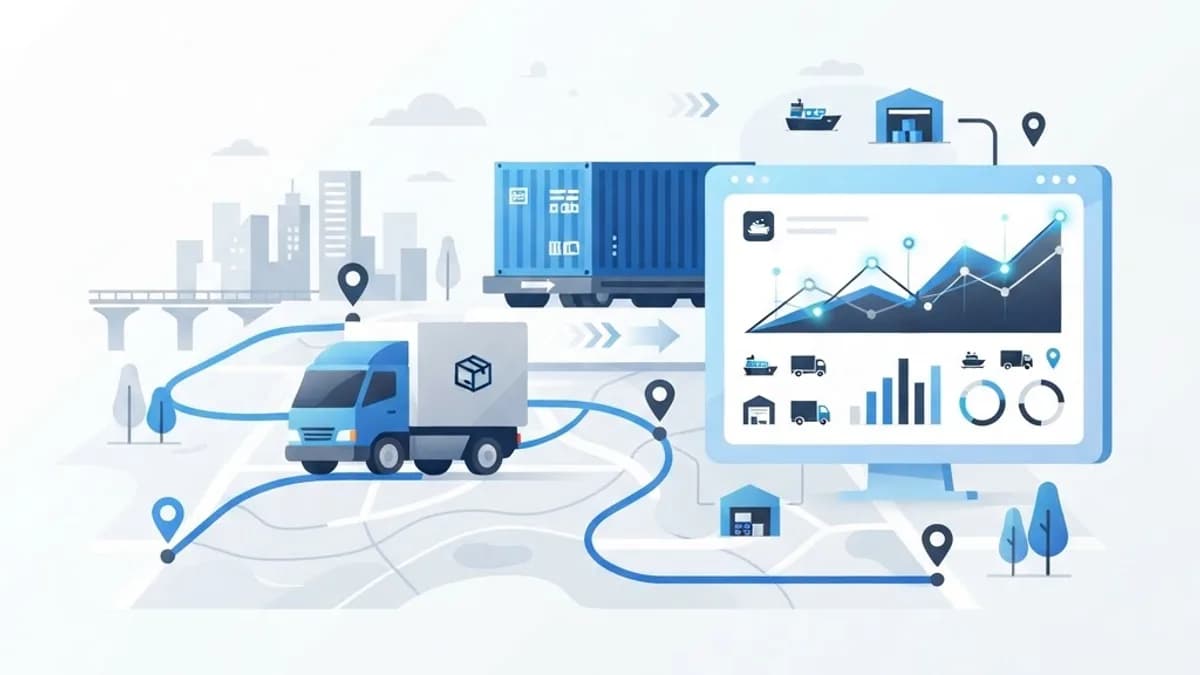
Freight has traditionally been sold over the phone by people with long relationship lists. That still works, but it no longer works alone. Shippers now research carriers, brokers and 3PLs online before they take a call, and procurement teams routinely disqualify vendors whose websites look neglected. Digital marketing for logistics companies is how you stay on the consideration list.
The industry has been slow to adopt this, which is precisely the opportunity. Search competition in most freight niches remains surprisingly light compared with the deal sizes involved.
This guide covers what works for carriers, brokers and third-party logistics providers: lane and vertical specific visibility, content that speaks to shipper pain, and the tracking discipline that connects marketing to booked loads.
What Is Digital Marketing for Logistics Companies?
It is the set of online channels used to attract shippers, recruit drivers and build credibility with procurement teams — search, content, LinkedIn, email and a website that functions as a serious business asset rather than a brochure.
Logistics marketing has two distinct audiences that are often confused: shippers who buy capacity, and drivers or owner-operators you need to recruit. They require completely separate messaging and often separate campaigns.
The most valuable logistics search terms are highly specific — a phrase combining a commodity, a service type and a lane will convert far better than any general freight keyword.
Who Uses It?
Different segments of the industry apply this differently, but all can benefit from being findable.
- Asset-based carriers seeking direct shipper relationships instead of broker-dependent freight
- Freight brokers building a book of business outside cold calling
- 3PLs and 4PLs selling complex, high-value managed logistics programs
- Specialized haulers in refrigerated, flatbed, hazmat or oversize niches
- Warehousing and fulfillment providers competing for ecommerce clients
Key Features of a Logistics Marketing Program
Service and Lane-Specific SEO
Generic pages about freight services rank for nothing. Pages built around a specific combination — refrigerated LTL out of a named region, for example — capture searchers with immediate needs. Build one page per meaningful service, commodity or corridor you genuinely want more of.
A Website That Survives Procurement Review
Enterprise shippers evaluate vendors partly on operational signals: does the site load, is safety data visible, are certifications listed, does the contact form work. Investing in solid back-end web development for quoting and tracking tools signals technical maturity that competitors on template sites cannot match.
LinkedIn for Shipper Outreach
Supply chain directors and transportation managers are reachable on LinkedIn in a way they are not by cold call. A combination of targeted connection outreach and genuinely useful posts about capacity, rates and compliance produces conversations that phone prospecting increasingly does not.
Driver Recruiting Campaigns
Recruiting is a marketing function with a measurable cost per hire. Paid social, job board optimization and a fast mobile application flow reduce that cost substantially. Treat it with the same rigor you apply to sales campaigns.
How to Get Started
Start where the deal sizes justify the effort, and instrument everything so you can prove value internally.
- Identify your three most profitable service types or lanes and the shipper profile that buys them.
- Audit your website for speed, mobile usability, working forms and visible credentials.
- Build detailed service pages for each priority lane or specialty.
- Set up CRM tracking so every inbound inquiry is attributed to a source.
- Publish practical content addressing shipper concerns — capacity planning, rate volatility, compliance.
- Run targeted LinkedIn outreach to transportation decision makers in your target verticals.
- Review cost per qualified opportunity quarterly and shift budget accordingly.
Benefits
The commercial case for logistics marketing rests on margin, not volume.
- Direct shipper relationships that carry better margins than brokered freight
- Reduced dependence on load boards and spot market volatility
- Lower driver recruiting costs through owned channels rather than agencies
- Credibility with enterprise procurement teams that screen vendors digitally
- Inbound inquiries that arrive pre-qualified for your specific capabilities
Potential Challenges
Freight marketing has its own friction points.
- Long, relationship-driven sales cycles make attribution difficult without disciplined CRM use
- Sales teams accustomed to cold calling may distrust or ignore inbound leads
- Rate volatility makes it hard to publish pricing, limiting content specificity
- Technical content requires operational expertise that marketers rarely have unaided
Best Practices and Tips
The logistics companies that get real returns share a few habits.
- Write content with your operations team, not around them — shippers detect generic filler instantly
- Separate shipper and driver campaigns entirely; mixed messaging weakens both
- Publish concrete proof — on-time percentages, claims ratios, safety scores — where you can substantiate them
- Automate follow-up with structured email marketing sequences so quotes that go quiet are not abandoned
Real-World Example
A regional refrigerated carrier relied almost entirely on brokers, running thin margins on spot freight. It built four detailed pages covering temperature-controlled transport for specific commodity types it handled well, added its safety record and cold chain certifications prominently, and had its VP of operations publish monthly LinkedIn posts on produce season capacity planning.
Over eighteen months the carrier signed six direct shipper contracts sourced entirely from inbound inquiry. Direct freight went from roughly 15 percent to nearly 40 percent of revenue, with a meaningful improvement in margin per mile.
Why It Matters
Supply chain buyers have shifted toward digital research, and younger transportation managers in particular expect to evaluate vendors online before engaging. A logistics company that is invisible or looks outdated is quietly removed from consideration without ever being told.
Because adoption across the industry remains uneven, digital marketing for logistics companies still offers a genuine competitive gap. That window will not stay open indefinitely.
Frequently Asked Questions
Does SEO work for freight and logistics?
Yes, particularly for specialized services. Search volume is lower than consumer markets, but a single new shipper contract can be worth six figures annually, so even a handful of qualified inquiries produces strong returns.
Should logistics companies use paid ads?
Paid search works well for specific, high-intent service terms and for driver recruiting. Broad freight keywords tend to attract job seekers and competitors, so tight keyword control and negative lists are essential.
What content do shippers actually want?
Practical operational information: capacity outlooks, rate trend commentary, compliance changes, and honest explanations of how you handle exceptions and claims. Case studies with real numbers outperform general industry commentary.
How do we measure marketing when sales cycles are so long?
Track intermediate milestones — qualified inquiries, RFP invitations, quote requests — in your CRM rather than waiting for signed contracts. Tag every lead source at first touch so you can attribute deals that close a year later.
Conclusion
Freight marketing works when it is specific: real lanes, real commodities, real performance data and content written with people who actually move the loads. Combine that with disciplined CRM tracking and the results become defensible in front of ownership.
If your site is currently a brochure rather than a sales tool, upgrading it is the logical starting point — explore custom web application development for logistics operations to see what a functional platform can add.
Enjoyed this article? Share it with others!