
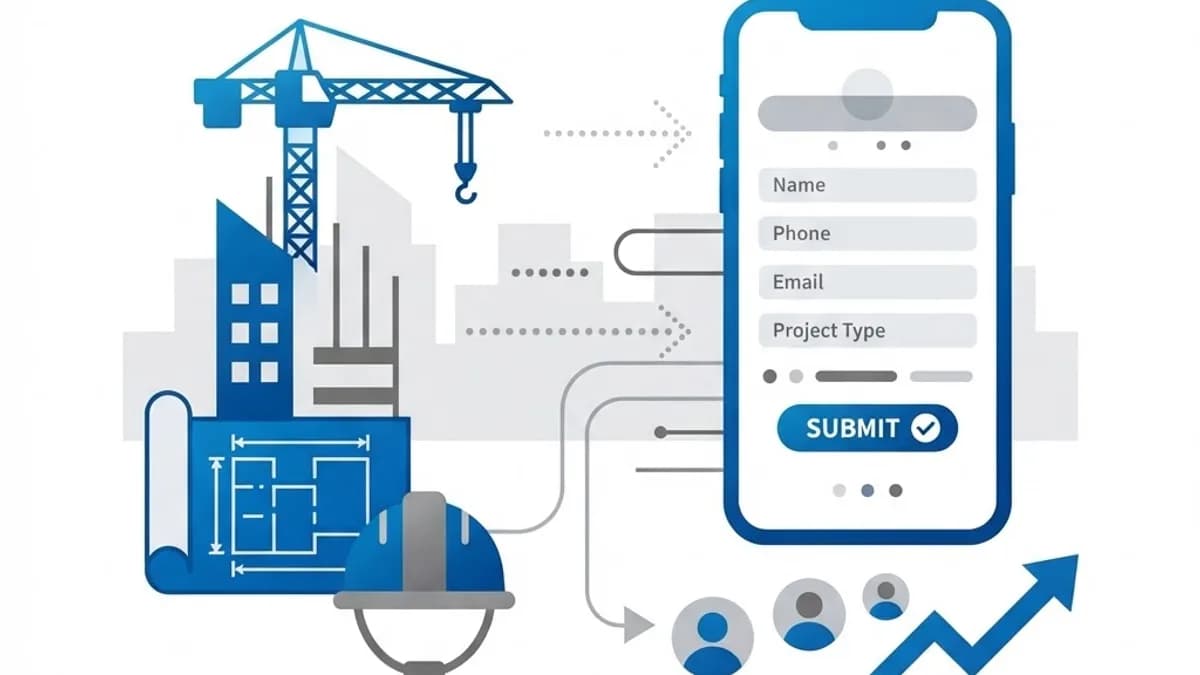
Digital marketing for general contractors has a problem most industries do not face: more leads can actually make a business worse. A calendar full of unqualified inquiries for jobs below your minimum project size wastes estimator time and produces nothing.
The goal is not volume. It is attracting the right projects — correct size, correct type, correct geography — and filtering out everything else before it reaches your team.
This guide covers how contractors build online visibility that produces qualified opportunities, how to present past work convincingly, and how to structure inquiry paths that screen prospects automatically.
What Is Digital Marketing for General Contractors?
Digital marketing for general contractors is the use of local search, project portfolios, targeted advertising, and content to attract qualified construction opportunities from property owners, developers, architects, and facility managers.
It applies across residential custom building, commercial construction, tenant improvement, industrial work, and design-build services.
The defining requirement is qualification. A contractor's website must communicate project scope and scale immediately, so a homeowner seeking a small repair self-selects out while a developer planning a multi-unit build recognizes a fit.
Who Needs This Approach?
Contractors at different scales apply the same principles with different targets.
- Residential general contractors building custom homes and large additions
- Commercial contractors pursuing tenant improvement and ground-up projects
- Design-build firms selling an integrated process rather than construction alone
- Specialty contractors seeking direct owner work alongside subcontract volume
- Growing firms reducing dependence on a small number of repeat clients
Key Features of an Effective Program
A Portfolio That Demonstrates Capability
Project pages showing scope, square footage, timeline, challenges solved, and professional photography do more selling than any service description. Prospects evaluate whether you have built something like their project before — nothing else matters as much.
Geographic and Scope Clarity
State plainly which regions you serve and your typical project range. Contractors who hide this attract constant unqualified inquiries. Contractors who publish it receive fewer but far better conversations.
Local Search Visibility
Owners search for contractors by project type and city. Dedicated pages for each service and major market you serve capture that intent. Consistent business listings reinforce credibility for commercial buyers performing due diligence.
A Site That Performs on Site
Prospects, architects, and superintendents view contractor websites on phones in poor signal conditions. Fast, lightweight pages matter. Contractors investing in properly optimized website design and performance lose fewer visitors before the portfolio loads.
How to Get Started
Build credibility assets first, then generate traffic toward them.
- Define your ideal project: type, size range, and service geography.
- Photograph and document your eight to twelve strongest completed projects.
- Build individual project pages with scope details and outcome descriptions.
- Create service pages for each construction type you actively pursue.
- Add a qualifying inquiry form asking project type, budget range, and timeline.
- Optimize your business listing with real project photography and service areas.
- Launch targeted campaigns only after the portfolio and qualification path exist.
Benefits for Contractors
Focused marketing improves pipeline quality rather than just quantity.
- Fewer unqualified inquiries consuming estimator and project manager time
- Higher average project value from better-matched prospects
- Credibility established before the first meeting through visible past work
- Reduced reliance on bid platforms and low-margin competitive bidding
- Easier recruitment, since skilled trades research employers online too
Potential Challenges
Construction marketing runs into practical obstacles on active job sites.
- Client confidentiality restricting what projects can be published
- Difficulty capturing quality photography during busy build schedules
- Long sales cycles making attribution across months complicated
- Field teams too busy to supply content consistently
Best Practices and Tips
Contractors who market well build simple internal habits.
- Photograph every project at completion as standard closeout procedure
- Request client permission for publication within the contract itself
- Publish project details rather than generic descriptions — specifics build trust
- Present your firm consistently across proposals, signage, and web with unified brand and graphic design
Real-World Example
A commercial general contractor specializing in medical and dental office buildouts had a website listing services generically and one gallery of unlabeled photos. Most inbound inquiries came from homeowners wanting kitchen remodels.
They rebuilt the site around their actual niche: individual project pages for completed medical suites, each showing square footage, timeline, specialized requirements like lead-lined walls, and finished photography. They added a form requiring project type and budget range.
Total inquiries decreased noticeably. Qualified medical buildout inquiries increased, and the estimating team stopped spending hours on residential requests they would never pursue. Average project value rose within two quarters.
Why It Matters
Property owners and developers now shortlist contractors online before requesting proposals. A firm without visible, documented project history is often eliminated before the bid list is finalized.
Digital marketing for general contractors ensures your best work is discoverable at the moment someone is deciding who to invite to the table.
Frequently Asked Questions
How do contractors get better quality leads online?
By publishing project scope and geography clearly, showcasing relevant completed work, and using qualifying questions in inquiry forms.
Is SEO worth it for general contractors?
Yes. Owners and facility managers search by project type and location, and those searches carry very high commercial intent.
Should contractors use lead generation platforms?
They can supplement pipeline but typically deliver price-driven, low-margin work. Owned channels produce better long-term economics.
How many projects should a portfolio include?
Eight to twelve well-documented projects representing your target work outperform fifty thin gallery entries.
Conclusion
Digital marketing for general contractors succeeds when it filters as effectively as it attracts. Document your best projects, state your scope clearly, and qualify inquiries before they consume estimating capacity.
If your firm needs a portfolio site that wins better projects, explore a custom contractor website build designed around credibility and lead qualification.
Enjoyed this article? Share it with others!