
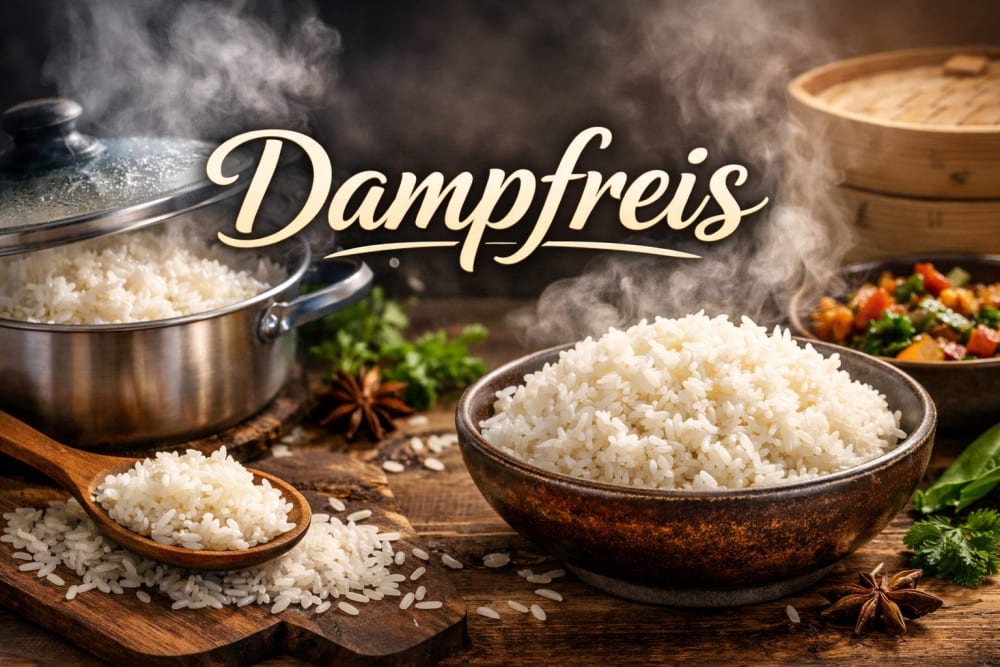
Dampfreis refers to rice that is cooked primarily through steam rather than by boiling in excess water. While the term is not always widely standardized, it describes a technique where measured water and controlled heat work together to allow the grains to absorb moisture gradually. The goal is a fluffy, separated texture without residual surface starch or excess moisture.
In practical terms, Dampfreis sits between traditional boiling and more specialized steaming methods found in various culinary traditions. It is relevant for anyone who wants consistent grain structure, better nutrient retention, and reliable results in daily cooking. Rather than being a trend, it reflects a controlled approach to rice preparation that prioritizes structure and balance.
What does Dampfreis mean and where does it come from?
At its core, Dampfreis means rice prepared through steam absorption rather than free boiling. The rice is cooked with a precise water ratio, typically in a closed vessel, so that steam circulates and penetrates the grains evenly. Unlike boiling methods where water is drained away, this approach keeps all moisture inside the pot.
Historically, steam-based rice cooking has been central to many cuisines across Asia and parts of Europe. Although terminology varies, the underlying principle remains consistent: rice absorbs the exact amount of water it needs. The method supports predictable texture and reduces nutrient loss that may occur when cooking water is discarded.
In everyday use, the term often appears in household cooking discussions, product descriptions, or recipe instructions that emphasize controlled hydration. It is less about branding and more about technique. Proper execution depends on understanding rice variety, water ratio, and heat management.
For home cooks, the meaning becomes clear once practiced. Dampfreis is not a special product. It is a controlled cooking method that reduces variability and improves consistency.
How is Dampfreis different from regular rice preparation methods?
The key difference lies in water management. When rice is boiled in large volumes of water, starch disperses into the liquid, and excess water is typically drained. In Dampfreis preparation, water is fully absorbed, and the grains cook through steam pressure inside the pot.
This affects texture and structure. Properly prepared steam-absorbed rice has individual grains that remain intact and defined. Boiled rice can become softer or uneven if timing is misjudged. The absorption method also tends to preserve more of the natural flavor because there is no dilution from discarded cooking water.
Nutritionally, the difference can be relevant. Water-soluble micronutrients are more likely to remain when the cooking liquid is not drained. While the change may not be dramatic for everyone, over time it can support better nutrient retention.
From a practical standpoint, Dampfreis requires more precision but less active supervision. Once the correct ratio and heat are set, the process is largely hands-off. Boiling often demands closer monitoring to prevent overcooking.
In which situations is Dampfreis the better choice?
Dampfreis works best when texture matters. For dishes that rely on separated grains such as stir-fries, plated entrées, or rice bowls, steam absorption provides stability and structure. The rice remains firm enough to hold sauces without collapsing.
It is also the preferred choice when cooking high-quality or specialty rice varieties. Long-grain, basmati, and jasmine rice respond particularly well to controlled steam cooking because their length and starch profile benefit from gentle hydration.
Meal preparation is another suitable context. Because the grains remain distinct, reheating tends to be more predictable. Rice cooked through absorption is less likely to turn sticky or watery during storage.
However, it is not universally superior. Some regional dishes require deliberate softness or excess starch. In those cases, boiling or pressure cooking may serve the culinary goal better.
What are common mistakes when preparing Dampfreis?
The most common mistake is incorrect water measurement. Too much water leads to clumping and excess surface moisture. Too little water results in undercooked centers. The correct ratio depends on rice type, age, and even storage conditions.
Another frequent issue is lifting the lid during cooking. When steam escapes, the cooking environment changes immediately. This can interrupt the absorption cycle and produce uneven texture. Consistency requires patience.
Heat control is often underestimated. High heat throughout the entire process can burn the bottom layer while the upper grains remain undercooked. The standard approach is to bring the water to a gentle boil and then reduce to low heat for gradual steaming.
Finally, skipping the resting phase after cooking reduces quality. Allowing the rice to sit covered for several minutes enables moisture redistribution, which improves overall texture.
How can you evaluate quality and technique at home?
Properly prepared Dampfreis has a dry surface appearance with soft but defined grains. When fluffed, the rice should separate easily without visible clumps. The bottom of the pot should show minimal sticking but no burnt residue.
Taste offers another indicator. Balanced steam-absorbed rice maintains its natural aroma and subtle sweetness. If the flavor seems diluted or overly starchy, water control likely needs adjustment.
Texture should feel light rather than heavy. When pressed gently between fingers, the grains should hold their shape without turning pasty. Excessive stickiness usually signals overhydration.
Over time, refinement comes through observation. Adjusting ratios slightly based on brand and batch leads to reliable results. Dampfreis is ultimately about understanding grain behavior rather than following a fixed formula.
Conclusion
Dampfreis represents a controlled method of cooking rice through measured water absorption and steam circulation. Its strength lies in predictability, texture preservation, and consistent structure. While not appropriate for every dish, it is often the preferred approach when grain separation and balance matter.
The difference does not come from complexity but from precision. By managing water, heat, and resting time carefully, home cooks can achieve dependable results without specialized equipment. Viewed as a technique rather than a trend, Dampfreis offers a practical, repeatable way to improve everyday rice preparation.
Enjoyed this article? Share it with others!