
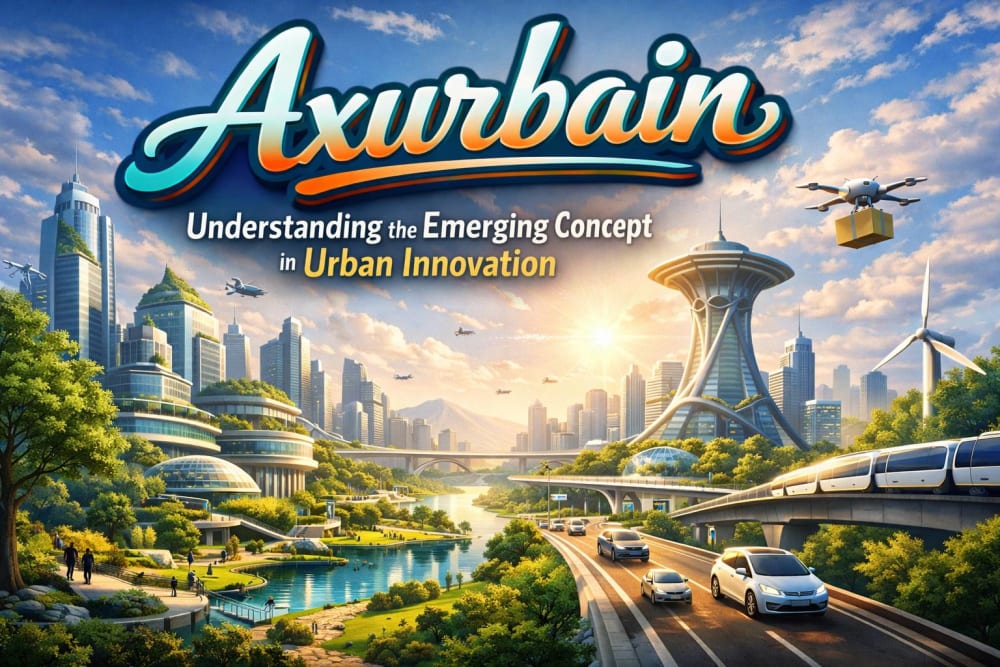
Urban innovation is evolving at an unprecedented pace, and Axurbain has emerged as a term attracting attention in digital and urban planning discussions. Although it is not yet a formally recognized urban planning theory, Axurbain represents a conceptual blend of urban design, technological integration, and futuristic city planning. This article explores what Axurbain entails, how it can be implemented, and why it matters in modern urban development. It provides a technical perspective suitable for developers, urban planners, and innovators seeking actionable insights.
What Is Axurbain? Exploring the Concept and Applications
Axurbain is primarily an emerging term, combining "axis" and "urbain" (French for urban), suggesting a central focus on city development and innovation. While not widely referenced in academic literature, the term is gaining traction in blogs and professional discussions about modern urban lifestyles and smart city planning.
Conceptually, Axurbain represents the intersection of urban infrastructure, sustainability, and digital integration. Cities facing population growth and environmental challenges are increasingly adopting technology-driven solutions to enhance mobility, energy efficiency, and livability. Axurbain serves as a framework for discussing these innovations collectively.
From a practical standpoint, Axurbain emphasizes modular urban components, such as adaptable public spaces, smart mobility hubs, and integrated energy systems. Its implementation can be seen in experimental city districts that use data analytics to optimize traffic flow, reduce emissions, and enhance citizen engagement.
Urban developers also use the term as a branding tool to highlight projects that aim to be futuristic, sustainable, and technologically integrated. This dual nature, both conceptual and promotional, means Axurbain occupies a unique space between theory and applied innovation.
How Axurbain Principles Can Be Implemented in Urban Planning
Implementing Axurbain-inspired initiatives requires a systematic, technical approach. First, urban planners must identify key urban challenges, such as congestion, energy consumption, and resource management. A data-driven assessment allows stakeholders to prioritize solutions based on measurable impact.
Next, integrating IoT (Internet of Things) devices across urban infrastructure is crucial. Sensors in roads, public transportation, and utilities collect real-time data, which feeds predictive models to optimize city operations. This approach aligns with Axurbain’s emphasis on technologically enhanced urban management.
Developers and planners should also adopt modular urban design strategies. This includes flexible public spaces that can adapt to changing population densities, smart energy grids that dynamically allocate resources, and scalable transportation solutions that reduce congestion.
Finally, collaboration between municipalities, private tech companies, and citizens ensures that Axurbain-inspired projects meet practical and social needs. Public engagement tools, such as participatory apps and virtual urban simulations, allow residents to provide input and adopt solutions effectively.
Why Axurbain Matters in Modern Cities
Axurbain’s relevance lies in its potential to reshape urban life. As global populations continue to grow, cities face mounting challenges in sustainability, mobility, and public safety. By framing innovation through the Axurbain lens, planners can approach these challenges with a cohesive, technology-driven strategy.
The framework also encourages interdisciplinary collaboration. Engineers, urban designers, environmental scientists, and IT specialists work together to create smart city environments that are efficient, safe, and adaptable. This integrated approach reduces fragmented development and promotes long-term urban resilience.
From an investment perspective, projects branded as Axurbain tend to attract interest from technology and sustainability-driven investors. Highlighting futuristic and sustainable solutions increases project credibility and potential funding opportunities.
Finally, adopting Axurbain principles allows cities to experiment with cutting-edge technologies such as autonomous vehicles, AI-driven traffic management, and renewable energy integration. These applications not only improve operational efficiency but also enhance the overall quality of urban life.
Practical Checklist: Implementing Axurbain Projects
- Assess Urban Challenges – Identify key areas like traffic congestion, pollution, energy inefficiency, and citizen engagement gaps.
- Integrate Smart Technologies – Deploy IoT devices, sensors, and data analytics tools to optimize urban operations in real-time.
- Modular Urban Design – Develop flexible public spaces, scalable energy systems, and adaptive transportation networks.
- Citizen Engagement – Use apps and virtual simulations to involve residents in planning and monitoring urban solutions.
- Cross-Sector Collaboration – Align municipal agencies, tech companies, and research institutions to co-develop sustainable projects.
By following this structured checklist, cities can apply Axurbain principles effectively, combining technology, sustainability, and urban design for measurable impact.
Axurbain in the Context of Smart Cities and Urban Innovation
Axurbain fits within the broader discourse of smart cities, which integrates technology, sustainability, and human-centered design. Unlike conventional urban planning frameworks, Axurbain emphasizes flexibility and futuristic potential rather than rigid regulation or standards.
Data-driven decision-making is a core aspect. By monitoring environmental, traffic, and energy data, city administrators can make informed decisions that improve quality of life while reducing operational inefficiencies. Predictive analytics plays a key role in managing these complex systems.
Moreover, Axurbain encourages scalable and modular infrastructure investments. Cities can pilot smaller projects, such as smart street lighting or adaptive traffic signals, and expand them once validated. This reduces risk while ensuring alignment with larger urban innovation strategies.
Finally, integrating Axurbain principles enhances sustainability goals. Renewable energy integration, low-emission transportation, and green public spaces collectively reduce carbon footprints and support global climate targets.
FAQ
1. What is Axurbain and why is it important?
Axurbain is an emerging term describing technology-driven urban innovation, integrating smart city design, sustainability, and modular infrastructure to enhance city operations and livability.
2. How does Axurbain differ from traditional urban planning?
Unlike conventional urban planning, Axurbain emphasizes technology integration, flexibility, and data-driven decision-making, allowing cities to adapt quickly to population growth and sustainability challenges.
3. Can Axurbain principles be applied to small cities?
Yes, even small cities can adopt Axurbain principles by implementing modular infrastructure, IoT monitoring systems, and citizen engagement platforms scaled to local needs and resources.
4. What technologies are commonly used in Axurbain-inspired projects?
Projects often use IoT sensors, AI-driven traffic management, renewable energy systems, and virtual citizen engagement tools to optimize operations and enhance sustainability.
5. How can developers measure the impact of Axurbain projects?
Impact can be measured through key performance indicators such as traffic flow efficiency, energy consumption reduction, citizen satisfaction, environmental impact metrics, and operational cost savings.
Enjoyed this article? Share it with others!