
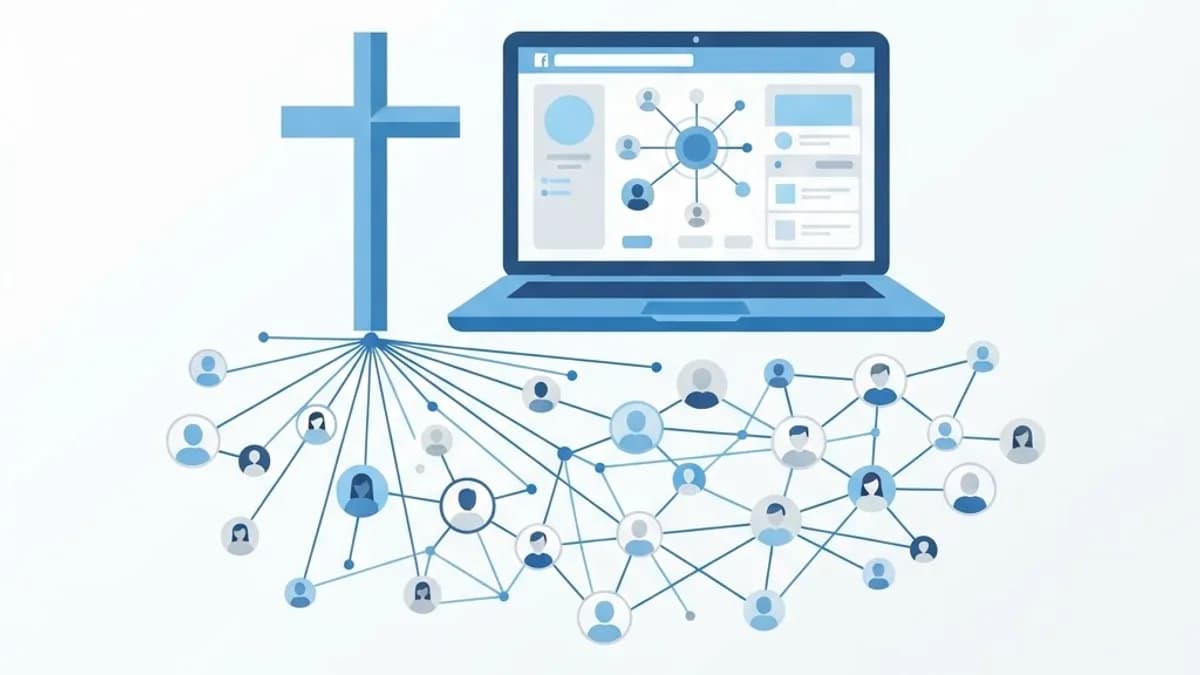
Christian digital marketing sits in an unusual space. The tools are the same as any other sector — search, email, social, advertising — but the standard is different. Persuasion techniques that feel merely aggressive elsewhere can feel genuinely wrong when the subject is faith.
That tension is solvable. Ministries, faith-based businesses, and Christian nonprofits can grow online without manipulative urgency or hollow claims. In fact, honesty tends to perform better with this audience, because trust is the currency.
This guide covers how to build a Christian digital marketing approach that respects the audience, communicates clearly, and still produces measurable growth in reach, engagement, and support.
What Is Christian Digital Marketing?
Christian digital marketing is the practice of promoting ministries, faith-based organizations, or values-driven businesses through online channels in a way that aligns with Christian ethical commitments.
Practically, it includes church websites, ministry email lists, podcast and sermon distribution, donation campaigns, event promotion, and content that serves an audience before asking anything of them.
The defining constraint is that method matters as much as outcome. Fear-based urgency, exaggerated claims, and pressure tactics may lift short-term numbers while damaging the credibility that faith-based organizations depend on entirely.
Who Uses Christian Digital Marketing?
The audience is broader than churches alone, spanning ministries, media, education, and commerce.
- Local churches promoting services, groups, and community events
- Parachurch ministries and mission organizations raising awareness and support
- Christian schools, colleges, and seminaries recruiting students
- Faith-based nonprofits running donor and volunteer campaigns
- Christian authors, counselors, publishers, and values-aligned businesses
Key Features of a Values-Aligned Approach
Content That Serves First
The most effective faith-based content answers real questions people are already asking — about grief, marriage, doubt, parenting, or belonging. These searches carry enormous volume and almost no commercial competition, which makes genuinely helpful writing unusually effective.
Honest, Transparent Messaging
State clearly what an organization does, where donations go, and what someone can expect when they attend or subscribe. Transparency reduces hesitation more effectively than any persuasive copywriting technique.
A Welcoming, Accessible Website
For churches especially, the website functions as a front door. Service times, location, parking, what to wear, and what happens to children should be findable in seconds. Clean, warm website design removes the anxiety that keeps first-time visitors from showing up.
Email as the Relationship Channel
Social reach fluctuates with algorithms; an email list does not. Regular, useful, non-manipulative email keeps a community connected. Organizations running structured email marketing campaigns consistently see stronger event attendance and giving than those relying on announcements alone.
How to Get Started
Begin with clarity about who you serve and what you want them to do next.
- Define your primary audience and the single next step you want them to take.
- Audit your website for the basics: times, location, contact, and mobile speed.
- List the twenty questions people most often ask your team and answer each in writing.
- Set up email capture with a genuinely valuable resource, not a generic newsletter offer.
- Claim and optimize your local listing so nearby searchers find accurate details.
- Publish consistently on one or two channels rather than thinly across six.
- Measure engagement, attendance, and response — then adjust what is not working.
Benefits of Doing It Well
An ethical approach is also a durable one.
- Deeper trust that translates into long-term community and support
- Higher engagement rates because content genuinely helps rather than sells
- Search visibility for meaningful questions competitors ignore
- Lower reliance on paid reach as organic content compounds
- A reputation that survives leadership changes and platform shifts
Potential Challenges
Faith-based organizations face constraints that commercial brands do not.
- Limited budgets and volunteer-dependent execution
- Advertising policies that restrict some religious targeting options
- Internal disagreement about how promotional communication should feel
- Difficulty measuring outcomes that are inherently relational
Best Practices and Tips
A few principles keep the work both effective and appropriate.
- Never use false scarcity or manufactured urgency in giving campaigns
- Show real people from your community rather than stock photography
- Make the first interaction low-commitment — a resource, not a membership
- Keep visual identity warm and consistent through thoughtful graphic design across print and digital touchpoints
Real-World Example
A midsize church struggled with first-time visitors. Attendance was stable but new faces were rare, and their website buried service times three clicks deep behind a photo carousel.
They rebuilt the homepage around three questions: when, where, and what to expect. They published a dozen short articles answering practical questions like what happens during children's programming and whether newcomers are asked to give. They added an email sequence for anyone who filled out a simple "planning a visit" form.
Within six months, first-time visitor forms rose steadily, and follow-up conversations became easier because people arrived already informed. Nothing about the message changed — only its accessibility.
Why It Matters
People now research a church, ministry, or faith-based organization online before ever attending or giving. The digital presence forms an impression long before a handshake does.
Christian digital marketing done with integrity ensures that impression is accurate, welcoming, and clear — removing friction for people who were already looking.
Frequently Asked Questions
Is marketing appropriate for a church or ministry?
Communication itself is neutral; method determines appropriateness. Clear, honest, service-oriented promotion helps people find what they are genuinely seeking.
What is the most effective channel for faith-based organizations?
A well-organized website paired with email typically outperforms social media, because both are owned channels unaffected by algorithm changes.
How should donation campaigns be handled online?
With transparency about allocation, realistic goals, simple giving mechanics, and no artificial deadlines or emotional pressure.
Can faith-based organizations run paid ads?
Yes, though platforms restrict certain religious targeting. Geographic and interest-based targeting around events and resources generally works well.
Conclusion
Christian digital marketing succeeds when it serves before it asks. Answer real questions, remove practical barriers, communicate honestly, and let consistency build trust over time.
If your organization needs a clearer online presence, consider a purpose-built website and communication setup designed around the people you are trying to reach.
Enjoyed this article? Share it with others!