
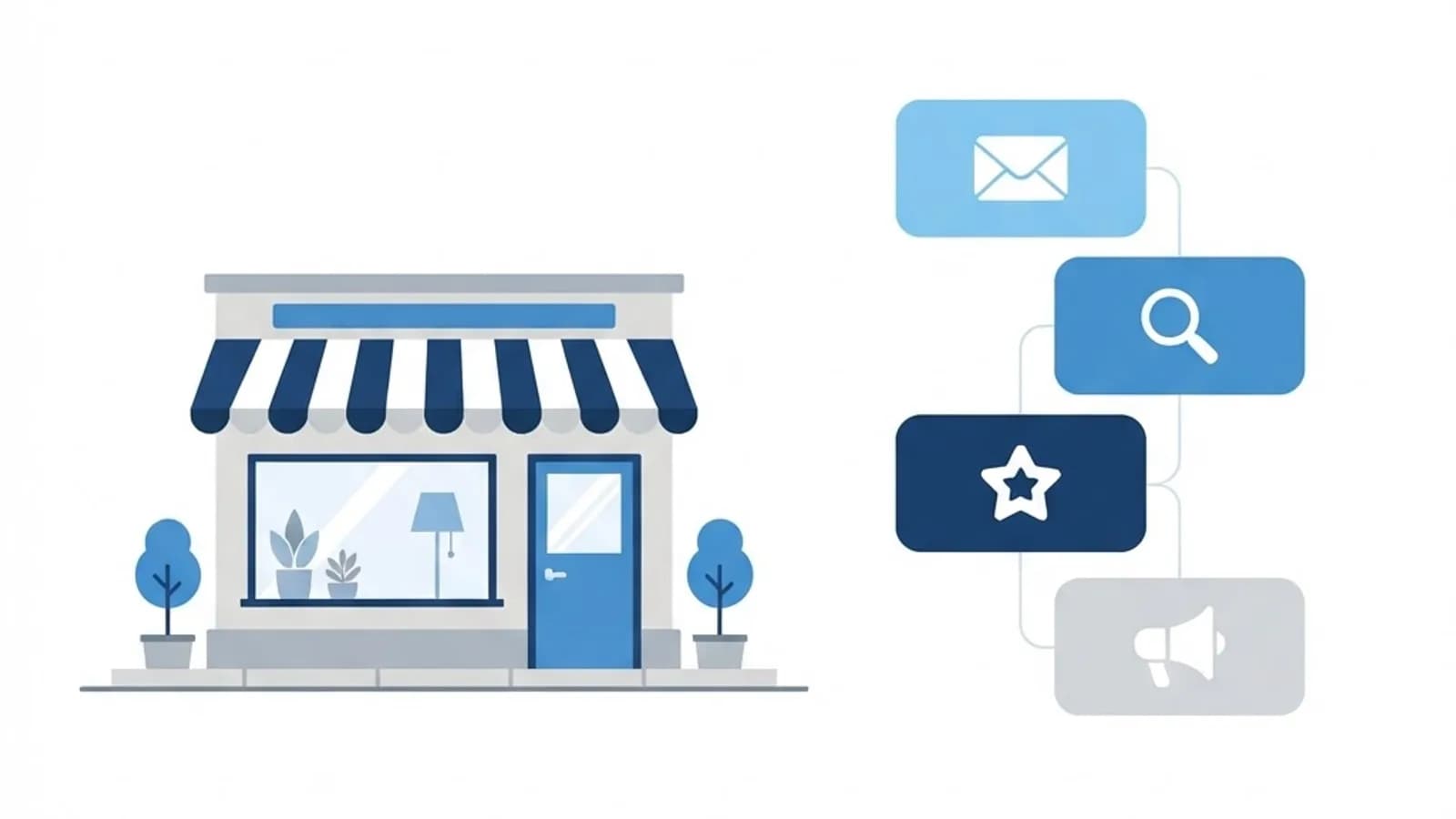
Small businesses do not fail at marketing because they lack ideas. They fail because they attempt twelve tactics badly instead of four properly. The most effective digital marketing tactics for SMBs are the ones a small team can actually sustain month after month.
Budget matters far less than consistency. A single well-maintained local listing and a disciplined review process will outperform an abandoned blog and three neglected social accounts every time.
What follows is a prioritised set of tactics, ordered roughly by return relative to effort, with honest notes on how long each takes to produce results.
What Are Digital Marketing Tactics for SMBs?
They are the specific, repeatable activities a small or medium business uses to attract, convert and retain customers online, chosen to fit limited budget, limited staff time and a local or niche market.
The defining constraint is capacity. A tactic that requires daily attention from someone you do not employ is not a tactic, it is a wish. Realistic selection is the whole discipline.
Most successful SMB programmes rest on four pillars: local search visibility, a website that converts, reputation, and a direct channel such as email that you own outright.
Who Should Use These Tactics?
These approaches apply across sectors wherever the business serves a defined market rather than competing nationally on scale.
- Local service businesses such as trades, clinics, salons and repair specialists
- Independent retailers operating physical and online sales together
- Professional services firms including accountants, consultants and legal practices
- Small business-to-business suppliers selling within a region or niche
- Franchise locations responsible for their own local marketing
Key Tactics That Consistently Work
Local Search and Map Visibility
For most SMBs this is the highest-return activity available. A fully completed business profile with accurate categories, regular photos, answered questions and consistent citations frequently doubles enquiry volume within a quarter, at almost no cost.
A Website Built to Convert
Traffic without conversion is expensive decoration. Clear headlines, visible phone numbers, short forms and fast mobile loading matter more than visual sophistication. Many SMBs see the fastest lift from a focused website redesign rather than from new traffic sources.
Systematic Review Generation
Reviews influence both search ranking and buyer decisions simultaneously. Asking every satisfied customer at the moment of completion, using a short link, turns this into a compounding asset within months.
Email as the Owned Channel
Social reach fluctuates with algorithms; an email list does not. Even a modest monthly email to past customers reliably produces repeat business and referrals at negligible cost.
How to Get Started
A ninety-day plan that a small team can genuinely complete.
- Week one: complete and verify your local business profile fully, including photos and services.
- Week two: test your website on a phone and fix the three biggest friction points.
- Week three: set up a review request process and ask your last twenty customers.
- Week four: install proper conversion tracking so you can see which enquiries come from where.
- Month two: publish four useful pages answering the questions customers ask most.
- Month two: start collecting emails and send your first customer newsletter.
- Month three: add paid search only on your highest-intent terms, with a small daily cap.
Benefits
Focused execution produces effects that broad, shallow activity cannot.
- Measurable enquiry growth within one quarter rather than vague brand improvement
- Lower cost per customer because owned channels replace rented attention
- Reduced dependence on any single platform or referral source
- Compounding results, since reviews, content and email lists all accumulate value
- Clearer decision-making because fewer channels means cleaner data
Potential Challenges
Small businesses face real constraints that generic advice tends to ignore.
- Owner time is the scarcest resource, and marketing competes with delivery work
- Results from organic tactics take months, which tests commitment during quiet periods
- Platform changes can reduce reach suddenly with no warning or recourse
- Hiring or outsourcing decisions are hard to judge without marketing experience
Best Practices and Tips
Habits that keep small-team marketing sustainable.
- Choose four tactics and do them properly rather than ten inconsistently
- Block ninety minutes weekly in the calendar specifically for marketing execution
- Reuse every asset: one customer story becomes a web page, an email and three social posts
- Review one number monthly, usually enquiries by source, and ignore vanity metrics entirely
Real-World Example
A two-location bicycle repair shop was posting daily on social media with almost no commercial effect. They stopped entirely for a quarter and redirected that time into three things: completing both business profiles thoroughly, asking every customer for a review at collection, and emailing their customer list monthly with seasonal servicing reminders.
Bookings rose sharply within two months, driven almost entirely by map visibility and the servicing reminders. They later reintroduced social posting through scheduled social media management, but as a supporting channel rather than the main effort.
Why It Matters
Small businesses compete against national brands with disproportionate budgets, yet local relevance and genuine reputation are advantages that money cannot simply buy. The tactics above lean directly into that asymmetry.
Equally, the cost of invisibility keeps rising. As more customers begin every purchase decision with a search, an SMB without local visibility is not merely under-marketed; it is effectively absent from the consideration set.
Frequently Asked Questions
How much should a small business spend on digital marketing?
Commonly between five and ten per cent of revenue for growing businesses, less for established ones. Start with the free foundations before committing to paid spend, since they raise the return on everything else.
Which single tactic gives the fastest results?
Completing and actively maintaining your local business profile, in almost every case. It costs nothing, takes a few hours, and typically produces visible change within weeks.
Do SMBs need to blog?
Only if the content answers real customer questions. Four genuinely useful pages beat fifty generic posts. If writing is a bottleneck, outsourced content writing is usually more cost-effective than sporadic self-publishing.
Is paid advertising necessary?
Not initially. Paid search is useful once your website converts well and you know your customer value, because it accelerates a system that already works rather than compensating for one that does not.
Conclusion
The top digital marketing tactics for SMBs are unexciting and reliably effective: be findable locally, convert the visitors you already get, collect reviews relentlessly and own a direct channel to your customers.
Pick four, commit for a year, and measure one number. A practical, easy-to-update website makes that commitment far easier to keep.
Enjoyed this article? Share it with others!