
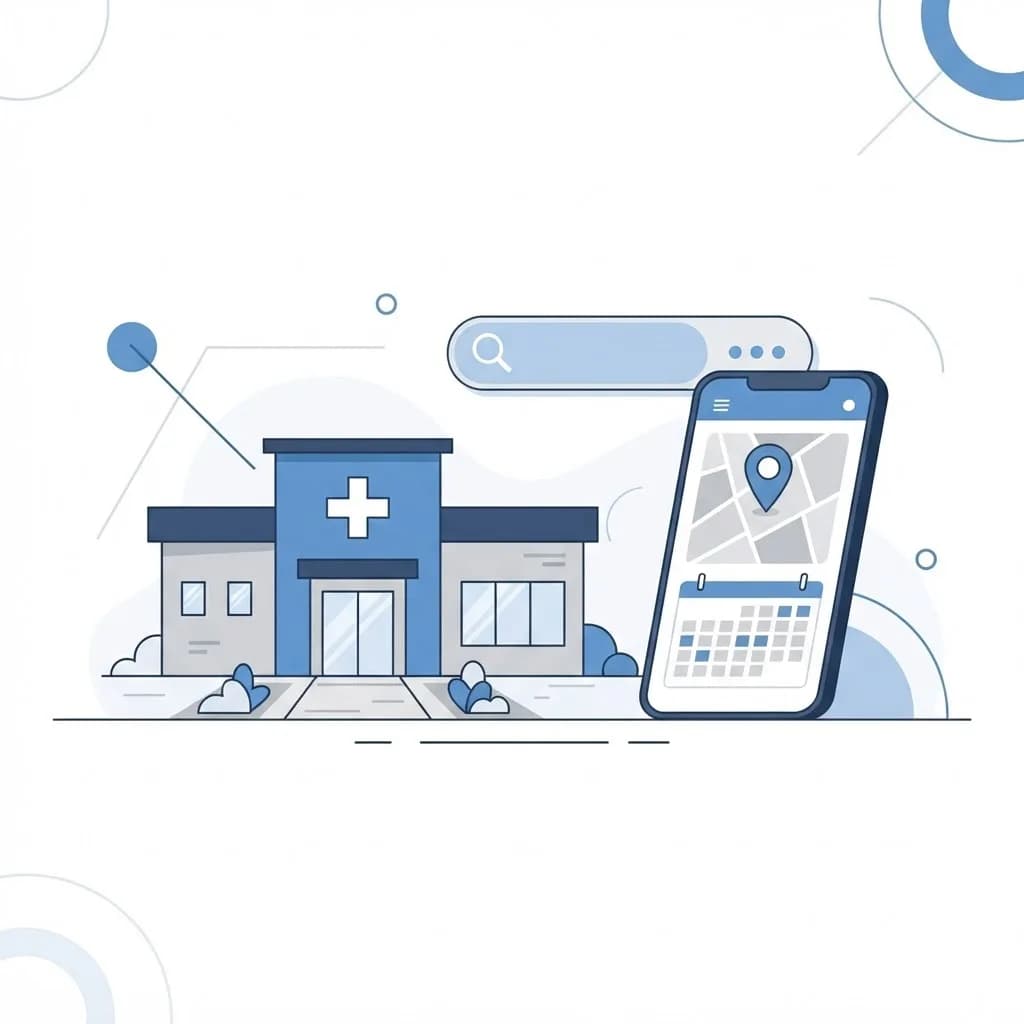
When someone sprains an ankle at 7pm, they do not read a brochure. They grab a phone, type something close to 'urgent care near me open now', and pick one of the first three results. That single moment is the entire battleground, and it is why digital marketing for urgent care centers looks nothing like marketing for a primary care practice.
Your competition is not only the clinic two miles away. It is the hospital emergency department, the retail pharmacy clinic, and the telehealth app that promises a video visit in four minutes. Winning means being the easiest, fastest, most reassuring option at the exact second a person is in pain.
This guide walks through what actually moves patient volume: local visibility, frictionless booking, credible reviews, and disciplined measurement.
What Is Digital Marketing for Urgent Care Centers?
It is the coordinated set of online activities that help a walk-in clinic get found, get chosen, and get visited. That includes your Google Business Profile, your website, paid search, wait-time transparency, patient reviews, and follow-up communication.
The defining trait of this vertical is urgency. Urgent care patients make decisions in under five minutes, usually on a mobile phone, usually within a five-mile radius. Every tactic should be judged against that reality.
It also sits inside a regulated environment. Anything that touches patient information has to respect HIPAA, which shapes how you run remarketing, how you handle form data, and what you can say in a testimonial.
Who Needs It?
Any clinic competing for same-day, unscheduled visits benefits from a structured online strategy. That is a wider group than most operators assume.
- Independent single-location urgent care clinics fighting a hospital-owned chain nearby
- Multi-site groups that need consistent listings and per-location landing pages
- Occupational health providers selling drug screening and injury care to local employers
- Pediatric urgent care centers targeting anxious parents at night and on weekends
- Hybrid clinics adding telehealth alongside walk-in services
Key Features of an Effective Program
Hyper-Local Search Visibility
Your Google Business Profile is your real homepage for most patients. Accurate hours, insurance information, services, photos of the actual waiting room, and weekly posts all influence whether the map pack sends you the click. Build one dedicated page per location with unique content, embedded directions, and schema markup so search engines understand your service area.
A Website Built for Speed and Panic
A patient in discomfort has no patience for a slow, cluttered site. Phone number visible without scrolling, a single obvious button to hold a spot, and a page that loads in under two seconds on a weak mobile signal. Clinics that invest in modern healthcare website design routinely see conversion lifts larger than anything a new ad campaign delivers.
Reputation and Review Velocity
Rating average matters, but recency matters just as much. A clinic with 120 reviews averaging 4.6 stars, twenty of them from the last month, outperforms one with 400 stale reviews. Automate the ask by text message ninety minutes after discharge.
Paid Search With Tight Geography
Bid on symptom and intent terms, not brand-building phrases. Sprained wrist, strep test, x-ray near me, sports physical. Use radius targeting, dayparting around your actual open hours, and call extensions so a patient can dial without ever opening the site.
How to Get Started
Sequence matters. Fixing the foundation before buying traffic protects your budget from leaking through a broken funnel.
- Audit and claim every location listing across Google, Apple Maps, Bing, Yelp and major insurance directories.
- Standardise name, address, phone and hours everywhere, including holiday hours.
- Rebuild or repair location landing pages with unique copy, services offered, insurance accepted and parking details.
- Install a simple online check-in or save-my-spot tool and display an honest current wait time.
- Launch a small, tightly geo-fenced paid search campaign focused on high-intent symptom keywords.
- Turn on automated post-visit review requests via SMS.
- Set up call tracking so you can attribute phone conversions, which will be the majority of them.
Benefits You Can Measure
Unlike brand advertising, this work produces numbers you can tie to exam room occupancy within weeks.
- Higher walk-in volume during historically quiet weekday afternoons
- Lower cost per patient acquisition compared with radio, print or billboard spend
- Better payer mix when landing pages clearly list accepted insurance plans
- Reduced front-desk phone load once online check-in absorbs routine questions
- A defensible local moat that new competitors cannot buy overnight
Potential Challenges
None of this is frictionless, and pretending otherwise sets clinics up for disappointment.
- Compliance limits: tracking pixels on pages containing health information can create HIPAA exposure
- Seasonality: flu season inflates results and quiet spring months deflate them, so compare year over year
- Staff buy-in: review generation fails when discharge staff forget to mention it
- Attribution gaps: patients who see an ad, then walk in three days later, rarely get credited correctly
Best Practices and Tips
The clinics that win tend to do a handful of unglamorous things consistently.
- Publish real wait times and update them automatically, even when they are long. Honesty builds return visits.
- Write service pages for symptoms patients actually search, not clinical terminology.
- Photograph your own space and staff instead of using stock imagery, which patients recognise instantly.
- Support your campaigns with clear visual assets, such as explainer infographics covering when to choose urgent care over the emergency room.
Real-World Example
Consider a two-location clinic in a mid-sized suburb. Both sites averaged 38 patients per day, and evenings were half empty. The team started by rewriting both location pages with genuine details: which insurers they accepted, that they had an on-site x-ray, and that the north site had free parking behind the building.
Next they added a save-my-spot form, switched their review requests to an automated text, and ran a modest paid search budget restricted to a four-mile radius after 4pm. Within ninety days evening volume rose roughly a third, review count nearly doubled, and the cost per new patient landed well below what they had been paying for a local radio sponsorship. Nothing exotic happened. They simply removed friction and showed up at the right time.
Why It Matters
Urgent care is a proximity and convenience business, and both of those attributes are now discovered digitally. A clinic that is invisible online is effectively invisible on the street, regardless of how good the clinical care is.
There is also a compounding effect. Reviews, local authority and returning patients accumulate. A practice that starts building this year will be far harder to displace in three years, which is exactly why the delay is more expensive than the investment.
Frequently Asked Questions
How much should an urgent care center budget for digital marketing?
Most single-location clinics land somewhere between two and six percent of revenue, weighted heavily toward local search and paid search. Start smaller, prove the cost per patient, then scale the channels that work.
Is paid search or SEO better for urgent care?
You need both, but in different roles. Paid search gives immediate visibility during your ramp-up and seasonal peaks, while local SEO lowers your long-term acquisition cost. Clinics that rely solely on ads see costs climb every year.
Can we use retargeting ads without violating HIPAA?
Carefully, and never on pages where a visitor discloses symptoms or personal health details. Keep tracking on general awareness pages, exclude form confirmation pages, and get your compliance officer to review the setup before launch.
How quickly should we expect results?
Paid search can produce patients the same week. Local SEO improvements typically show meaningful movement in eight to sixteen weeks, depending on how competitive your market is and how neglected your listings were.
Conclusion
Effective digital marketing for urgent care centers is less about clever campaigns and more about being reliably findable, obviously convenient and visibly trusted at the moment someone needs help. Fix the listings, speed up the site, earn fresh reviews, then buy traffic with confidence.
If you want an outside team to audit the funnel and build the assets, exploring a structured healthcare digital marketing engagement is a sensible next step.
Enjoyed this article? Share it with others!