
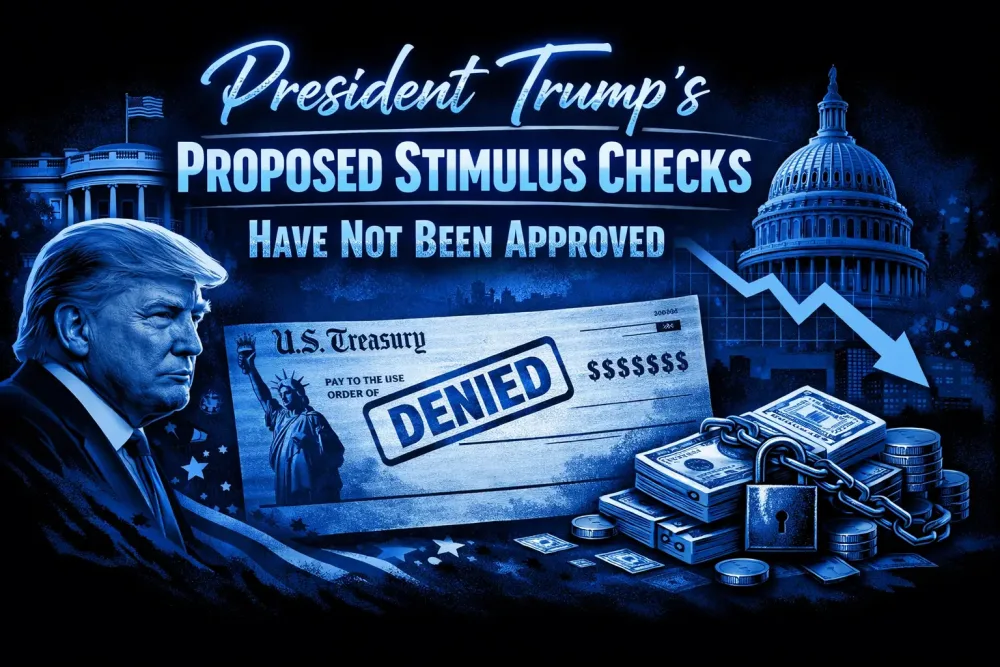
In recent months, news outlets and social media platforms have been filled with claims about proposed new stimulus checks tied to former President Donald Trump. Headlines have circulated stating “President Trump’s proposed stimulus checks have not been approved.” That phrase, while seemingly simple, reflects a complicated intersection of American politics, economic policy, public expectations, and media literacy.
Here’s what you should know, why it matters, and how we got here.
A Quick Overview: Stimulus Checks in U.S. History
Before diving into the recent situation surrounding President Trump’s proposals, it’s important to understand the broader context of stimulus checks in the United States.
Stimulus checks, also called Economic Impact Payments, first became well-known during the COVID-19 pandemic. The U.S. government issued several rounds between 2020 and 2021 in response to the economic downturn, including:
- $1,200 checks in the first round under the CARES Act (2020)
- $600 checks in the second round (late 2020)
- $1,400 checks in the third round (2021) under the American Rescue Plan
These checks were signed into law by then-President Donald Trump (first round) and later by President Joe Biden (third round). They were real, approved by Congress, and distributed to millions of Americans.
How Did “Proposed Stimulus Checks” Become News Again?
Several public figures, influencers, and political commentators began talking about new rounds of stimulus checks during the lead-up to the 2024 U.S. election cycle. Many of these discussions linked the topic to Donald Trump — whether as part of campaign messaging, public speculation, or online strategy.
The key issue, however, is this:
Any new federal stimulus checks must be approved by the U.S. Congress and signed into law by the sitting President.
Former President Trump cannot unilaterally issue stimulus checks.
As of now, no new stimulus plan proposed by Trump has been passed into law.
Multiple fact-checking organizations and government reporting outlets have confirmed this repeatedly.
Why the Confusion?
The idea that a former president could issue stimulus checks is a misunderstanding of how U.S. federal budget and legislative process works. Here are the main contributors to the confusion:
1. Campaign Promises vs. Legislative Action
During election years, candidates often make promises — including proposals for economic relief. These are proposals, not laws.
You can promise a stimulus check, but the proposal must pass the House and Senate, then be signed by the President in office, to become law.
Trump’s supporters have shared this proposed policy widely, blurring the lines between campaign messaging and actual government action.
2. Social Media Misinformation
Inflammatory or misleading posts often go viral. Some graphics claim “$2,000 checks are coming,” without credible sources or official government announcements.
Experts warn that misinformation about government payments can lead to unrealistic expectations or misplaced financial planning.
3. Media Amplification
News outlets sometimes report on a political leader’s statements about economic plans. Without clear framing, headlines might give the impression that something has already been approved when it hasn’t.
For example:
“Trump wants to send checks”
vs.
“Trump’s plan HAS been approved”
These messages sound similar — but the legal reality is very different.
What Would a New Stimulus Package Entail?
Many Americans are understandably interested in financial relief. A true stimulus package would likely involve:
- Direct cash payments (stimulus checks)
- Tax credits or rebates
- Expanded unemployment benefits
- Support for small businesses (grants, loans, payroll support)
- Infrastructure investments
- Healthcare-related financial assistance
If Congress ever passes a new stimulus bill, it could include one or more of these provisions.
However, as of the current moment:
No new stimulus bill including direct checks has been passed into law.
Any talk of proposed checks — whether tied to Trump or anyone else — remains just that: a proposal.
How the Approval Process Works
To understand why Trump’s proposed stimulus checks are not approved, it helps to know the official pathway for federal legislation:
Step 1: Proposal
The president or a member of Congress proposes an idea.
This appears as a bill in the House of Representatives or Senate.
Step 2: Committee Review
The bill is reviewed, debated, and sometimes amended in committee settings.
Step 3: House & Senate Vote
Both chambers must pass the exact same version of the bill.
Step 4: President Signs or Vetoes
Only after passage by Congress does the sitting President sign the bill into law.
At no point can a former president enact policy without Congress and without being the current president.
What Political Leaders Are Saying
Here are some ways different political voices frame the issue:
- Supporters of Trump may emphasize his campaign statements and push for economic measures they favor.
- Opponents and fact-checkers point out that nothing has been approved by Congress.
- Economists stress that stimulus is a tool, not a guarantee — and its timing and size matter for inflation and economic growth.
- Government agencies focus on official guidance and warn against scams.
Public Reaction & Expectations
Across communities, reactions have varied:
🗳 Supporters Who Hope for Checks
Many Americans who benefited from pandemic checks desire more direct payments — especially during times of inflation or economic uncertainty.
When a public figure discusses new stimulus checks, supporters often share these messages widely.
💬 Skeptics Who Demand Accuracy
Some citizens and organizations push back hard against misleading claims, wanting clarity between what is proposed and what is approved.
📉 Business Owners & Economists
Smaller businesses have mixed feelings:
- Some hope for cash flow relief.
- Others caution that uncertainty makes planning difficult.
- Still others focus on loans, tax incentives, or market-specific strategies instead of direct income support.
Why People Care About Stimulus Checks
Stimulus checks do more than send money. They also:
- Increase consumer spending
- Support struggling households
- Boost economic activity in downturns
- Serve as tangible government relief
For individuals with tight budgets, direct payments can help cover essentials like:
- Rent or mortgage
- Groceries
- Utilities
- Medical costs
- School supplies and family needs
But those benefits depend on actual legislative approval — not proposals.
The Role of Media & Fact-Checking
Because so many people receive news on social platforms, fact-checking organizations play a critical role in clarifying what is true and what is false.
Here’s how to check whether a stimulus claim is real:
🔎 Look for:
- Official government announcements (IRS, White House, Treasury)
- Statements from Congressional leaders
- Trusted news agencies with source documentation
🚫 Be cautious of:
- Viral images with no source
- Posts claiming guaranteed money with no official reference
- Clickbait headlines
If a stimulus plan has not passed Congress and been signed into law, it is not approved.
How This Affects Your Financial Decisions
If you were expecting new stimulus checks, here’s how to prepare realistically:
📌 Don’t Plan Based on Unapproved Claims
Assuming payments that haven’t been authorized can lead to:
- Budget shortfalls
- Missed financial planning opportunities
- Misallocation of resources
📌 Seek Trusted Financial Advice
Talk to:
- Financial planners
- Tax professionals
- Local business advisors
These experts can help adjust your budget without relying on uncertain government policy.
📌 Focus on Other Financial Support Systems
There are existing programs and resources that are active, such as:
- Small business loans and grants
- Tax deductions and credits
- Local economic development programs
- Job training and retention subsidies
Exploring real available options is more productive than waiting on proposals.
What Happens Next?
As long as U.S. elections and political debates continue, proposals for stimulus checks will likely keep surfacing. These debates often become louder when:
- Economic uncertainty rises
- Inflation affects household spending
- Election campaigns begin or escalate
- Media narratives gain traction online
But it’s vital to track what is simply proposed versus what is approved and signed into law.
Here’s what to watch for:
🔹 Congressional Bills
Bills introduced in the House or Senate related to economic relief.
🔹 Public Statements
Official statements from leaders in government offices — not just campaign speeches.
🔹 Fiscal Policy Reports
Analyses from reputable economists and government budget offices.
How Businesses Should Respond
For business owners — whether local or international — it’s important to stay grounded in facts:
📌 Don’t Rely on Unapproved Government Payments
Stimulus checks that have not been approved should not be part of your financial forecasting.
📌 Explore Actual Support Options
Instead, focus on:
- Grants your business qualifies for
- Loan programs that have been enacted
- Tax incentives for hiring or infrastructure
- Industry-specific assistance programs
📌 Stay Informed by Trusted Sources
Rather than social media speculation, use:
- Official government websites (IRS.gov, congress.gov)
- Business associations
- Certified financial advisors
Final Thoughts: Stimulus Proposals ≠ Approved Payments
The phrase “President Trump’s proposed stimulus checks have not been approved” is accurate — and it carries significant meaning.
It reminds us that:
- Proposals are not law
- Former presidents cannot approve payments
- Economic policy requires legislative action
- Media and public expectations must be grounded in verified facts
As readers, consumers, business owners, and citizens, understanding the difference between political messaging and actual government action is crucial. It helps you make informed financial decisions and protects you from misinformation that can have real economic consequences.
If you want help positioning your business in a global market or increasing your online visibility, consider working with Tulu e Biz for Worldwide Business Listing & Discovery Platform Services — they specialize in helping companies grow by expanding their digital presence.
Enjoyed this article? Share it with others!